Skip to content
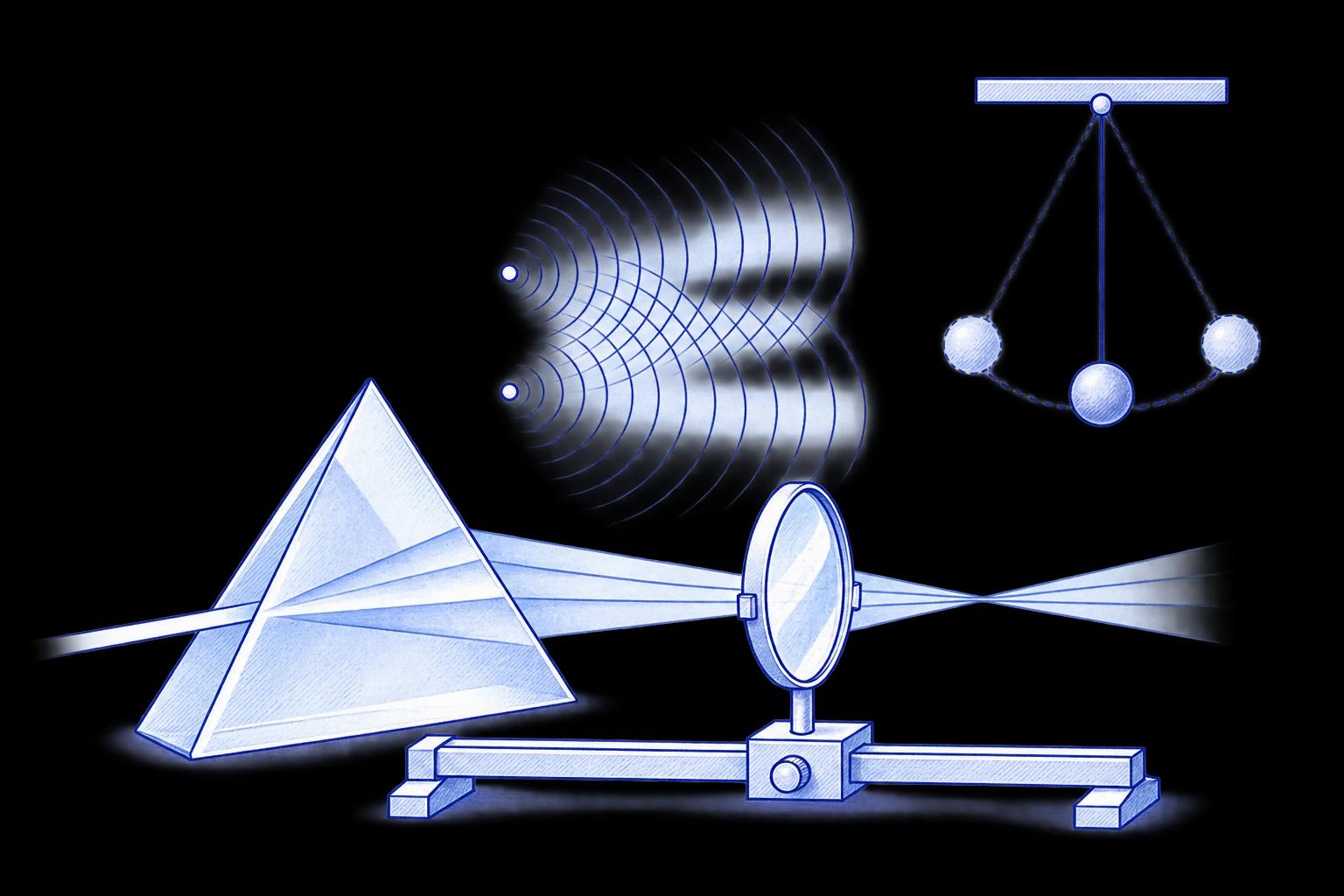
Physics: blue ink subject illustration
Image source

AI-generated ink illustration

Conceptual study artwork, not a photograph of teaching facilities.

Unidex · generated with ImageGen

Checked 2026-11-05

Symbolic subject artwork; no university facility depicted

Deadlines

See the published deadlines below.

Other deadline details

Dates and conditionsApplication and document deadlinesStanding annual entry · Every year
  • Domestic Ontario high school applicants to the faculty linked from this programme
  • For information on how to submit official documents, visit our Approved Documents page Application deadlines: Early application deadline for fall term* - March 15 Fall term – August 15 Winter term – December 15 Spring/summer term – One week before the start of classes Final official transcript deadlines: Fall term deadline for early conditionally admitted students – August 1 Fall term – August 15 Winter term – January 1 Spring/summer term – May 1 Deadline for off-campus students** – last day to add courses without permission in all terms * The early application deadline is the recommended deadline to ensure the best course selection options, in addition to the deadline for entrance awards **Off-campus students are students taking courses through regional colleges or the First Nations University of Canada Prince Albert and Saskatoon campuses
SourceChecked
Dates and conditionsApplication and document deadlinesStanding annual entry · Every year
  • Domestic university or college transfer applicants to the faculty linked from this programme
  • For information on how to submit official documents, visit our Approved Documents page Application deadlines: Fall term – August 15 Winter term – December 15 Spring/summer term – One week before the start of classes Final official transcript deadlines: Fall term – August 15 Winter term – January 1 Spring/summer term – May 1 Final official transcript deadlines for those admitted conditionally: Fall term - September 30 Winter term - January 31 Spring/summer term - May 31 Petitioning student deadlines: Fall term – July 1 Winter term – November 1 Spring/summer term – March 1 Deadline for off-campus students* – last day to add courses without permission in all terms *Off-campus students are students taking courses through regional colleges or the First Nations University of Canada Prince Albert and Saskatoon campuses
SourceChecked
March 15Fall early application deadline for most programsRecurring annual · Every year
  • March 15
  • Recommended for course selection, scholarships, residence and parking
  • Program-specific deadlines can be earlier
SourceChecked
August 15Fall final application deadline for most programsRecurring annual · Every year
  • August 15
  • The application, fee and documents are due by this date unless the program has an earlier deadline
SourceChecked

Requirements

Admission requirements

High-school prerequisites
  • ENG4UEnglish 12U (ENG4U)
  • MHF4UAdvanced Functions 12U (MHF4U)
  • Two of Biology 12U (SBI4U), Calculus and Vectors 12U (MCV4U), Chemistry 12U (SCH4U), Earth and Space Science (SES4U) or Physics 12U (SPH4U)
University of Regina faculty guide linked from the programme: Ontario applicants
Application steps
  1. Step 1Check the admission requirements
  2. Step 2Apply through U of R admissions
    • Create your application and select this program.
    U of R admissionsU of R admissions
  3. Step 3Official high-school transcript
    • Official transcripts must come directly from the issuing institution or government authority. SCBScN applicants apply through Saskatchewan Polytechnic and follow its document process.
    University of Regina admission documents and transcriptsUniversity of Regina admission documents and transcripts
  4. Step 4$100 undergraduate application fee
    • Published in the Fall 2026 domestic fee schedule. SCBScN applicants apply through Saskatchewan Polytechnic and follow its fee schedule.
    University of Regina Fall 2026 domestic undergraduate fee scheduleUniversity of Regina Fall 2026 domestic undergraduate fee schedule
Applicant pathways
Application Information

Domestic Ontario high school applicants to the faculty linked from this programme

  • If you are currently completing your Grade 12 year you can apply as a high school student. Your application will be assessed for early conditional admission to your program of choice. This allows students who are still in grade 12 to be conditionally admitted using grade 11 and any grade 12 courses they have completed. Students who are granted early conditional admission are still required to meet the final admission requirements for their program/faculty at the time of graduation. Your application will be assessed based on the Early Conditional Admission Requirements listed below, and then after graduation, you will be required to meet the Final Admission Requirements listed below. If you have graduated from high school or completed secondary-level standing, and have not attended any post-secondary institutions, you are also considered a high school student. Your application will be assessed on he FInal Admission Requirement listed below. When applying during the final year of high school, students can provide an interim grade report and a schedule of current/planned courses via email, fax, or mail. This can be sent directly to the Enrolment Services office from the student or guidance counsellor. This interim/unofficial grade report is used for the early conditional admission calculation. Official high school final transcripts must be submitted following graduation and by all those applying who have completed high school. This official document is used for the final admission average calculation. Find information on how to order your official transcripts . Official transcripts must come to the University of Regina directly from the issuing institution (Ministry of Education, school board office, etc.) in your province or country (if other than Canada). English Language Proficiency The language of instruction at the University of Regina is English. All applicants to the University of Regina must therefore demonstrate an appropriate level of proficiency in the English language, unless they are entering the Baccalaureate en education program, in which case they must meet the French language proficiency requirement. Find information on English language proficiency requirements here.
University of Regina faculty guide linked from the programme: Ontario applicants
Final Admission Requirements

Domestic Ontario high school applicants to the faculty linked from this programme

  • English 12U (ENG4U) Advanced Functions 12U (MHF4U) Two of Biology 12U (SBI4U), Calculus and Vectors 12U (MCV4U), Chemistry 12U (SCH4U), Earth and Space Science (SES4U) or Physics 12U (SPH4U)
University of Regina faculty guide linked from the programme: Ontario applicants
Additional Information

Domestic Ontario high school applicants to the faculty linked from this programme

  • 70% average required Starting in Fall 2025, admission to Computer Science programs will require an 80% average. Applicants will be admitted as a Science Qualifying student if they are either: missing one of the subjects used for final admission, but have an admission average of 70% on the remaining courses, or have an admission average between 65-69.99%, but have all of the subjects required The Faculty of Science does not offer a qualifying program for Computer Science.
University of Regina faculty guide linked from the programme: Ontario applicants
Application and Document Deadlines

Domestic Ontario high school applicants to the faculty linked from this programme

  • For information on how to submit official documents, visit our Approved Documents page Application deadlines: Early application deadline for fall term* - March 15 Fall term – August 15 Winter term – December 15 Spring/summer term – One week before the start of classes Final official transcript deadlines: Fall term deadline for early conditionally admitted students – August 1 Fall term – August 15 Winter term – January 1 Spring/summer term – May 1 Deadline for off-campus students** – last day to add courses without permission in all terms * The early application deadline is the recommended deadline to ensure the best course selection options, in addition to the deadline for entrance awards **Off-campus students are students taking courses through regional colleges or the First Nations University of Canada Prince Albert and Saskatoon campuses
University of Regina faculty guide linked from the programme: Ontario applicants
Application Information

Domestic university or college transfer applicants to the faculty linked from this programme

  • If you have previously attended another recognized college, university, or technical institute, you are considered a college/university transfer student. Post-secondary transfer admission averages are calculated using the Admissions Grade Point Average (AGPA). The AGPA is calculated by combining recognized academic post-secondary courses and attempted U of R courses. Official college/university transcripts must be sent directly from the post-secondary institution(s) to Enrolment Services at the U of R. We accept mailed and e-mailed transcripts sent directly from the issuing institution(s). We also accept electronic transcripts delivered via vendors authorized by the sending institution such as Parchment, Digitary (MyCreds), National Student Clearinghouse, and others. Finally, we accept transcripts from online verification portals that have secure log in portals such as International Baccalaureate and Cambridge Exams. We will also accept official World Education Services (WES) International Credential Advantage Package ( ICAP ) assessments. When you are completing the request, you will choose "University of Regina" and "Office of Undergraduate Admissions" as the "Recipient", which can be sent either by mail or electronically. All documents that are supplied in support of applications for admission become the property of the University of Regina and will not be forwarded to another institution. English Language Proficiency The language of instruction at the University of Regina is English. All applicants to the University of Regina must therefore demonstrate an appropriate level of proficiency in the English language. Find information on English language proficiency requirements here.
University of Regina faculty transfer guide linked from the programme
Post-Secondary Admission Requirements

Domestic university or college transfer applicants to the faculty linked from this programme

  • Applicants who have attempted 15 credit hours or more of approved post-secondary education must have a minimum AGPA of 65% on the most recent 30 credit hours of post-secondary courses attempted. If applicants have attempted fewer than 15 credit hours, their admission will be based on high school admission requirements. Post-secondary applicants must also have successfully completed course work in math and sciences at either the post-secondary or secondary school level. Applicants who have been required to withdraw from a prior institution may be required to petition for admission. For more information, visit the petitioning for admission page .
University of Regina faculty transfer guide linked from the programme
Additional Information

Domestic university or college transfer applicants to the faculty linked from this programme

  • Applicants who have attempted 15 credit hours or more of approved post-secondary education and have an AGPA of 60-64.9% on all post-secondary courses attempted may be admitted to the Science Qualifying Program. Applicants must provide evidence of having successfully completed course work in math and sciences at either the post-secondary or secondary school level. Students who are missing one or more course requirements may be admitted to the Science Qualifying Program. Applicants who have failed more than 15 credit hours of university courses are not admissible except by permission of the Faculty. Applicants who have failed a core requirement of the Faculty of Science (CS 110, Math 110, English 100 or 110) after the maximum number of repeat attempts are not admissible except by permission of the Faculty. Applicants to the BSc in Chemical Technology must also present the SIAST/SK Polytech Diploma in Chemical Technology with a 60% GPA. Applicants to the BSc in Environmental Biology must have completed the SIAST/SK Polytech Diploma in Integrated Resource Management or Lakeland Colleges Diploma in Wildlife and Fisheries Conservation or the Diploma in Conservation and Restoration Ecology with a 60% GPA and a passing grade in Pre-calculus 30 or equivalent. Applicants to the Bachelor of Medical Radiation Technology program must have completed a two-year Medical Radiation Technology Diploma Program in Canada that is recognized by the Canadian Association of Medical Radiation Technologists ( CAMRT ), with a minimum GPA of 60%, in addition to meeting the high school admission requirements for the Faculty of Science. Applicants to the Bachelor of Medical Laboratory Science program require a completed Diploma in Medical Laboratory Technology from Saskatchewan Polytechnic with a minimum 60% graduating average and a passing grade in Pre-Calculus 30 or equivalent. Diploma in Computer Science - Applicants who have more than two years of studies in the areas of Computer Science, Computer Engineering, or a related discipline may not enroll in the Diploma of Computer Science, except with special permission of the Faculty. Applicants to the Bachelor of Geographic Information Science must also present the SIAST/SK Polytech Certificate in Geographic Information Science for Resource Management with a 65% GPA.
University of Regina faculty transfer guide linked from the programme
Application and Document Deadlines

Domestic university or college transfer applicants to the faculty linked from this programme

  • For information on how to submit official documents, visit our Approved Documents page Application deadlines: Fall term – August 15 Winter term – December 15 Spring/summer term – One week before the start of classes Final official transcript deadlines: Fall term – August 15 Winter term – January 1 Spring/summer term – May 1 Final official transcript deadlines for those admitted conditionally: Fall term - September 30 Winter term - January 31 Spring/summer term - May 31 Petitioning student deadlines: Fall term – July 1 Winter term – November 1 Spring/summer term – March 1 Deadline for off-campus students* – last day to add courses without permission in all terms *Off-campus students are students taking courses through regional colleges or the First Nations University of Canada Prince Albert and Saskatoon campuses
University of Regina faculty transfer guide linked from the programme
Domestic external postsecondary transfer

Domestic transfer applicants to Physics through Science; exact programme exceptions are separate.

  • At least 15 attempted approved postsecondary credit hours: minimum AGPA 65% over the most recent 30 attempted hours.
  • Fewer than 15 attempted hours: assessed using secondary-school requirements.
  • Completed Mathematics and Science coursework at secondary or postsecondary level is required.
  • More than 15 failed university hours, or a core requirement failed after the permitted repeat limit, requires faculty permission.
  • Send official records from every prior postsecondary institution directly to admissions; English-language requirements apply.
  • A prior required withdrawal may require a petition for admission.
Regina current domestic university/college-transfer guide: Science
Current or returning U of R faculty transfer

Internal faculty-transfer applicants to Physics, as scoped in the current calendar.

  • At least 15 attempted approved postsecondary credit hours: minimum AGPA 65% over the most recent 30 attempted hours.
  • Fewer than 15 attempted hours: assessed using secondary-school requirements.
  • Completed Mathematics and Science coursework at secondary or postsecondary level is required.
  • More than 15 failed university hours, or a core requirement failed after the permitted repeat limit, requires faculty permission.
Regina October 2026 edition of 2026/27 calendar: programme-specific and transfer admission tables, printed pages 20–27

Degree requirements

Grades and academic standing
Credits and degree requirements

Program facts

Academic minimum70% minimum
Co-opCo-op option

Optional Physics co-op: four work terms, with an optional fifth. Entrance requirements include a 70% programme GPA, 30–60 credits, five PHYS courses including three at 200 level, three MATH courses including one at 200 level, and two CS courses covering UNIX and C programming. Credit limits include registered courses as specified in the linked table; faculty rules take priority.

University of Regina · undergraduate co-op entrance requirements table
University of Regina · undergraduate co-op entrance requirements tableCheck work experience options

Majors & specializations

Routes named on this shared programme-area page; they are separate credentials or streams, not necessarily options inside this degree.

Applied Physics

BSc

Combine physics with practical study in related fields in a program that works with industry employers.

Courses

Codes named in this exact current degree section, including required courses, alternative choices and prerequisite references. This is a scoped menu, not a timetable or a list every student takes.

  • PHYS 109General Physics I3 credits
  • PHYS 111Mechanics3 credits
  • PHYS 112Waves and Optics3 credits
  • PHYS 201Electricity and Magnetism3 credits
  • PHYS 202Classical Mechanics I3 credits
  • PHYS 242Introduction to Modern Physics3 credits
  • PHYS 251Mathematical Physics I3 credits
  • PHYS 261Heat and Thermodynamics3 credits
  • PHYS 301Classical Mechanics II3 credits
  • PHYS 311Electromagnetism I3 credits
  • PHYS 342Atomic Physics3 credits
  • PHYS 372Modern Experimental Physics3 credits
  • PHYS 401Quantum Mechanics I3 credits
  • PHYS 421Solid State Physics3 credits
  • PHYS 432Nuclear Physics3 credits
  • ASTR 300Astronomical Observation3 credits

  • CHEM 104General Chemistry I3 credits

    Introduces atomic structure, chemical bonding, quantitative reactions, energy changes, solutions and organic compounds alongside laboratory work.

    University of Regina Fall 2026 Course Catalogue · CHEM 104

  • CS 110Programming and Problem Solving3 credits

    Introduces program design and problem solving through data types, control flow, functions, scope and files.

    University of Regina Fall 2026 Course Catalogue · CS 110
  • CS 115Object-Oriented Design3 credits

    Develops object-oriented programming with abstraction, classes, inheritance, polymorphism and dynamic memory.

    University of Regina Fall 2026 Course Catalogue · CS 115
  • MATH 110Calculus I3 credits

    Introduces single-variable calculus for algebraic and trigonometric functions, with limits, differentiation, integration, optimization and area problems.

    University of Regina Fall 2026 Course Catalogue · MATH 110
  • MATH 111Calculus II3 credits

    Extends calculus to exponential and logarithmic functions, advanced integration, limits of indeterminate forms and infinite series.

    University of Regina Fall 2026 Course Catalogue · MATH 111

  • MATH 122Linear Algebra I3 credits

    Develops applied linear algebra through systems of equations, matrix operations, determinants, vectors and inner products.

    University of Regina Fall 2026 Course Catalogue · MATH 122
  • MATH 213Vector Calculus3 credits

    Studies differentiation and integration in several variables, constrained optimization and coordinate changes for multiple integrals.

    University of Regina Fall 2026 Course Catalogue · MATH 213
  • MATH 217Differential Equations I3 credits

    Uses ordinary differential equations and Laplace transforms to develop and analyze mathematical models.

    University of Regina Fall 2026 Course Catalogue · MATH 217
  • ENGL 100Critical Reading and Writing I3 credits

    Develops critical reading and composition through literary and non-literary texts and connects reading strategies with writing.

    University of Regina Fall 2026 Course Catalogue · ENGL 100
  • ENGL 110Critical Reading and Writing II3 credits

    Continues the writing practice from ENGL 100 through a selected literary topic and may include non-literary texts.

    University of Regina Fall 2026 Course Catalogue · ENGL 110
  • PHYS 322Physical Optics and Electromagnetic (E/M) Radiation3 credits

  • PHYS 362Statistical Mechanics3 credits
  • PHYS 471Modern Experimental Physics II3 credits
  • PHYS 498Senior Research0 credits
  • PHYS 499Honours Thesis3 credits
  • ESC 460Applied Exploration Geophysics3 credits
  • MATH 312Complex Analysis I3 credits
  • PHYS 051Physics Co-op Work Term0 credits
  • PHYS 052Physics Co-op Work Term #20 credits
  • PHYS 053Physics Co-op Work Term #30 credits
  • PHYS 054Physics Co-op Work Term #40 credits

  • ENGG 100Engineering Graphics3 credits

    Develops engineering drawing and visual communication through manual sketches, computer-aided drawing and multiple projection methods.

    University of Regina Fall 2026 Course Catalogue · ENGG 100
  • ENEL 384Digital Electronics3 credits
  • ENSE 352Fundamentals of Computer Systems Architectures3 credits
  • CS 201Introduction to Digital Systems3 credits
  • CS 210Data Structures and Abstractions3 credits

    Introduces the implementation and analysis of data structures and algorithms through examples such as stacks, queues, heaps and recursion.

    University of Regina Fall 2026 Course Catalogue · CS 210
  • CS 261Methods in Numerical Analysis3 credits
  • MATH 261Methods of Numerical Analysis3 credits
  • CS 330Introduction to Operating Systems3 credits
  • CS 340Advanced Data Structures and Algorithm Design3 credits
  • CS 375Database Systems3 credits
  • CS 372Software Engineering Methodology3 credits
  • CS 425Computer Vision3 credits
  • ENEL 280Electrical Circuits3 credits
  • ENEL 281Signals, Circuits, and Systems3 credits
  • ENIN 233System Dynamics3 credits
  • ENEL 282Semiconductor Devices3 credits
  • ENEL 395Transmission Lines and Antennas3 credits
  • ENSE 472Digital Networks3 credits
  • STAT 160Introductory Statistics3 credits

    Introduces statistical inference and probability through sampling distributions, variance analysis, regression and categorical data.

    University of Regina Fall 2026 Course Catalogue · STAT 160
Elective choices
  • 18.0 Six Open electives
  • 12.0 Four Open electives
Study routes

Routes named on this shared programme-area page; they are separate credentials or streams, not necessarily options inside this degree.

  • Bachelor of Science in Physics
  • Bachelor of Science in Applied Physics
  • Bachelor of Science Honours in Physics
Study locations
Published academic-unit location
Faculty of Science academic planning: Science Academic Hub, Laboratory Building, LB 238. This is an academic contact office, not a course room or clinical-placement assignment.University of Regina registrar: faculty-specific academic advising offices

Careers

Career examples

  • Astronomer
  • Astrophysicist
  • Geophysicist

Career sectors

8
  • Astronomer
  • Astrophysicist
  • Geophysicist
  • Health Physicist
  • Industrial Physicist
  • Medical Physicist
  • Physicist
  • X-Ray Crystallographer
Scope and qualifications

University-published career examples for Physics, including its published routes; some require further training or registration. These are examples, not ranked graduate outcomes.

Career examples published for this programme area, not measured graduate outcomes for this exact route.

Costs

Science

Published cost estimate

2026–27 · Fall 2026 · Per credit hour · CAD

Canadian students example · Choose your category

Tuition$296.25 / credit hour
Books and suppliesNot researched
Residence
Not estimated
Meal plan
Not estimated
Estimated subtotalNot available

Published tuition · Other charges extra

Housing and meals are outside this estimate.

Last updated

Suggest to a student