



- HBA · 4 years
- Work experience details
- ~High 80s to low 90s



AI-generated ink illustration
Conceptual study artwork, not a photograph of teaching facilities.
Unidex · generated with ImageGen
Checked 2026-11-05
Symbolic subject artwork; no university facility depicted
Duration (years)
4 years regular · 5 years co-op
Waterloo Science and Business degree duration and study modesEntering average
Published approximate guidance: Low 80s. Fall 2027. Ontario high-school admission guidance.
Waterloo Ontario high-school prerequisites for Science and Business November 2026
| Mon | Tue | Wed | Thu | Fri | Sat | Sun |
|---|---|---|---|---|---|---|
| 1 | ||||||
| 2 | 3 | 4 | 5 | 6 | 7 | 8 |
| 9 | 10 | 11 | 12 | 13 | 14 | 15 |
| 16 | 17 | 18 | 20 | 21 | 22 | |
| 23 | 24 | 25 | 26 | 27 | 28 | 29 |
| 30 |

2027 entry
School deadline, not a student task. Universities receive these grades by November 26. Verbatim: "Deadline for the OUAC to receive all midterm or final grades available for 4U/M courses from Ontario high schools. Schools may report in-progress grades for full-year courses as soon as they are available." Universities receive these by the target date of November 26, 2026. This is a deadline on the high school, not on the student, but it governs which grades a university sees in the first round.
 Other deadline details
Verbatim: "There is no specific Undergraduate application deadline if you are a Group B applicant. Deadlines vary at each university and sometimes depend on the program. Visit the university websites or contact the universities directly for their deadlines. If you are interested in a program but the deadline has passed, you may contact the university's admission office for help. Be aware of university-specific deadlines for submitting transcripts and portfolios, if required, and for arranging interviews and auditions. You must ensure the OUAC has enough time to process your choices before the universities' program deadlines." OUAC defines Group B as anyone who does not meet the Group A criteria, e.g. not currently taking an Ontario high school course, a Canadian outside Ontario, an international applicant, a postsecondary transfer student, or a mature applicant.
 ENG4UEnglish70% min.
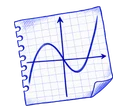 MHF4UAdvanced Functions70% min.
 MCV4UCalculus and Vectors70% min.
 Two approved science or mathematics subjects
Entry terms · September
First-year Science and Business.
Waterloo September 2027 application and document deadlinesBritish Columbia secondary students taking AP courses
Alberta secondary students
International Baccalaureate Diploma applicants
Ontario high-school admission guidance.
Waterloo Ontario high-school prerequisites for Science and BusinessWaterloo Ontario high-school prerequisites for Science and BusinessDirect first-year entry.
BSc (Honours)
Focus your science studies on the chemistry of living systems.
The effective 2026–27 degree calendar and published first-year examples. Confirm the course calendar for your admission year.
Choose two science courses from the first-year options. Take the paired lab where required.
 AFM 112Analytic Methods for Business 10.5 units
Use quantitative tools to analyze business information and solve practical business problems.
Waterloo course calendar · AFM 112 SCBUS 123Workshop 1: Science and Business0.5 units
Work through case problems at the intersection of science and business.
Waterloo course calendar · SCBUS 123Choose COMMST 193 or ENGL 193 and two science courses. Keep a matched science sequence across both terms.
AFM 113Analytic Methods for Business 20.5 unitsExtend quantitative analysis and apply it to business decisions.
Waterloo course calendar · AFM 113AFM 132Introduction to Business Stages0.5 unitsExplore how businesses develop, operate and grow.
Waterloo course calendar · AFM 132COMMST 193Communication in the Sciences0.5 unitsPractise communicating scientific ideas to different audiences.
Waterloo course calendar · COMMST 193ENGL 193Communication in the Sciences0.5 unitsPractise communicating scientific ideas to different audiences.
Waterloo course calendar · ENGL 193Named requirements in the effective 2026–27 calendar.
 CHEM 120General Chemistry 10.5 unitsCHEM 120LGeneral Chemistry Laboratory 10.25 unitsCHEM 123General Chemistry 20.5 unitsCHEM 123LGeneral Chemistry Laboratory 20.25 unitsCS 100Introduction to Computing Through Applications0.5 unitsECON 101Introduction to Microeconomics0.5 unitsECON 102Introduction to Macroeconomics0.5 unitsECON 201Microeconomic Theory for Business and Policy0.5 units
 ECON 221Statistics for Economists0.5 unitsECON 371Business Finance 10.5 unitsMATH 127Calculus 1 for the Sciences0.5 unitsMATH 128Calculus 2 for the Sciences0.5 unitsMGMT 220Entrepreneurship and the Creative Workplace0.5 unitsSCBUS 122Management of Business Organizations0.5 unitsSCBUS 223Workshop 2: Strategies Behind Technological Innovation0.5 units
Investigate how organizations develop and commercialize technological innovations.
Waterloo course calendar · SCBUS 223 SCBUS 225Organizational Behaviour in Scientific and Technical Workplaces0.5 unitsSCBUS 323Workshop 3: Technology Development0.5 units
Apply science and business perspectives to technology development.
Waterloo course calendar · SCBUS 323SCBUS 423Workshop 4: Strategic Management of Science and Business0.5 unitsAnalyze strategic decisions faced by technology and science organizations.
Waterloo course calendar · SCBUS 423Choose science courses according to the matched fall/winter sequence and your intended specialization.
BIOL 110Biodiversity, Biomes, and Evolution0.5 units BIOL 130Introductory Cell Biology0.5 units
Study the structure and function of cells.
Waterloo course calendar · BIOL 130 BIOL 150Organismal and Evolutionary Ecology0.5 unitsBIOL 165Diversity of Life0.5 unitsBIOL 201Human Anatomy0.5 units
Explore the anatomy and function of human organ systems in lectures and labs.
Waterloo course calendar · BIOL201BIOL 211Introductory Vertebrate Zoology0.5 unitsBIOL 220Introduction to Plant Structure and Function0.5 unitsBIOL 239Genetics0.5 unitsUse pedigrees, breeding data and DNA sequences to study inheritance and gene function.
Waterloo course calendar · BIOL239BIOL 240Fundamentals of Microbiology0.5 unitsStudy how bacteria and archaea grow, function, reproduce and are classified.
Waterloo course calendar · BIOL240BIOL 241Introduction to Applied Microbiology0.5 unitsBIOL 251Fundamentals of Ecology0.5 unitsBIOL 266Introduction to Computational Biology0.5 unitsBIOL 273Principles of Human Physiology 10.5 unitsTake the corresponding lab with each lecture. Confirm which courses count toward core versus science units.
CHEM 120General Chemistry 10.5 unitsCHEM 120LGeneral Chemistry Laboratory 10.25 unitsCHEM 123General Chemistry 20.5 unitsCHEM 123LGeneral Chemistry Laboratory 20.25 unitsTake the corresponding lab with each lecture.
EARTH 121Introductory Earth Sciences0.5 unitsEARTH 121LIntroductory Earth Sciences Laboratory0.25 unitsEARTH 122Introductory Environmental Sciences0.5 unitsUse earth science to investigate environmental systems and problems.
Waterloo course calendar · EARTH 122EARTH 122LIntroductory Environmental Sciences Laboratory0.25 unitsChoose one lecture and lab series. Confirm course prerequisites and use the same science subject across terms.
 PHYS 111Physics 10.5 units
Apply introductory physics to motion, forces and energy.
Waterloo course calendar · PHYS 111PHYS 111LPhysics 1 Laboratory0.25 unitsPHYS 112Physics 20.5 unitsPHYS 112LPhysics 2 Laboratory0.25 unitsPHYS 121Mechanics0.5 unitsPHYS 121LMechanics Laboratory0.25 units PHYS 122Electricity and Magnetism0.5 unitsPHYS 122LWaves, Electricity and Magnetism Laboratory0.25 units
Choose courses from the categories and quantities listed in the academic calendar.
AFM 123Accounting Information for Managers0.5 unitsARBUS 102Accounting Information for Managers0.5 unitsAFM 131Introduction to Business in North America0.5 unitsARBUS 101Introduction to Business in North America0.5 unitsAFM 231Business Law0.5 unitsLS 283Business Law0.5 unitsACTSC 231Introductory Financial Mathematics0.5 unitsAFM 333International Business0.5 unitsARBUS 301International Business0.5 unitsBET 300Foundations of Venture Creation0.5 unitsECON 211Introduction to Mathematical Economics0.5 unitsECON 311Mathematical Economics0.5 unitsECON 361Cost-Benefit Analysis and Project Evaluation0.5 unitsECON 372Business Finance 20.5 unitsHRM 200Basic Human Resources Management0.5 unitsHRM 301Strategic Human Resources Management0.5 unitsINDEV 100Introduction to International Development0.5 units MSE 311Organizational Design and Technology0.5 unitsMSE 432Production and Service Operations Management0.5 unitsSTAT 231Statistics0.5 units
Evaluate how data were collected and what conclusions a statistical study can support.
Waterloo 2026–27 course calendar, STAT 231STAT 333Stochastic Processes 10.5 unitsUse this separate plan for Biology specialization requirements.
CHEM 120General Chemistry 10.5 unitsCHEM 120LGeneral Chemistry Laboratory 10.25 unitsCHEM 123General Chemistry 20.5 unitsCHEM 123LGeneral Chemistry Laboratory 20.25 unitsCHEM 237Introductory Biochemistry0.5 unitsExplore the chemistry of biological molecules, proteins and enzymes.
Waterloo course calendar · CHEM237CHEM 237LIntroductory Biochemistry Laboratory0.25 unitsCHEM 266Basic Organic Chemistry 10.5 unitsStudy the structure, reactions and stereochemistry of organic compounds.
Waterloo course calendar · CHEM266CHEM 266LOrganic Chemistry Laboratory0.25 unitsApply topics from CHEM 266 in laboratory experiments.
Waterloo course calendar · CHEM266LCS 100Introduction to Computing Through Applications0.5 unitsECON 101Introduction to Microeconomics0.5 unitsECON 102Introduction to Macroeconomics0.5 unitsECON 221Statistics for Economists0.5 unitsECON 371Business Finance 10.5 unitsMATH 127Calculus 1 for the Sciences0.5 unitsMGMT 220Entrepreneurship and the Creative Workplace0.5 unitsSCBUS 122Management of Business Organizations0.5 unitsSCBUS 123Workshop 1: Science and Business0.5 unitsWork through case problems at the intersection of science and business.
Waterloo course calendar · SCBUS 123SCBUS 223Workshop 2: Strategies Behind Technological Innovation0.5 unitsInvestigate how organizations develop and commercialize technological innovations.
Waterloo course calendar · SCBUS 223SCBUS 225Organizational Behaviour in Scientific and Technical Workplaces0.5 unitsSCBUS 323Workshop 3: Technology Development0.5 unitsApply science and business perspectives to technology development.
Waterloo course calendar · SCBUS 323SCBUS 423Workshop 4: Strategic Management of Science and Business0.5 unitsAnalyze strategic decisions faced by technology and science organizations.
Waterloo course calendar · SCBUS 423AFM 123Accounting Information for Managers0.5 unitsARBUS 102Accounting Information for Managers0.5 unitsAFM 131Introduction to Business in North America0.5 unitsARBUS 101Introduction to Business in North America0.5 unitsAFM 231Business Law0.5 unitsLS 283Business Law0.5 unitsCOMMST 193Communication in the Sciences0.5 unitsPractise communicating scientific ideas to different audiences.
Waterloo course calendar · COMMST 193ENGL 193Communication in the Sciences0.5 unitsPractise communicating scientific ideas to different audiences.
Waterloo course calendar · ENGL 193ACTSC 231Introductory Financial Mathematics0.5 unitsAFM 333International Business0.5 unitsARBUS 301International Business0.5 unitsBET 300Foundations of Venture Creation0.5 unitsECON 211Introduction to Mathematical Economics0.5 unitsECON 311Mathematical Economics0.5 unitsECON 361Cost-Benefit Analysis and Project Evaluation0.5 unitsECON 372Business Finance 20.5 unitsHRM 200Basic Human Resources Management0.5 unitsHRM 301Strategic Human Resources Management0.5 unitsINDEV 100Introduction to International Development0.5 unitsMSE 311Organizational Design and Technology0.5 unitsMSE 432Production and Service Operations Management0.5 unitsSTAT 231Statistics0.5 unitsEvaluate how data were collected and what conclusions a statistical study can support.
Waterloo 2026–27 course calendar, STAT 231STAT 333Stochastic Processes 10.5 unitsUse this separate plan for Biotechnology specialization requirements.
BIOL 130Introductory Cell Biology0.5 unitsStudy the structure and function of cells.
Waterloo course calendar · BIOL 130BIOL 235Foundations of Molecular Biology0.5 unitsBIOL 239Genetics0.5 unitsUse pedigrees, breeding data and DNA sequences to study inheritance and gene function.
Waterloo course calendar · BIOL239BIOL 240Fundamentals of Microbiology0.5 unitsStudy how bacteria and archaea grow, function, reproduce and are classified.
Waterloo course calendar · BIOL240BIOL 240LMicrobiology Laboratory0.25 unitsInvestigate microbiology concepts through experiments linked to BIOL 240.
Waterloo course calendar · BIOL240LBIOL 241Introduction to Applied Microbiology0.5 unitsBIOL 308Principles of Molecular Biology0.5 unitsBIOL 331Advanced Cell Biology0.5 unitsBIOL 342Molecular Biotechnology 10.5 unitsBIOL 432Molecular Biotechnology 20.5 unitsBIOL 443Fermentation Biotechnology0.5 unitsCHEM 120General Chemistry 10.5 unitsCHEM 120LGeneral Chemistry Laboratory 10.25 unitsCHEM 123General Chemistry 20.5 unitsCHEM 123LGeneral Chemistry Laboratory 20.25 unitsCHEM 237Introductory Biochemistry0.5 unitsExplore the chemistry of biological molecules, proteins and enzymes.
Waterloo course calendar · CHEM237CHEM 266Basic Organic Chemistry 10.5 unitsStudy the structure, reactions and stereochemistry of organic compounds.
Waterloo course calendar · CHEM266CHEM 266LOrganic Chemistry Laboratory0.25 unitsApply topics from CHEM 266 in laboratory experiments.
Waterloo course calendar · CHEM266LCS 100Introduction to Computing Through Applications0.5 unitsECON 101Introduction to Microeconomics0.5 unitsECON 102Introduction to Macroeconomics0.5 unitsECON 221Statistics for Economists0.5 unitsECON 371Business Finance 10.5 unitsMATH 127Calculus 1 for the Sciences0.5 unitsMGMT 220Entrepreneurship and the Creative Workplace0.5 unitsSCBUS 122Management of Business Organizations0.5 unitsSCBUS 123Workshop 1: Science and Business0.5 unitsWork through case problems at the intersection of science and business.
Waterloo course calendar · SCBUS 123SCBUS 223Workshop 2: Strategies Behind Technological Innovation0.5 unitsInvestigate how organizations develop and commercialize technological innovations.
Waterloo course calendar · SCBUS 223SCBUS 225Organizational Behaviour in Scientific and Technical Workplaces0.5 unitsSCBUS 323Workshop 3: Technology Development0.5 unitsApply science and business perspectives to technology development.
Waterloo course calendar · SCBUS 323SCBUS 423Workshop 4: Strategic Management of Science and Business0.5 unitsAnalyze strategic decisions faced by technology and science organizations.
Waterloo course calendar · SCBUS 423AFM 123Accounting Information for Managers0.5 unitsARBUS 102Accounting Information for Managers0.5 unitsAFM 131Introduction to Business in North America0.5 unitsARBUS 101Introduction to Business in North America0.5 unitsAFM 231Business Law0.5 unitsLS 283Business Law0.5 unitsBIOL 341Fundamentals of Immunology0.5 unitsBIOL 345Microorganisms in Foods0.5 unitsBIOL 431Bacterial Molecular Genetics0.5 unitsBIOL 433Plant Biotechnology0.5 unitsBIOL 441Advances in Immunology0.5 unitsBIOL 442Virology0.5 unitsBIOL 444Bacterial Pathogenesis0.5 unitsBIOL 483Animal Cell Biotechnology0.5 unitsCOMMST 193Communication in the Sciences0.5 unitsPractise communicating scientific ideas to different audiences.
Waterloo course calendar · COMMST 193ENGL 193Communication in the Sciences0.5 unitsPractise communicating scientific ideas to different audiences.
Waterloo course calendar · ENGL 193ACTSC 231Introductory Financial Mathematics0.5 unitsAFM 333International Business0.5 unitsARBUS 301International Business0.5 unitsBET 300Foundations of Venture Creation0.5 unitsECON 211Introduction to Mathematical Economics0.5 unitsECON 311Mathematical Economics0.5 unitsECON 361Cost-Benefit Analysis and Project Evaluation0.5 unitsECON 372Business Finance 20.5 unitsHRM 200Basic Human Resources Management0.5 unitsHRM 301Strategic Human Resources Management0.5 unitsINDEV 100Introduction to International Development0.5 unitsMSE 311Organizational Design and Technology0.5 unitsMSE 432Production and Service Operations Management0.5 unitsSTAT 231Statistics0.5 unitsEvaluate how data were collected and what conclusions a statistical study can support.
Waterloo 2026–27 course calendar, STAT 231STAT 333Stochastic Processes 10.5 unitsUse this separate plan for Biochemistry specialization requirements.
BIOL 130Introductory Cell Biology0.5 unitsStudy the structure and function of cells.
Waterloo course calendar · BIOL 130BIOL 235Foundations of Molecular Biology0.5 unitsBIOL 239Genetics0.5 unitsUse pedigrees, breeding data and DNA sequences to study inheritance and gene function.
Waterloo course calendar · BIOL239BIOL 331Advanced Cell Biology0.5 unitsCHEM 120General Chemistry 10.5 unitsCHEM 120LGeneral Chemistry Laboratory 10.25 unitsCHEM 123General Chemistry 20.5 unitsCHEM 123LGeneral Chemistry Laboratory 20.25 unitsCHEM 237Introductory Biochemistry0.5 unitsExplore the chemistry of biological molecules, proteins and enzymes.
Waterloo course calendar · CHEM237CHEM 237LIntroductory Biochemistry Laboratory0.25 unitsCHEM 333Metabolism 10.5 unitsCS 100Introduction to Computing Through Applications0.5 unitsECON 101Introduction to Microeconomics0.5 unitsECON 102Introduction to Macroeconomics0.5 unitsECON 221Statistics for Economists0.5 unitsECON 371Business Finance 10.5 unitsMATH 127Calculus 1 for the Sciences0.5 unitsMGMT 220Entrepreneurship and the Creative Workplace0.5 unitsSCBUS 122Management of Business Organizations0.5 unitsSCBUS 123Workshop 1: Science and Business0.5 unitsWork through case problems at the intersection of science and business.
Waterloo course calendar · SCBUS 123SCBUS 223Workshop 2: Strategies Behind Technological Innovation0.5 unitsInvestigate how organizations develop and commercialize technological innovations.
Waterloo course calendar · SCBUS 223SCBUS 225Organizational Behaviour in Scientific and Technical Workplaces0.5 unitsSCBUS 323Workshop 3: Technology Development0.5 unitsApply science and business perspectives to technology development.
Waterloo course calendar · SCBUS 323SCBUS 423Workshop 4: Strategic Management of Science and Business0.5 unitsAnalyze strategic decisions faced by technology and science organizations.
Waterloo course calendar · SCBUS 423AFM 123Accounting Information for Managers0.5 unitsARBUS 102Accounting Information for Managers0.5 unitsAFM 131Introduction to Business in North America0.5 unitsARBUS 101Introduction to Business in North America0.5 unitsAFM 231Business Law0.5 unitsLS 283Business Law0.5 unitsBIOL 308Principles of Molecular Biology0.5 unitsBIOL 341Fundamentals of Immunology0.5 unitsBIOL 342Molecular Biotechnology 10.5 unitsBIOL 345Microorganisms in Foods0.5 unitsBIOL 365Methods in Bioinformatics0.5 unitsBIOL 370Comparative Animal Physiology: Environmental Aspects0.5 unitsBIOL 371Comparative Animal Physiology: Evolutionary Themes0.5 unitsBIOL 403Developmental Biology and Embryology0.5 unitsBIOL 431Bacterial Molecular Genetics0.5 unitsBIOL 432Molecular Biotechnology 20.5 unitsBIOL 434Human Molecular Genetics0.5 unitsBIOL 439Environmental and Natural Products Biochemistry0.5 unitsBIOL 441Advances in Immunology0.5 unitsBIOL 442Virology0.5 unitsBIOL 447Environmental Microbiology0.5 unitsCHEM 430Special Topics in Biochemistry0.5 unitsCHEM 432Metabolism 20.5 unitsCHEM 433Advanced Biochemistry0.5 unitsCHEM 464Spectroscopy in Organic Chemistry0.5 unitsCHEM 264Organic Chemistry 10.5 unitsCHEM 265Organic Chemistry 20.5 unitsCHEM 265LOrganic Chemistry Laboratory 10.25 unitsCHEM 266Basic Organic Chemistry 10.5 unitsStudy the structure, reactions and stereochemistry of organic compounds.
Waterloo course calendar · CHEM266CHEM 266LOrganic Chemistry Laboratory0.25 unitsApply topics from CHEM 266 in laboratory experiments.
Waterloo course calendar · CHEM266LCHEM 267Basic Organic Chemistry 20.5 unitsCOMMST 193Communication in the Sciences0.5 unitsPractise communicating scientific ideas to different audiences.
Waterloo course calendar · COMMST 193ENGL 193Communication in the Sciences0.5 unitsPractise communicating scientific ideas to different audiences.
Waterloo course calendar · ENGL 193ACTSC 231Introductory Financial Mathematics0.5 unitsAFM 333International Business0.5 unitsARBUS 301International Business0.5 unitsBET 300Foundations of Venture Creation0.5 unitsECON 211Introduction to Mathematical Economics0.5 unitsECON 311Mathematical Economics0.5 unitsECON 361Cost-Benefit Analysis and Project Evaluation0.5 unitsECON 372Business Finance 20.5 unitsHRM 200Basic Human Resources Management0.5 unitsHRM 301Strategic Human Resources Management0.5 unitsINDEV 100Introduction to International Development0.5 unitsMSE 311Organizational Design and Technology0.5 unitsMSE 432Production and Service Operations Management0.5 unitsSTAT 231Statistics0.5 unitsEvaluate how data were collected and what conclusions a statistical study can support.
Waterloo 2026–27 course calendar, STAT 231STAT 333Stochastic Processes 10.5 unitsDirect first-year entry.
Business analystProduct manager Financial analystScience communications specialistData analyst
 Healthcare consultant
 Marketing specialistSupply chain coordinatorPharmaceutical sales representativeSustainability consultantTechnology consultant
 Clinical research coordinatorStartup founderMarketing research analystMarketing and operation coordinator
 Validation quality assurance analystLaboratory technicianUndergraduate research assistantScience peer tutorSustainability project analyst
Waterloo’s published Science and Business career examples.
| Program or faculty | Ontario | Other Canadian | International | Books and supplies |
|---|---|---|---|---|
| Accounting and Financial Management, Sustainability and Financial Management | $9,000 | $10,000 | $58,000 | $1,500 |
| Architecture | $14,000 | $15,000 | $75,000 | $8,100 |
| Business Administration (Laurier) and Computer Science (Waterloo) Double Degree | $17,000 | $20,000 | $75,000 | $1,500 |
| Business Administration (Laurier) and Mathematics (Waterloo) Double Degree | $15,000 | $15,000 | $64,000 | $1,500 |
| Computer Science | $16,000 | $18,000 | $73,000 | $1,500 |
| Computing and Financial Management | $11,000 | $12,000 | $64,000 | $1,500 |
| Faculty of Arts | $9,000 | $10,000 | $58,000 | $1,500 |
| Faculty of Engineering, Software Engineering | $19,000 | $21,000 | $75,000 | $1,500 |
| Faculty of Environment | $9,000 | $10,000 | $51,000 | $1,500 |
| Faculty of Health | $9,000 | $10,000 | $54,000 | $1,500 |
| Faculty of Science | $9,000 | $10,000 | $54,000 | $1,500 |
| Geography and Aviation | $9,000 | $10,000 | $51,000 | $1,500 |
| Science and Aviation | $9,000 | $10,000 | $54,000 | $1,500 |
| Global Business and Digital Arts | $14,000 | $16,000 | $56,000 | $1,500 |
| Mathematics (includes 16 majors), Mathematics/ Business Administration, Mathematics/Chartered Professional Accountancy | $9,000 | $10,000 | $62,000 | $1,500 |
| Mathematics/Financial Analysis and Risk Management | $12,000 | $14,000 | $63,000 | $1,500 |
2026–27 · Two terms · CAD
Ontario example · Choose your fee category
Last updated
























































