



- HBA · 4 years
- Work experience details
- ~High 80s to low 90s



AI-generated ink illustration
Conceptual study artwork, not a photograph of teaching facilities.
Unidex · generated with ImageGen
Checked 2026-11-05
Symbolic subject artwork; no university facility depicted
Duration (years)
4 years regular or about 5 years co-op
Waterloo Computer Science regular and co-op schedulesWork experience
Four entry sequences usually schedule six four-month work terms, or up to 24 months. Computer Science requires five credited work terms and five professional development courses for the co-op designation.
Waterloo 2026–27 calendar, Bachelor of Computer Science degree requirementsEntering average
Published approximate guidance: Low to mid-90s. Guidance checked November 2026. Individual selection for Ontario high-school applicants.
Waterloo Computer Science: admission requirements and study options November 2026
| Mon | Tue | Wed | Thu | Fri | Sat | Sun |
|---|---|---|---|---|---|---|
| 1 | ||||||
| 2 | 3 | 4 | 5 | 6 | 7 | 8 |
| 9 | 10 | 11 | 12 | 13 | 14 | 15 |
| 16 | 17 | 18 | 20 | 21 | 22 | |
| 23 | 24 | 25 | 26 | 27 | 28 | 29 |
| 30 |

2027 entry
School deadline, not a student task. Universities receive these grades by November 26. Verbatim: "Deadline for the OUAC to receive all midterm or final grades available for 4U/M courses from Ontario high schools. Schools may report in-progress grades for full-year courses as soon as they are available." Universities receive these by the target date of November 26, 2026. This is a deadline on the high school, not on the student, but it governs which grades a university sees in the first round.
 Other deadline details
Verbatim: "There is no specific Undergraduate application deadline if you are a Group B applicant. Deadlines vary at each university and sometimes depend on the program. Visit the university websites or contact the universities directly for their deadlines. If you are interested in a program but the deadline has passed, you may contact the university's admission office for help. Be aware of university-specific deadlines for submitting transcripts and portfolios, if required, and for arranging interviews and auditions. You must ensure the OUAC has enough time to process your choices before the universities' program deadlines." OUAC defines Group B as anyone who does not meet the Group A criteria, e.g. not currently taking an Ontario high school course, a Canadian outside Ontario, an international applicant, a postsecondary transfer student, or a mature applicant.
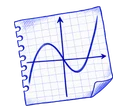 MHF4UAdvanced Functions
 MCV4UCalculus and Vectors
 ENG4U / EAE4U / EWC4U / ETS4UAny Grade 12 U English
 One other Grade 12 U course
Entry terms · Fall
September 2027 first-year undergraduate entry.
Waterloo September 2027 application and document deadlinesWaterloo requires the Admission Information Form for all applicants.
Waterloo Computer Science: admission requirements and study optionsOntario high-school applicants; average text uses the university's own published guideline
All applicants to this programme
Applicants to this programme; September 2027 entry
Applicants to this Faculty of Mathematics programme
Ontario high-school students taking IB courses, including students completing an OSSD
British Columbia high school
Alberta high school
Quebec Grade 12
U.S. curriculum
Full International Baccalaureate
British A Levels
Indian Standard XII
BCS
BMath
Individual selection for Ontario high-school applicants.
Waterloo Computer Science: admission requirements and study optionsWaterloo Computer Science: admission requirements and study optionsFour entry sequences usually schedule six four-month work terms, or up to 24 months. Computer Science requires five credited work terms and five professional development courses for the co-op designation.
Waterloo 2026–27 calendar, Bachelor of Computer Science degree requirementsComputer Science offers the BCS and BMath honours degrees. Both are offered in regular and co-op formats.
BCS
Explore machine learning, pattern recognition and data analysis.
The first two study terms are Waterloo’s published examples. Course times depend on course selection and assigned sections. Upper-year requirements differ for the BCS and BMath routes.
Published sample term; course availability may change.
 CS 135Designing Functional Programs0.5 credits
Build functional programs using recursive data, lists, trees and abstraction.
Published first-year sample term
Waterloo 2026–27 course calendar, CS 135 MATH 135Algebra for Honours Mathematics0.5 credits
Develop proof techniques through integers, number systems and polynomials.
Published first-year sample term
Waterloo 2026–27 course calendar, MATH 135MATH 137Calculus 1 for Honours Mathematics0.5 creditsStudy limits, continuity, derivatives and approximation with error bounds.
Published first-year sample term
Waterloo 2026–27 course calendar, MATH 137Published sample term; course availability may change.
CS 136Elementary Algorithm Design and Data Abstraction0.5 creditsStudy algorithms, data structures, memory management and program efficiency.
Published first-year sample term
Waterloo 2026–27 course calendar, CS 136CS 136LTools and Techniques for Software Development0.25 creditsUse command-line tools, version control, scripts, testing and debugging.
Published first-year sample term
Waterloo 2026–27 course calendar, CS 136LMATH 136Linear Algebra 1 for Honours Mathematics0.5 creditsStudy linear systems, matrices, vector spaces, transformations and eigenvalues.
Published first-year sample term
Waterloo 2026–27 course calendar, MATH 136MATH 138Calculus 2 for Honours Mathematics0.5 creditsStudy integration, differential equations, series and Taylor approximations.
Published first-year sample term
Waterloo 2026–27 course calendar, MATH 138Examples from the programme page; not a complete required-course list.
CS 341Algorithms0.5 creditsDesign efficient algorithms using graph search, greedy methods and dynamic programming.
Waterloo 2026–27 course calendar, CS 341CS 449Human-Computer Interaction0.5 creditsDesign and evaluate computing technologies around human needs.
Waterloo 2026–27 course calendar, CS 449 CS 459Privacy, Cryptography, Network and Data Security0.5 credits
Protect data using cryptography, network security and privacy-preserving computation.
Waterloo 2026–27 course calendar, CS 459CS 486Introduction to Artificial Intelligence0.5 creditsExplore AI problem-solving, reasoning, planning, machine learning and language processing.
Waterloo 2026–27 course calendar, CS 486CS 492The Social Implications of Computing0.5 creditsExamine the effects of computing on individuals, organizations and society.
Waterloo 2026–27 course calendar, CS 492Choose the regular or enriched version within each paired course. CS 341 and CS 350 are required in both routes.
CS 240Data Structures and Data Management0.5 unitsCompare data structures and their performance in sorting, priority queues, dictionaries and text processing.
Waterloo 2026–27 course calendar, CS 240CS 240EData Structures and Data Management (Enriched)0.5 unitsStudy data organization and algorithm performance in the enriched version of CS 240.
Waterloo 2026–27 course calendar, CS 240ECS 241Foundations of Sequential Programs0.5 unitsSee how programs become executable through machine architecture, assembly, translation and linking.
Waterloo 2026–27 course calendar, CS 241CS 241EFoundations of Sequential Programs (Enriched)0.5 unitsStudy the link between high-level programs and machine execution in the enriched version of CS 241.
Waterloo 2026–27 course calendar, CS 241ECS 245Logic and Computation0.5 unitsUse formal logic to analyse reasoning and investigate what computers can calculate.
Waterloo 2026–27 course calendar, CS 245CS 245ELogic and Computation (Enriched)0.5 unitsStudy formal reasoning and the limits of computation in the enriched version of CS 245.
Waterloo 2026–27 course calendar, CS 245ECS 246Object-Oriented Software Development0.5 unitsDesign, test and document medium-sized software using object-oriented techniques.
Waterloo 2026–27 course calendar, CS 246CS 246EObject-Oriented Software Development (Enriched)0.5 unitsDevelop and test object-oriented software in the enriched version of CS 246.
Waterloo 2026–27 course calendar, CS 246E CS 251Computer Organization and Design0.5 units
Study digital logic, processor design, pipelining, memory and multiprocessor systems.
Waterloo 2026–27 course calendar, CS 251CS 251EComputer Organization and Design (Enriched)0.5 unitsStudy processor and memory organization in the enriched version of CS 251.
Waterloo 2026–27 course calendar, CS 251ECS 341Algorithms0.5 unitsDesign and analyse algorithms using divide and conquer, greedy choices, dynamic programming and graph search.
Waterloo 2026–27 course calendar, CS 341CS 350Operating Systems0.5 unitsStudy how operating systems handle processes, threads, memory, storage, devices and security.
Waterloo 2026–27 course calendar, CS 350The first communication course normally comes from List 1. Both lists use half-unit courses.
COMMST 100Interpersonal Communication0.5 unitsPractise one-to-one communication through listening, verbal expression and nonverbal cues in personal and professional settings.
Waterloo 2026–27 course calendar, COMMST 100COMMST 223Public Speaking0.5 unitsPlan and deliver speeches while developing voice, organization, listening and feedback skills.
Waterloo 2026–27 course calendar, COMMST 223EMLS 101Oral Communications for Academic Purposes0.5 unitsPractise presentations, group discussion and English pronunciation for academic and professional settings.
Waterloo 2026–27 course calendar, EMLS 101EMLS 102Clear Communication in English Writing0.5 unitsDevelop clearer English writing through grammar, editing and timed writing exercises.
Waterloo 2026–27 course calendar, EMLS 102EMLS 129Written Academic English0.5 unitsPractise English academic essay writing, grammar and paragraph structure.
Waterloo 2026–27 course calendar, EMLS 129ENGL 109Introduction to Academic Writing0.5 unitsPractise academic argument, style and clear presentation through frequent writing exercises.
Waterloo 2026–27 course calendar, ENGL 109ENGL 129Written Academic English0.5 unitsPractise English academic essays with attention to grammar, organization and development of ideas.
Waterloo 2026–27 course calendar, ENGL 129Where a second communication course can be chosen, List 2 includes the courses below or another List 1 course. Check the degree rules for plan-specific exceptions.
COMMST 225Interviewing0.5 unitsDesign and conduct interviews, then use recorded practice to improve delivery and listening.
Waterloo 2026–27 course calendar, COMMST 225COMMST 227Leadership0.5 unitsApply leadership theory in workshops and practise communicating as a leader.
Waterloo 2026–27 course calendar, COMMST 227COMMST 228Public Communication0.5 unitsExamine how political and commercial communicators shape public messages.
Waterloo 2026–27 course calendar, COMMST 228EMLS 103Effective English Pronunciation0.5 unitsPractise English speech sounds and pronunciation patterns.
Waterloo 2026–27 course calendar, EMLS 103EMLS 104Reading and Listening for Academic Purposes0.5 unitsDevelop English academic reading, listening and note-taking strategies.
Waterloo 2026–27 course calendar, EMLS 104EMLS 110Communicating in Canadian Academic Contexts0.5 unitsStudy North American academic conventions for interpreting, organizing and acknowledging information.
Waterloo 2026–27 course calendar, EMLS 110ENGL 101BIntroduction to Rhetorical Studies0.5 unitsAnalyse and create persuasive messages, from advertisements to political or scientific communication.
Waterloo 2026–27 course calendar, ENGL 101BENGL 108BGlobal English Literatures0.5 unitsRead and discuss English-language literature from several regions, including South Asia, the Caribbean and southern Africa.
Waterloo 2026–27 course calendar, ENGL 108BENGL 108DDigital Lives0.5 unitsExamine how digital communication shapes identities, relationships and communities online.
Waterloo 2026–27 course calendar, ENGL 108DENGL 119Communications in Mathematics and Computer Science0.5 unitsDevelop written and spoken communication for academic and workplace tasks in mathematics and computing.
Waterloo 2026–27 course calendar, ENGL 119ENGL 208BScience Fiction0.5 unitsRead science fiction across subgenres and trace how the genre has developed.
Waterloo 2026–27 course calendar, ENGL 208BENGL 209Advanced Academic Writing0.5 unitsAdapt academic research and argument to different disciplines, audiences and purposes.
Waterloo 2026–27 course calendar, ENGL 209ENGL 210EGenres of Technical Communication0.5 unitsWrite and design technical communication such as documentation, specifications or white papers.
Waterloo 2026–27 course calendar, ENGL 210E ENGL 210FGenres of Business Communication0.5 units
Practise workplace writing through reports, correspondence and other organizational communication.
Waterloo 2026–27 course calendar, ENGL 210F ENGL 378Professional Communications in Statistics and Actuarial Science0.5 units
Explain statistics and actuarial science to an audience, and practise giving and using feedback.
Waterloo 2026–27 course calendar, ENGL 378BCS
Choose one course in each of the combinatorics, probability and statistics pairs. Applied Cryptography, Honours Thesis and Computational Inference are three options for the final upper-level requirement.
MATH 239Introduction to Combinatorics0.5 unitsStudy graph colourings, matchings and planarity alongside generating series and recurrences.
Waterloo 2026–27 course calendar, MATH 239MATH 249Introduction to Combinatorics (Advanced Level)0.5 unitsStudy graph theory and combinatorial analysis in the advanced version of MATH 239.
Waterloo 2026–27 course calendar, MATH 249STAT 230Probability0.5 unitsModel random events with conditional probability, Bayes’ theorem and common probability distributions.
Waterloo 2026–27 course calendar, STAT 230STAT 240Probability (Advanced Level)0.5 unitsStudy probability models and distributions in the enriched version of STAT 230.
Waterloo 2026–27 course calendar, STAT 240STAT 231Statistics0.5 unitsEvaluate how data were collected and what conclusions a statistical study can support.
Waterloo 2026–27 course calendar, STAT 231STAT 241Statistics (Advanced Level)0.5 unitsStudy the design and interpretation of empirical investigations in the enriched version of STAT 231.
Waterloo 2026–27 course calendar, STAT 241CO 487Applied Cryptography0.5 unitsLearn how encryption, authentication, signatures and key exchange secure messaging and internet applications.
Waterloo 2026–27 course calendar, CO 487CS 499THonours Thesis0.5 unitsInvestigate a focused topic through original analysis or experimentation and present the results in a thesis.
Waterloo 2026–27 course calendar, CS 499TSTAT 440Computational Inference0.5 unitsUse simulation and optimization for statistical inference, including bootstrap and Monte Carlo methods.
Waterloo 2026–27 course calendar, STAT 440BMath
Choose one option per subject group. BMath additionally follows the shared BMath List A and Mathematics course requirements.
AMATH 242Introduction to Computational Mathematics0.5 unitsApproximate continuous models with discrete methods. Topics include interpolation, numerical integration, Fourier transforms and linear systems.
Waterloo 2026–27 course calendar, AMATH 242CS 370Numerical Computation0.5 unitsUse numerical methods to approximate equations and differential models, and assess computational error and stability.
Waterloo 2026–27 course calendar, CS 370CS 371Introduction to Computational Mathematics0.5 unitsStudy how numerical methods solve continuous problems through interpolation, integration, Fourier transforms and linear systems.
Waterloo 2026–27 course calendar, CS 371CS 360Introduction to the Theory of Computing0.5 unitsUse automata, formal languages and Turing machines to study what computers can and cannot solve.
Waterloo 2026–27 course calendar, CS 360CS 365Models of Computation0.5 unitsStudy automata and computability at an accelerated pace, with additional work on time and space complexity.
Waterloo 2026–27 course calendar, CS 365MATH 237Calculus 3 for Honours Mathematics0.5 unitsExtend calculus to several variables, including derivatives, optimization and multiple integrals.
Waterloo 2026–27 course calendar, MATH 237MATH 247Calculus 3 (Advanced Level)0.5 unitsDevelop multivariable calculus from the topology of real spaces, including differentiation and integration.
Waterloo 2026–27 course calendar, MATH 247MATH 239Introduction to Combinatorics0.5 unitsStudy graph colourings, matchings and planarity alongside generating series and recurrences.
Waterloo 2026–27 course calendar, MATH 239MATH 249Introduction to Combinatorics (Advanced Level)0.5 unitsStudy graph theory and combinatorial analysis in the advanced version of MATH 239.
Waterloo 2026–27 course calendar, MATH 249BCS
BMath
Computer Science offers the BCS and BMath honours degrees. Both are offered in regular and co-op formats.
Software developerMobile app developer Data scientistCybersecurity analyst
 Artificial intelligence engineerGame developerSystems analystFull stack developerGame programmerDevOps engineerTechnical systems analystResearch assistantSoftware developerAppleGoogleShopify
Waterloo publishes these as Computer Science career or co-op examples. Co-op roles represent past or sample jobs. Job availability depends on the employer and term.
| Program or faculty | Ontario | Other Canadian | International | Books and supplies |
|---|---|---|---|---|
| Accounting and Financial Management, Sustainability and Financial Management | $9,000 | $10,000 | $58,000 | $1,500 |
| Architecture | $14,000 | $15,000 | $75,000 | $8,100 |
| Business Administration (Laurier) and Computer Science (Waterloo) Double Degree | $17,000 | $20,000 | $75,000 | $1,500 |
| Business Administration (Laurier) and Mathematics (Waterloo) Double Degree | $15,000 | $15,000 | $64,000 | $1,500 |
| Computer Science | $16,000 | $18,000 | $73,000 | $1,500 |
| Computing and Financial Management | $11,000 | $12,000 | $64,000 | $1,500 |
| Faculty of Arts | $9,000 | $10,000 | $58,000 | $1,500 |
| Faculty of Engineering, Software Engineering | $19,000 | $21,000 | $75,000 | $1,500 |
| Faculty of Environment | $9,000 | $10,000 | $51,000 | $1,500 |
| Faculty of Health | $9,000 | $10,000 | $54,000 | $1,500 |
| Faculty of Science | $9,000 | $10,000 | $54,000 | $1,500 |
| Geography and Aviation | $9,000 | $10,000 | $51,000 | $1,500 |
| Science and Aviation | $9,000 | $10,000 | $54,000 | $1,500 |
| Global Business and Digital Arts | $14,000 | $16,000 | $56,000 | $1,500 |
| Mathematics (includes 16 majors), Mathematics/ Business Administration, Mathematics/Chartered Professional Accountancy | $9,000 | $10,000 | $62,000 | $1,500 |
| Mathematics/Financial Analysis and Risk Management | $12,000 | $14,000 | $63,000 | $1,500 |
2026–27 · Two terms · CAD
Ontario example · Choose your fee category
For the co-op stream, add $1,672 for two first-year study terms.
Last updated

























































