



- HBA · 4 years
- Work experience details
- ~High 80s to low 90s


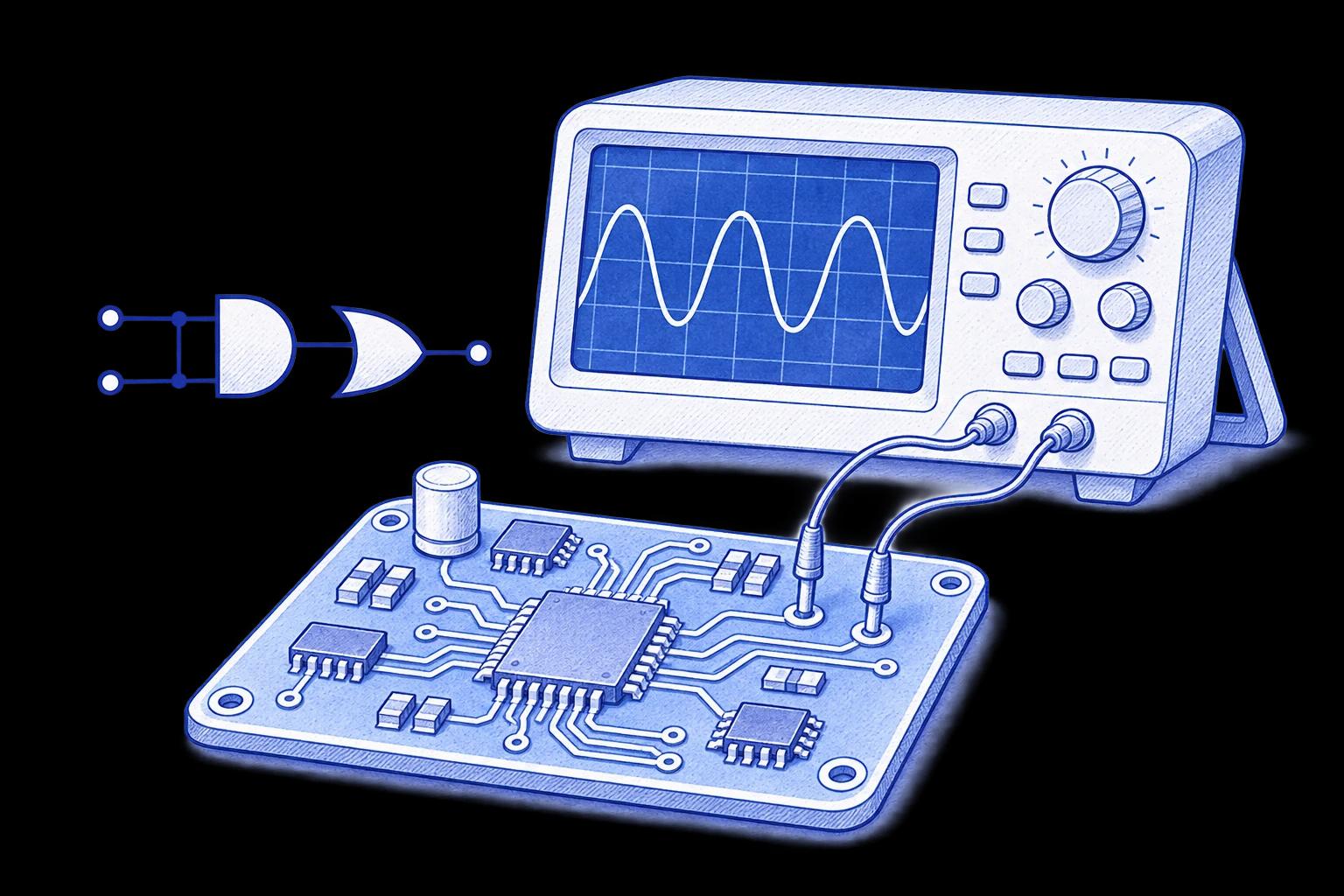
AI-generated ink illustration
Conceptual study artwork, not a photograph of teaching facilities.
Unidex · generated with ImageGen
Checked 2026-11-05
Symbolic subject artwork; no university facility depicted
Duration (years)
5 years including two mandatory work terms
TRU September 2026 edition of the 2026/27 official academic calendarWork experience
Two co-op work terms are mandatory within the published five-year Engineering degree. Work experience and the academic course plan have separate credits; a placement is not a promise of professional registration.
TRU September 2026 official calendar, printed page 158Academic minimum
The university publishes a 73% academic minimum, not an entering-average range.
TRU undergraduate admission requirements May 2027
| Mon | Tue | Wed | Thu | Fri | Sat | Sun |
|---|---|---|---|---|---|---|
| 2 | ||||||
| 3 | 4 | 5 | 6 | 7 | 8 | 9 |
| 10 | 11 | 12 | 13 | 14 | 15 | 16 |
| 17 | 18 | 19 | 20 | 21 | 22 | 23 |
| 24 | 25 | 26 | 27 | 28 | 29 | 30 |
| 31 |

2027 entry
Some programs continue accepting applications after this date if space remains.
 Other deadline details
Verbatim: "Each institution sets their own application open and close dates. These dates also may vary based on the program you are applying to. You can use the search database to explore programs you are interested in applying to or visit the institution's website directly. Please refer to the institution's website or contact the Admissions/Registrar's Office directly for application deadlines and details." EducationPlannerBC is the single application service for B.C.'s 25 public post-secondary institutions but publishes no deadline dates of its own.
 English Studies 12 or English First Peoples 12, or the source's explicitly accepted ESAL/ENGL upgrading equivalents73% min.
 Pre-calculus 1267% min.
 Chemistry 1167% min.
 Physics 11; Physics 12 is preferred, not mandatory67% min.
BC high-school or explicitly named alternate/advanced-entry route; recommendations are optional
On-campus undergraduate applicants; flexible entry applies only to the source's explicitly listed degrees
On-campus undergraduate applicants; flexible entry applies only to the source's explicitly listed degrees
Two co-op work terms are mandatory within the published five-year Engineering degree. Work experience and the academic course plan have separate credits; a placement is not a promise of professional registration.
TRU September 2026 official calendar, printed page 158Named courses in the selected current degree calendar, including alternative majors, prerequisites and transfer routes. This menu is not a list every student takes. Published year or term groups appear separately.
Courses and alternatives named in this published term group; elective requirements are listed separately.
 ENGR 1100Engineering Design I3 credits
Students are introduced to the engineering profession and various engineering disciplines.
tru2026–27 published course content, PDFpage292 SENG 1110Programming for Engineers-1 (3,0,2)(L)3 creditsENGL 1100Introduction to University Writing3 credits
Students explore the practices of reading and writing in scholarly contexts by investigating a chosen topic or issue.
tru2026–27 published course content, PDFpage283EPHY 1170Physics for Engineering 13 creditsThis is the introductory physics course for engineering students.
tru2026–27 published course content, PDFpage294MATH 1130Calculus 1 for Engineering3 creditsStudents build a strong mathematical foundation for engineering by learning ideas, methods and applications of single-variable differential calculus.
tru2026–27 published course content, PDFpage337 MATH 1300Linear Algebra for Engineers3 credits
This course is designed for engineering students, with applications chosen accordingly.
tru2026–27 published course content, PDFpage338Courses and alternatives named in this published term group; elective requirements are listed separately.
EPHY 1270Physics for Engineering 23 creditsThis course continues from EPHY 1170.
tru2026–27 published course content, PDFpage295EPHY 1700Engineering Mechanics 13 creditsThis is an introductory course in engineering mechanics.
tru2026–27 published course content, PDFpage295MATH 1230Calculus 2 for Engineering3 creditsStudents learn the ideas and techniques of single- variable integral calculus from an engineering perspective.
tru2026–27 published course content, PDFpage337SENG 1210Programming for Engineers-2 (3,0,2)(L)3 creditsENGR 1200Engineering Design II3 creditsStudents apply the knowledge of the engineering design process by developing and completing relatively complex and self-directed engineering project that consists of electrical, mechanical, and software sub-systems Students learn the incorporation of sustainability, regulatory, environmental, ethical, health, and safety-related issues relevant to the design of an engineering product.
tru2026–27 published course content, PDFpage292CMNS 1290Introduction to Professional Writing3 creditsStudents study the theories and practice of professional organizational communication, learning the importance of effective communication to meeting goals, developing and maintaining relationships and the overall facilitation of work.
tru2026–27 published course content, PDFpage244Courses and alternatives named in this published term group; elective requirements are listed separately.
PHYS 2150Circuit Analysis (3,1,3)(L)3 credits EPHY 2200Electrical Properties of Materials3 credits
This course provides an introduction to the fundamental properties of solids that govern the behavior of electronic and photonic devices.
tru2026–27 published course content, PDFpage295 ENGR 2200Engineering in Society, Health and Safety3 credits
Students are introduced to the process of hazard identification and control, and how it is applied to various physical, chemical, and biological hazards in both an occupational and public setting.
tru2026–27 published course content, PDFpage292MATH 2110Calculus 33 creditsThe concepts of single-variable calculus are extended to higher dimensions by using vectors as variables.
tru2026–27 published course content, PDFpage338 CENG 2010Computer Architecture & Assembly Language3 credits
Students are introduced to the basic concepts of computer architecture.
tru2026–27 published course content, PDFpage239 STAT 2230Probability and Statistics for Engineers3 credits
This course is an introductory course in statistics.
tru2026–27 published course content, PDFpage389MATH 1700Discrete Mathematics 13 creditsThis course is an introduction to the foundation of modern mathematics including basic set theory; solution to recurrence relations; logic and quantifiers; properties of integers; mathematical induction; introduction to graphs and trees; Boolean algebra and finite state machines.
tru2026–27 published course content, PDFpage338Courses and alternatives named in this published term group; elective requirements are listed separately.
CENG 2030Introduction to Signal Processing3 creditsStudents are introduced to the basic theory of continuous-time and discrete-time signals and systems, with emphasis on linear time-invariant systems.
tru2026–27 published course content, PDFpage239ENGR 2000Engineering Design III3 creditsStudents apply the design process to provide a solution to an engineering problem using engineering best practices.
tru2026–27 published course content, PDFpage292EPHY 2300Digital and Semiconductor Electronics (3,0,3)(L)3 creditsMATH 2240Differential Equations 13 creditsThis course examines ordinary differential equations and related initial-value problems, and emphasizes their many applications in science and engineering.
tru2026–27 published course content, PDFpage339 ENGR 2300Engineering Management3 credits
Students are introduced to the concepts of engineering project management from conception, commissioning to decommissioning phases.
tru2026–27 published course content, PDFpage292CHEM 1520Principles of Chemistry (3,0,3)(L)3 creditsCourses and alternatives named in this published term group; elective requirements are listed separately.
SENG 3110Algorithms & Data Structure (3,0,2)(L)3 creditsCENG 3010Digital Systems Design3 creditsStudents are introduced to the basic concepts of industry-standard hardware description language VHDL into the digital design process.
tru2026–27 published course content, PDFpage239CENG 3310Communication Systems3 creditsStudents are introduced to the concepts of analog and digital communication systems such as various modulation techniques, frequency multiplexing, line coding, pulse shaping, and time division multiplexing.
tru2026–27 published course content, PDFpage239 EENG 3010Introduction to Control Systems3 credits
Students learn fundamental concepts of control system.
tru2026–27 published course content, PDFpage281EENG 3100Fundamentals of Electronics3 creditsStudents are introduced to basic electronics components such as diodes, thyristors, bipolar and field effect transistors and their application as linear devise and switches to analyze and design electronic circuits.
tru2026–27 published course content, PDFpage281 ENGR 3300Engineering Professional Ethics3 credits
Students are introduced to the professional and ethical responsibilities of a professional engineer and regulations of the practice.
tru2026–27 published course content, PDFpage292CMNS 3510Intercultural and Cross-Cultural Communication3 creditsStudents examine the way culture shapes communication practices, and focus on the issues that arise within organizations when individuals from different cultural perspectives attempt to work together.
tru2026–27 published course content, PDFpage247Courses and alternatives named in this published term group; elective requirements are listed separately.
SENG 3120Software Engineering Design: Process & Principles (3,0,2)(L)3 creditsSENG 3210Applied Software Engineering (3,0,2)(L)3 creditsCENG 3020Real Time Systems Design and Analysis3 creditsStudents are introduced to the concepts of real-time systems from hardware and software perspectives with a specific focus on exploring real-time operating systems covering the concepts of concurrency, exception handling, synchronization and scheduling techniques.
tru2026–27 published course content, PDFpage239PHYS 3830Intermediate Electromagnetism3 creditsStudents will utilize vector calculus to calculate static electric and magnetic fields, in vacuum and in materials.
tru2026–27 published course content, PDFpage360ENGR 2400Engineering Economics3 creditsStudents are introduced to the concepts of engineering economics to be able to evaluate projects from a financial perspective that are needed in the decision making process.
tru2026–27 published course content, PDFpage292 BIOL 3220Natural History3 credits
Knowledges & Ways Defined as "the direct knowledge of organisms in their environments," natural history remains a critical link between science and society.
tru2026–27 published course content, PDFpage233BIOL 3430Plants and People (3,0,2)(L)3 creditsCourses and alternatives named in this published term group; elective requirements are listed separately.
COOP 3080Engineering Co-op Work-Term 1 (420 Hours)3 creditsCourses and alternatives named in this published term group; elective requirements are listed separately.
COOP 3180Engineering Co-op Work-Term 2 (420 Hours)3 creditsCourses and alternatives named in this published term group; elective requirements are listed separately.
EENG 4120Power Electronics3 creditsStudents are introduced to key assumptions, theories, methodologies and mathematical modeling of power electronics.
tru2026–27 published course content, PDFpage282 CENG 4100Computer Engineering Capstone Project6 credits
This course represents the culmination of students' knowledge and skills in their final year of software engineering degree program.
tru2026–27 published course content, PDFpage239CENG 4410Microprocessor System Design & Interfacing3 creditsStudents are introduced to the basic concepts interfacing of microprocessor with external devices.
tru2026–27 published course content, PDFpage239CENG 4400Introduction to Digital Image Processing3 creditsStudents are introduced to the basic theoretical concepts of digital image processing.
tru2026–27 published course content, PDFpage239Courses and alternatives named in this published term group; elective requirements are listed separately.
CENG 4420Introduction to VLSI Design3 creditsStudents are introduced to the basic concepts of Very Large Scale Integrated (VLSI) circuits, design rules and methodology.
tru2026–27 published course content, PDFpage239 CENG 4430Introduction to Robotics3 credits
Students are introduced to the basic theoretical concepts of robot and its application.
tru2026–27 published course content, PDFpage239CENG 4320Communication Networks3 creditsStudents are introduced to the concepts of communication networks including various protocol layers and their service models.
tru2026–27 published course content, PDFpage239CENG 4450Introduction to Mechatronics3 creditsStudents are introduced to the basic concepts of mechatronics which enables fundamentals of integrating different types of components and functions, both mechanical and electrical, to achieve optimal operation that meets a desired set of performance specifications of the product.
tru2026–27 published course content, PDFpage240Mapped termsNamed required degree rows in the native Year 1–5 Fall/Winter term sequence only, from the September 2026 edition of the 2026/27 calendar. OR alternatives, generic elective slots and policy-only code mentions remain outside core rows. Choice slot coverage is partial; named course weights do not reconstruct complete term-load totals.
Courses and alternatives named in this published term group; elective requirements are listed separately. Published elective/alternative slots are incomplete, so the named course weights are not a complete term-load total.
ENGR 1100Engineering Design I3 creditsStudents are introduced to the engineering profession and various engineering disciplines.
tru2026–27 published course content, PDFpage292SENG 1110Programming for Engineers-1 (3,0,2)(L)3 creditsENGL 1100Introduction to University Writing3 creditsStudents explore the practices of reading and writing in scholarly contexts by investigating a chosen topic or issue.
tru2026–27 published course content, PDFpage283EPHY 1170Physics for Engineering 13 creditsThis is the introductory physics course for engineering students.
tru2026–27 published course content, PDFpage294MATH 1130Calculus 1 for Engineering3 creditsStudents build a strong mathematical foundation for engineering by learning ideas, methods and applications of single-variable differential calculus.
tru2026–27 published course content, PDFpage337MATH 1300Linear Algebra for Engineers3 creditsThis course is designed for engineering students, with applications chosen accordingly.
tru2026–27 published course content, PDFpage338Courses and alternatives named in this published term group; elective requirements are listed separately. Published elective/alternative slots are incomplete, so the named course weights are not a complete term-load total.
EPHY 1270Physics for Engineering 23 creditsThis course continues from EPHY 1170.
tru2026–27 published course content, PDFpage295EPHY 1700Engineering Mechanics 13 creditsThis is an introductory course in engineering mechanics.
tru2026–27 published course content, PDFpage295MATH 1230Calculus 2 for Engineering3 creditsStudents learn the ideas and techniques of single- variable integral calculus from an engineering perspective.
tru2026–27 published course content, PDFpage337SENG 1210Programming for Engineers-2 (3,0,2)(L)3 creditsENGR 1200Engineering Design II3 creditsStudents apply the knowledge of the engineering design process by developing and completing relatively complex and self-directed engineering project that consists of electrical, mechanical, and software sub-systems Students learn the incorporation of sustainability, regulatory, environmental, ethical, health, and safety-related issues relevant to the design of an engineering product.
tru2026–27 published course content, PDFpage292CMNS 1290Introduction to Professional Writing3 creditsStudents study the theories and practice of professional organizational communication, learning the importance of effective communication to meeting goals, developing and maintaining relationships and the overall facilitation of work.
tru2026–27 published course content, PDFpage244Courses and alternatives named in this published term group; elective requirements are listed separately. Published elective/alternative slots are incomplete, so the named course weights are not a complete term-load total.
PHYS 2150Circuit Analysis (3,1,3)(L)3 creditsEPHY 2200Electrical Properties of Materials3 creditsThis course provides an introduction to the fundamental properties of solids that govern the behavior of electronic and photonic devices.
tru2026–27 published course content, PDFpage295ENGR 2200Engineering in Society, Health and Safety3 creditsStudents are introduced to the process of hazard identification and control, and how it is applied to various physical, chemical, and biological hazards in both an occupational and public setting.
tru2026–27 published course content, PDFpage292MATH 2110Calculus 33 creditsThe concepts of single-variable calculus are extended to higher dimensions by using vectors as variables.
tru2026–27 published course content, PDFpage338CENG 2010Computer Architecture & Assembly Language3 creditsStudents are introduced to the basic concepts of computer architecture.
tru2026–27 published course content, PDFpage239STAT 2230Probability and Statistics for Engineers3 creditsThis course is an introductory course in statistics.
tru2026–27 published course content, PDFpage389MATH 1700Discrete Mathematics 13 creditsThis course is an introduction to the foundation of modern mathematics including basic set theory; solution to recurrence relations; logic and quantifiers; properties of integers; mathematical induction; introduction to graphs and trees; Boolean algebra and finite state machines.
tru2026–27 published course content, PDFpage338Courses and alternatives named in this published term group; elective requirements are listed separately. Published elective/alternative slots are incomplete, so the named course weights are not a complete term-load total.
CENG 2030Introduction to Signal Processing3 creditsStudents are introduced to the basic theory of continuous-time and discrete-time signals and systems, with emphasis on linear time-invariant systems.
tru2026–27 published course content, PDFpage239ENGR 2000Engineering Design III3 creditsStudents apply the design process to provide a solution to an engineering problem using engineering best practices.
tru2026–27 published course content, PDFpage292EPHY 2300Digital and Semiconductor Electronics (3,0,3)(L)3 creditsMATH 2240Differential Equations 13 creditsThis course examines ordinary differential equations and related initial-value problems, and emphasizes their many applications in science and engineering.
tru2026–27 published course content, PDFpage339ENGR 2300Engineering Management3 creditsStudents are introduced to the concepts of engineering project management from conception, commissioning to decommissioning phases.
tru2026–27 published course content, PDFpage292CHEM 1520Principles of Chemistry (3,0,3)(L)3 creditsCourses and alternatives named in this published term group; elective requirements are listed separately. Published elective/alternative slots are incomplete, so the named course weights are not a complete term-load total.
SENG 3110Algorithms & Data Structure (3,0,2)(L)3 creditsCENG 3010Digital Systems Design3 creditsStudents are introduced to the basic concepts of industry-standard hardware description language VHDL into the digital design process.
tru2026–27 published course content, PDFpage239CENG 3310Communication Systems3 creditsStudents are introduced to the concepts of analog and digital communication systems such as various modulation techniques, frequency multiplexing, line coding, pulse shaping, and time division multiplexing.
tru2026–27 published course content, PDFpage239EENG 3010Introduction to Control Systems3 creditsStudents learn fundamental concepts of control system.
tru2026–27 published course content, PDFpage281EENG 3100Fundamentals of Electronics3 creditsStudents are introduced to basic electronics components such as diodes, thyristors, bipolar and field effect transistors and their application as linear devise and switches to analyze and design electronic circuits.
tru2026–27 published course content, PDFpage281ENGR 3300Engineering Professional Ethics3 creditsStudents are introduced to the professional and ethical responsibilities of a professional engineer and regulations of the practice.
tru2026–27 published course content, PDFpage292CMNS 3510Intercultural and Cross-Cultural Communication3 creditsStudents examine the way culture shapes communication practices, and focus on the issues that arise within organizations when individuals from different cultural perspectives attempt to work together.
tru2026–27 published course content, PDFpage247Courses and alternatives named in this published term group; elective requirements are listed separately. Choose BIOL 3220 or BIOL 3430 for the published 3-credit Biology alternative; neither is assigned here as compulsory. Published elective/alternative slots are incomplete, so the named course weights are not a complete term-load total.
SENG 3120Software Engineering Design: Process & Principles (3,0,2)(L)3 creditsSENG 3210Applied Software Engineering (3,0,2)(L)3 creditsCENG 3020Real Time Systems Design and Analysis3 creditsStudents are introduced to the concepts of real-time systems from hardware and software perspectives with a specific focus on exploring real-time operating systems covering the concepts of concurrency, exception handling, synchronization and scheduling techniques.
tru2026–27 published course content, PDFpage239PHYS 3830Intermediate Electromagnetism3 creditsStudents will utilize vector calculus to calculate static electric and magnetic fields, in vacuum and in materials.
tru2026–27 published course content, PDFpage360ENGR 2400Engineering Economics3 creditsStudents are introduced to the concepts of engineering economics to be able to evaluate projects from a financial perspective that are needed in the decision making process.
tru2026–27 published course content, PDFpage292Courses and alternatives named in this published term group; elective requirements are listed separately. Published elective/alternative slots are incomplete, so the named course weights are not a complete term-load total.
COOP 3080Engineering Co-op Work-Term 1 (420 Hours)3 creditsCourses and alternatives named in this published term group; elective requirements are listed separately. Published elective/alternative slots are incomplete, so the named course weights are not a complete term-load total.
COOP 3180Engineering Co-op Work-Term 2 (420 Hours)3 creditsCourses and alternatives named in this published term group; elective requirements are listed separately. Two upper-level technical-elective slots remain unassigned; no elective course code is invented. Published elective/alternative slots are incomplete, so the named course weights are not a complete term-load total.
EENG 4120Power Electronics3 creditsStudents are introduced to key assumptions, theories, methodologies and mathematical modeling of power electronics.
tru2026–27 published course content, PDFpage282CENG 4100Computer Engineering Capstone Project6 creditsThis course represents the culmination of students' knowledge and skills in their final year of software engineering degree program.
tru2026–27 published course content, PDFpage239CENG 4410Microprocessor System Design & Interfacing3 creditsStudents are introduced to the basic concepts interfacing of microprocessor with external devices.
tru2026–27 published course content, PDFpage239CENG 4400Introduction to Digital Image Processing3 creditsStudents are introduced to the basic theoretical concepts of digital image processing.
tru2026–27 published course content, PDFpage239Courses and alternatives named in this published term group; elective requirements are listed separately. Two upper-level technical-elective slots remain unassigned; no elective course code is invented. Published elective/alternative slots are incomplete, so the named course weights are not a complete term-load total.
CENG 4420Introduction to VLSI Design3 creditsStudents are introduced to the basic concepts of Very Large Scale Integrated (VLSI) circuits, design rules and methodology.
tru2026–27 published course content, PDFpage239CENG 4430Introduction to Robotics3 creditsStudents are introduced to the basic theoretical concepts of robot and its application.
tru2026–27 published course content, PDFpage239CENG 4320Communication Networks3 creditsStudents are introduced to the concepts of communication networks including various protocol layers and their service models.
tru2026–27 published course content, PDFpage239CENG 4450Introduction to Mechatronics3 creditsStudents are introduced to the basic concepts of mechatronics which enables fundamentals of integrating different types of components and functions, both mechanical and electrical, to achieve optimal operation that meets a desired set of performance specifications of the product.
tru2026–27 published course content, PDFpage240 Career examplesEmbedded systems engineer
 Hardware design engineerNetwork engineerAutonomous system design engineerRobotics engineerDigital system design engineer
University-published career examples; some require further study or registration. These are not ranked graduate outcomes. The source names companies that hire computer engineers generally, without claiming programme-specific graduate employers.
Engineers Canada’s institution directory lists Software Engineering only. TRU’s Computer Engineering programme page does not state a programme-specific accreditation or review status.
Thompson Rivers University Computer Engineering BEng at Kamloops
Undergraduate campus courses

2026–27 · Per campus course credit · CAD
Canadian students example · Choose your category
 Tuition$165.10 / creditBooks and suppliesNot researched
 ResidenceNot estimated
 Meal planNot estimated
Published tuition · Other charges extra
Housing and meals are outside this estimate.
Last updated

























































