



- HBA · 4 years
- Work experience details
- ~High 80s to low 90s



AI-generated ink illustration
Conceptual study artwork, not a photograph of teaching facilities.
Unidex · generated with ImageGen
Checked 2026-11-05
Symbolic subject artwork; no university facility depicted
Work experience
Published supervised Kinesiology practicum options, subject to specific courses, selection and departmental permission.
University · exact programme work-study requirementsAcademic minimum
The university publishes a 70% academic minimum, not an entering-average range.
USask · 2026–2027 credential-specific admission requirementsSee the published deadlines below.
 Other deadline details
 Biology 4U
 Chemistry 4U or Physics 4U
 Mathematics of Data Management 4U or Advanced Functions 4U (recommended)
Ontario high-school applicants to this exact programme; degree-specific deficiencies/alternatives retained
Saskatchewan high-school applicants to this exact programme; degree-specific deficiencies/alternatives retained
InternationalBaccalaureate applicants to this exact programme; degree-specific deficiencies/alternatives retained
Postsecondary transfer applicants to this exact programme; degree-specific deficiencies/alternatives retained
IB applicants at the university-admission stage; this does not grant direct entry to a later-entry professional degree
High-school applicants with fewer than 18 transferable postsecondary credit units
Current 2026/27 degree requirements with exact linked course titles and individual credit units. Named alternatives and elective banks are choices, not all required courses.
Published allocation. Named alternatives and elective banks remain choices.
 BIOL 120The Nature of Life3 credits
This course explores fundamental aspects of living organisms through the study of cell biology, genetics, bioenergetics, and evolutionary processes. In laboratories, students visualize cells and tissues, conduct hands-on experiments, and learn to solve genetics problems. The course builds foundational knowledge and analytical skills required for further study in biology. Prerequisite(s): Biology 30 or BIOL 90 or BIOL 107 or BIOL 108.
SASK complete current official course definitionBIOL 224Animal Body Systems3 creditsUnderstanding how animals survive and reproduce in their environments begins with exploring the foundation of organ systems. In this course, students will build foundational knowledge of how cells, tissues, and organs function together as organ systems across a diversity of taxa. We will examine how these organ systems work together to maintain animal homeostasis, and investigate how organ systems have evolved in response to unique environmental challenges. Lab experiments will compliment lecture material, allowing students to investigate how their own organ systems function and respond to the environment around them. Prerequisite(s): BIOL 120.3
SASK complete current official course definitionKIN 121Functional Basis of Physical Activity3 creditsIn surveying the functional effects of physical activity the course will examine strength development and training, anaerobic training, aerobic training, flexibility, diet and other selected topics. Physical growth patterns of children and the effects of exercise on growing tissues will also be covered. Laboratory experiences will be provided to supplement the lectures. Restriction(s): Course only open to first and/or second year students.
SASK complete current official course definitionKIN 122Social Behavioral Foundations of Physical Activity3 creditsIntroduction to the basic concepts and topics associated with the behavioral aspects of physical activity. The focus is basic principles of motor learning and the social psychology of sport. A brief introduction to cultural aspects of physical activity in Canada is also presented along with current issues.
SASK complete current official course definitionKIN 150How Body Moves I3 creditsIntroduces students to the theoretical and practical study of human movement. Students will become knowledgeable in the basic sports science principles underpinning human movement while at the same time developing their own body-management skills (moving efficiently and safely). Through the medium of gymnastics, students will be introduced to the six mechanically-related Movement Patterns from which most human movement evolves: The Body in Stillness (Statics), The Body in Explosive Movement (Spring or Take-off), The Body in Repetitive Movement (Locomotion), The Body in Absorbing Movement (Landing), The Body in Rotation and The Body in Swing. Students will be assessed on both theoretical and practical content. Prerequisite(s) or Corequisite(s): KIN 121 or 122 or 146.
SASK complete current official course definition MATH 104Elementary Calculus3 credits
An elementary introduction to calculus including functions, limits, derivatives, techniques of differentiation, curve sketching and maximum and minimum problems, antiderivatives and the integral. Prerequisite(s): Foundations of Mathematics 30, Pre-Calculus 30, or MATH 102.3 Note(s): MATH 104 may not be used to fulfill the Quantitative Reasoning Requirement built in to all B.Sc. and B.A.&Sc. programs in the College of Arts & Science. As of 2020-2021 students can have credit for only one of MATH 104, MATH 110, MATH 121, MATH 123, MATH 125, MATH 133 or MATH 176. Students who attempted MATH 104 in 2019-2020 or earlier may have credit for both MATH 104 and one of MATH 110, MATH 121, MATH 123, MATH 125, MATH 133 or MATH 176. This course may not be included in the courses required in C4 or C6 for Applied Mathematics, Mathematical Physics, Mathematics or Statistics.
SASK complete current official course definitionMATH 110Calculus I3 creditsIntroduction to derivatives, limits, techniques of differentiation, maximum and minimum problems and other applications, implicit differentiation, anti-derivatives. Prerequisite(s): Pre-Calculus 30 or MATH 102.3 Note(s): Students can have credit for only one of MATH 104, MATH 110, MATH 121, MATH 123, MATH 125, MATH 133 or MATH 176. The Math Readiness Assessment helps students assess their readiness for MATH 110. It is especially valuable for students without credit for MATH 102. More information is available at https://artsandscience.usask.ca/math/students/undergraduates/math-readiness-assessment.php.
SASK complete current official course definition RCM 200Effective Professional Communication3 credits
Aims to prepare students to negotiate the political, rhetorical, ethical and interpersonal challenges of communicating in a professional environment. Addresses the practical demands of writing technical correspondence and reports. The primary focus of the course is on developing students' communicative judgement through case studies and analysis. The course also provides a foundation for further study in communication. Prerequisite(s): 24 credit units from the institution.
SASK complete current official course definitionENG 120Introduction to Creative Writing3 creditsThis course introduces students to strategies for writing original fiction, poetry, and creative non-fiction. The course will include both lectures and writing workshops in which students critique original writing by class members. Visiting authors may be invited into the classroom, and students will be encouraged to attend literary events in the community. By the end of the course, students will have a portfolio of polished writing in three genres.
SASK complete current official course definition CLAS 103Medical Terminology3 credits
Presents the most important Greek and Latin roots of the vocabulary of contemporary medicine and demonstrates the predictable patterns by which these roots combine. Students will learn to define new compounds and phrases by analysis of their parts and will be introduced to language history, linguistic principles and etymology.
SASK complete current official course definition CLAS 104Classical Myths3 credits
A study of the traditional stories of Greek gods and heroes with some consideration given to both earlier Mesopotamian and later Roman mythic traditions.
SASK complete current official course definitionCLAS 105Classical Roots of English3 creditsAn examination of the Latin and Greek roots of English vocabulary and grammar.
SASK complete current official course definitionMUS 111History of Popular Music3 creditsAn introduction to popular music of the United States and Canada. Organized chronologically, the course examines popular music from 1840 to present in a historical context. Fundamental musical skills (i.e. notation, directed listening) will be a component. No previous musical-specific training is required.
SASK complete current official course definition GEOG 130Environment Health and Planning3 credits
This course explores the many physical, social and cultural interactions that exist between the natural environment, human health and the built environment. Using multiple scales of inquiry ranging from global to local, selected topics will include environmental management, regional and urban planning as well as human health promotion and wellbeing. The course will focus not only on factors contributing to the many current environmental challenges such as global food and water security, building healthier cities and global health inequities but also on innovative technologies and human capabilities to improve the current condition.
SASK complete current official course definition PSY 234Statistical Methods in Behavioural Sciences B3 credits
This course further examines the role of statistics in research (e.g., multiple regression). The laboratory component will consist of training in the use of statistical software. Prerequisite(s): PSY 233.3
SASK complete current official course definitionSOC 225An Introduction to Survey Research and Data Analysis in Sociology3 creditsThe study of research design and data analysis designed to familiarize the student with the logic and the mechanics of conducting survey research and with basic data analysis techniques applied to survey data. Prerequisite(s): 6 credit units of 100-level SOC.
SASK complete current official course definition SOC 325Applied Quantitative Research in Sociology3 credits
Designed to review the basic analytical techniques in statistics as they are applied to Sociological questions, and to introduce analyses that logically follow from the basic techniques. The students will apply the techniques covered in the class to existing data sets using data analysis software. Prerequisite(s): SOC 225 or PSY 233 or STAT 244.
SASK complete current official course definitionPublished allocation. Named alternatives and elective banks remain choices.
CPPS 221Gross Anatomy3 creditsEspecially designed for students in Kinesiology with applications to activities involving motion, locomotion and related injuries. The emphasis is on the structural, biomechanical and positional relationships of the skeleton, joints, muscles, blood vessels and peripheral nerves in the trunk and limbs. The anatomy of other major body systems is also covered, but less thoroughly. Restriction(s): Students must be enrolled in the College of Kinesiology. Prerequisite(s): (BIOL 120.3 and BIOL 121.3) or BIOL 224.3 or BMSC 208.3.
SASK complete current official course definitionKIN 222Biomechanics I3 creditsA study of the principles of statics and dynamics related to human motor performance in exercise and sport. Systematic methods for analyzing simple and complex motor skills are presented. Prerequisite(s): KIN 121 and 122; MATH 104 or MATH 110.
SASK complete current official course definitionKIN 225Introduction to Exercise Physiology Neuromuscular and Metabolic Aspects3 creditsAn introductory course on the effects of physical activity on specific physiological systems. Specific emphasis will be placed on the basic aspects of skeletal muscle and neural physiology. Prerequisite(s): KIN 121 and 122.
SASK complete current official course definitionKIN 226Introduction to Exercise Physiology Cardiorespiratory Obesity Thermoregulation3 creditsContinues to study the effects of physical activity on basic physiological function and systems. Special emphasis will be placed on the basic aspects of cardiovascular and respiratory function. Prerequisite(s): KIN 121 and KIN 122.
SASK complete current official course definitionKIN 231Social Psychological Foundations of Physical Activity3 creditsExplores individual human behaviour in a physical activity context. The emphasis will be placed upon understanding social-psychological concepts as they relate to the physical activity setting. Prerequisite(s): KIN 121 and 122.
SASK complete current official course definitionKIN 232Physical Activity in Society3 creditsIntroduces the sociology of physical activity, including sport, and challenges students to think critically about physical activity in Canadian society. Overarching topics include: (a) the emergence of physical activity as a way to promote health and prevent chronic disease in Canadian society, (b) social inequality, arising from social structural factors such as social class, age, race, gender, and sexual orientation, and physical activity, and (c) the impact of social institutions on physical activity in society. Prerequisite(s): KIN 121 and KIN 122.
SASK complete current official course definitionKIN 281Fitness Foundations for Life3 creditsIntroduces students to fitness foundations for life and their relationship to a healthy lifestyle through traditional fitness methods and current trends in different mediums. Students will become knowledgeable in physical activity prescription and the application of specific fitness programming, as well as enhancement of leadership skills in aerobic fitness, flexibility, resistance training, and expressive movement. Students will be assessed on both theoretical and practical content. Prerequisite(s) or Corequisite(s): KIN 146 and KIN 150; OR KIN 121, KIN 122, and KIN 150.
SASK complete current official course definitionPLSC 214Statistical Methods3 creditsAn introduction to statistical methods and their application to experiments. Includes probability, means and variances, "t" tests, analysis of variance, experimental designs, simple regression and correlation, and chi-square tests. The lab component provides an introduction to the data analysis functions of spreadsheet software. This class is designed for students in the biological sciences. This course will be conducted online with weekly laboratory sessions.
SASK complete current official course definitionSTAT 245Introduction to Statistical Methods3 creditsAn introduction to basic statistical methods including frequency distributions, elementary probability, confidence intervals and tests of significance, analysis of variance, regression and correlation, contingency tables, goodness of fit. Prerequisite(s): One of MATH 100.6, MATH 104.3, MATH 110.3, MATH 121.3, MATH 123.3, MATH 125.3, MATH 133.4, MATH 176.3, or STAT 103.3. Note(s): Students with credit for GE 210.3, PLSC 214.3, STAT 242.3, or STAT 246.3 may not take this course for credit. Students may take STAT 242.3 for credit in a subsequent term. Please refer to the Statistics Course Regulations in the Arts and Science section of the Course and Program Catalogue.
SASK complete current official course definitionPublished allocation. Named alternatives and elective banks remain choices.
KIN 306Introduction to Indigenous Wellness3 creditsThe purpose of this course is to introduce students to Indigenous wellness. Emphasizing a wholistic approach, the course will engage students in the physical, mental, spiritual, and emotional aspect of Indigenous health, physical activity, and well-being. Examination of the effects of colonialism on Indigenous peoples in Canada provides a background to understanding contemporary wellness. Prerequisite(s): KIN 121.3 and KIN 122.3; or KIN 146.3
SASK complete current official course definitionKIN 322Motor Learning and Control3 creditsThis course will provide an introduction to human motor control, learning, and development. Motor control will be examined through the concepts, theories, and applications of experimental neuroscience. Motor learning will be explored using theoretical and conceptual application of behavioural research. Motor development will also be introduced and examined across the lifespan. In addition, application to special populations, including clinical and high performance, will be integrated throughout. Prerequisite(s): KIN 121 and 122; STAT 245 or PLSC 214 or PSY 233.
SASK complete current official course definitionKIN 380Research Methods in Kinesiology3 creditsProvides an introduction to research methods and design used in kinesiology research. The course will focus on critical evaluation of research studies and the use of various types of research methods with emphasis on the sport and physical activity context. Prerequisite(s): KIN 121 and 122; or permission of the department. Prerequisite(s) or Corequisite(s): STAT 245 or PLSC 214 or PSY 233.
SASK complete current official course definitionKIN 223Contemporary Health Issues3 creditsProvides a forum for the discussion of current health issues. Global health concerns (e.g. environment, media, medical technologies, health care), as well as personal behaviors related to one's health and the health of others, will be examined. Students will develop the skills needed to seek out and evaluate health information enabling them to make wise choices for themselves and others. Prerequisite(s): KIN 146 OR KIN 121 and KIN 122.
SASK complete current official course definitionKIN 233History of Sport and Physical Education in Canada3 creditsA historical and comparative study of the role, significance, and extent of sport and physical education in Canadian society and a series of selected cultures. The development and significance of sport and physical education in the U.S.A., Germany, Sweden, and China will also be studied. Prerequisite(s): KIN 146 OR KIN 121 and KIN 122.
SASK complete current official course definitionKIN 240Pedagogy in Physical Activity Setting I Theory3 creditsA study of the philosophical and theoretical concepts involved in a physical education environment. The intent is to establish a foundation upon which further developments in the area may be undertaken. Topics will include factors such as: developmentally appropriate physical education, factors influencing the learning of motor skills, development of movement tasks, and a comprehensive understanding of human movement taxonomies. Prerequisite(s): KIN 121 and 122 or 146.
SASK complete current official course definitionKIN 250How the Body Moves II3 creditsThis course introduces students to the theoretical and practical study of the common movement patterns from which most games evolve. Attention is paid to the inclusion of cultural content to facilitate a cross cultural understanding of games. Students will gain knowledge and skills in how the body generates and absorbs force using projectiles (throwing, shooting, kicking, spiking, trapping, etc.) and implements (bats, racquets, clubs, sticks, etc.). Low organized games and lead-up games will be used extensively to teach students the commonalities in teaming and evading used in team games. Students will be assessed on both theoretical and practical content. Prerequisite(s): KIN 121.3 and KIN 150.3; or KIN 146.3 Prerequisite(s) or Corequisite(s): KIN 122.3
SASK complete current official course definition KIN 255Program Planning and Design for Leisure and Sport3 credits
Provides students with the basic information required to successfully plan a leisure or sport program for a variety of agencies and target groups. In an effort to address the changing demographic trends that influence leisure and sport programs, focus will be on needs assessments of clients, resource implications, short- and long-term planning. Prerequisite(s): KIN 146 OR KIN 121 and KIN 122.
SASK complete current official course definition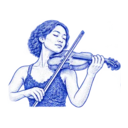 KIN 310Rhythm and Dance Movement Fundamentals3 credits
This course is an introduction to dance, rhythm, and movement fundamentals. It incorporates basic movement techniques designed to give the students an understanding of body alignment, body balance, and control of center, and will focus on aesthetic, expressive, and rhythmical dimensions of movement and the foundations of dance. The course will include looking at dance in society, dance on stage, and dance in education. Prerequisite(s): KIN 121.3 and KIN 122.3; or KIN 146.3
SASK complete current official course definitionKIN 311Aquatics3 creditsIncludes practical and theoretical work related to movement in the water. Practical aspects include Swim Strokes, Skills and Water Safety, Resuscitation and First-Aid training. CPR-C is required. Prerequisite(s): KIN 121.3, and KIN 122.3; OR KIN 146.3, along with Level 8/Ranger Patrol or demonstrated equivalent distance swimming (150 meters).
SASK complete current official course definitionKIN 320Physical Growth and Development of Children3 creditsDeals with the physical changes that occur during the growth period in children. The implications of changes in structure and function as they relate to education, exercise and physical activity will be discussed. Topics include the relationship of growth to physiological function, strength and motor performance, exercise and growth, secular trends, variations in puberty and the assessment of growth by anthropometric techniques. Prerequisite(s): KIN 146 OR KIN 121 and KIN 122.
SASK complete current official course definitionKIN 321Acute Sport Injury Care and Prevention3 creditsThis course introduces students to common athletic injuries and focuses on the development of skills necessary to implement prevention strategies and provide acute injury care. Emphasis is placed on athlete safety, appropriate treatment strategies, and determining timelines for return to sport. Prerequisite(s): KIN 121.3, KIN 122.3 and CPPS 221.3
SASK complete current official course definitionKIN 324Athletics3 creditsThis course will offer student’s the opportunity to increase their understanding of the coaching aspects and physical requirements within the sport of Athletics (Track and Field). The course will center on expanding one’s understanding of coaching; combining elements of coaching theory and science, technical event skill development, and practical applications of the sport.
SASK complete current official course definitionKIN 325Combatives3 creditsThis course will offer students the opportunity to increase their understanding of the coaching aspects and physical requirements of combative sports, with specific emphasis within the sport of wrestling. The course will center on expanding one’s understanding of coaching; combining elements of coaching theory and science, technical skill development, and practical applications of the sport of wrestling. Prerequisite(s): KIN 121.3 and KIN 122.3; or KIN 146.3
SASK complete current official course definitionKIN 330Exercise Psychology3 creditsThis course is designed to explore the application of psychological, behavioural, and social factors concepts in exercise and physical activity settings. Prerequisite(s): KIN 231
SASK complete current official course definitionKIN 334Theory of Coaching3 creditsDesigned to provide the student with an appreciation and understanding of the theory and practice of coaching. Students will look at the development of techniques of communication between the coach, individuals and/or groups as they relate to team organization and integration. There will be a development of the concept that coaching is a specialized form of teaching. Prerequisite(s): KIN 146 and KIN 150 OR KIN 121, KIN 122, and KIN 150.
SASK complete current official course definitionKIN 341Pedagogy in Physical Activity Setting II Practice3 creditsThe aim of this course is to develop an increased understanding of selected principles and practices of motor skill development in children and youth. In addition emphasis will be placed upon the establishment of optimal environments for the instruction and practice of motor skills. Opportunities will be provided for the observation and application of these principles and practices in lab and field based settings. Prerequisite(s): KIN 240.
SASK complete current official course definition KIN 350Huskie Athletics Student Trainer Practicum I6 credits
This practicum allows successful student trainer applicants to attain 6 credit units for their commitment to a Huskie Athletics season. Student trainers will be assigned to a varsity sports team in the fall semester. The Student Trainer Practicum I includes a pre-season orientation, education seminars, shadowing in Huskie Health/week, team involvement at practices and games, and meeting with their supervisor. The orientation will take place at the beginning of term one in the fall to educate students on their roles and responsibilities when working with a team, Huskie Health policies and procedures, USPORT and CANWEST requirements, policies and procedures, and expectations working alongside an IST (Integrated Support Team). Students will be evaluated and will receive a grade for this practicum. Prerequisite(s): CPPS 221.3 and a minimum of 30 credit units at the university; successful Interview and acceptance into the program; Standard First Aid and CPR; Sport First Responder (hosted by Huskie Health and offered to students in Spring/Summer). Prerequisite(s) or Corequisite(s): KIN 321.3
SASK complete current official course definitionKIN 381Adult Fitness and Exercise Management I3 creditsStudents will have the opportunity to complete the CSEP Certified Personal Trainer theory and practical examinations. Prerequisite(s): KIN 222, 225, 226, and 281
SASK complete current official course definitionKIN 382Adult Fitness and Exercise Management II3 creditsStudents will have the opportunity to challenge the Certified Exercise Physiologist (CEP) examination, provided that all prerequisites have been satisfied. Prerequisite(s): KIN 381
SASK complete current official course definitionKIN 423Adapted Physical Activity3 creditsFocuses on physical activity programs for persons with impairments. Current trends in Canadian physical activity program philosophy and delivery are considered in concert with the more general philosophy and delivery systems for persons with impairments. Basic adapted physical activity principles focusing on activity, program and instructional modification are also considered. Prerequisite(s): KIN 146 or KIN 121 and KIN 122.
SASK complete current official course definitionKIN 424Aging and Activity3 creditsWill focus on exercise programming for older adults with respect to understanding the biology of aging as it affects potential for physical activity in later years. Emphasis will be on the special and changing needs of older adults and the adaptations to traditional exercise modalities necessary to ensure success in "active living." As part of the practicum experience, students are expected to spend 6-10 hours during the term, outside of class lecture times, observing and participating in community-based activity programs for seniors. Prerequisite(s): KIN 225 and 226.
SASK complete current official course definitionKIN 425Physiology of Exercise3 creditsWill involve an overview of neuromuscular and cardiorespiratory physiology and a focus on special topics such as causes of fatigue during exercise, gender differences in response to exercise, and physiological responses during exercise in environments with altered temperature and atmospheric pressure (ie. altitude and diving). Prerequisite(s): KIN 225 and 226.
SASK complete current official course definitionKIN 426Cardiovascular Exercise Pathophysiology3 creditsThis course focuses on describing the pathophysiology of exercise that is attributable to the cardiovascular and related systems. Towards this end, this course aims to enhance the students’ understanding of the physiology of the cardiovascular system during exercise and merge this knowledge with maladaptive physiology mechanisms in diseased states that are exercise limiting. Complementing the course focus and aims, special attention will be placed on gas exchange and other forms of commonly used clinical exercise testing approaches to detect exercise-limiting pathophysiology in individuals with cardiovascular and related diseases. Prerequisite(s): KIN 225 and 226.
SASK complete current official course definitionKIN 428Nutrition Drugs and Physical Activity3 creditsExamines the effects of nutritional intake and drug usage on physical performance. Preparation for competitive or recreational activities demands an understanding of: (1) the nutritional requirements which underpin such activity, and (2) the major consequences that ingestion of performance enhancing drugs may have upon the health and physical achievement of an individual. Prerequisite(s): KIN 225 and 226.
SASK complete current official course definitionKIN 429Exercise and Cardiac Rehabilitation3 creditsPrimarily a practicum course in cardiac rehabilitation. Students will intern within the tri-hospital cardiac rehabilitation program offered through Saskatoon District Health. The major emphasis of this course is the role of exercise in cardiac rehabilitation. Application and permission of the department required. Prerequisite(s): KIN 226.3
SASK complete current official course definitionKIN 431Mental Training for Sport and Physical Activity3 creditsAn introduction to mental skills training for sport and physical activity. This course will build on the material presented in KIN 231.3 and focus on the development and application of a mental skills training program in sport and physical activity. Analysis, discussion, and application will focus on ethical issues, pre-competition and competition planning, goal-setting, arousal control, imagery, self-talk, attention control, and program evaluation. Prerequisite(s): KIN 231.
SASK complete current official course definitionKIN 433Self KINpassion Self Compassion in Sport and Exercise3 creditsThis course will explore the breadth and depth of theory, research, and application of self-compassion in sport and exercise as it pertains to health and wellness. The course will include lecture-based and activity-based learning, with an emphasis on providing students the opportunity to experience self-compassion and taking action towards positive mental health. Activity-based learning will involve participation in yoga-based physical activities and self-compassion guided meditations. Prerequisite(s): KIN 231.3 and KIN 380.3.
SASK complete current official course definitionKIN 434Coaching Practicum3 creditsThis course provides further application of sport coaching theory to practice. Students will plan, implement and evaluate aspects of coaching pedagogy, sociology, and sport science while coaching their selected sport. This occurs during coaching sessions within a selected coaching environment, throughout a season of practices and games/events. Restriction(s): Students must be entering third year or fourth year of their programs in the College of Kinesiology or the College of Education. Application and permission of the department required. Apply to the Manager Undergraduate Student Academic Services Prerequisite(s): KIN 146 and KIN 150 OR KIN 121, KIN 122, and KIN 150.
SASK complete current official course definitionKIN 442Biomechanics II3 creditsThis is a second level biomechanics course which provides students an opportunity to further their study in both the qualitative and quantitative aspects of sport biomechanics. Prerequisite(s): KIN 222.
SASK complete current official course definitionKIN 450Huskie Athletics Student Trainer Practicum II6 creditsThis practicum allows successful student trainer applicants to attain 6 credit units for their yearlong commitment to Huskie Athletics. Student trainers will be assigned to a varsity sports team in the fall semester. The Student Trainer Practicum II includes a pre-season orientation, monthly education seminars, minimum of 1 hour of shadowing in Huskie Health/week, team support at practices and games, and assessment of knowledge learnt. The orientation will take place at the beginning of term one educate students on their roles and responsibilities when working with a team, Huskie Health policies and procedures, USPORT and CANWEST requirements, policies and procedures, and expectations working alongside an IST (Integrated Support Team). Students will evaluated and receive a final grade for this practicum. Prerequisite(s): KIN 321.3 and KIN 350.3; a minimum of 30 credit units at the university level; successful interview and acceptance into the program; standard First Aid and CPR; Sport First Responder (Hosted by Huskie Health and offered to students in Spring/Summer entering their first year).
SASK complete current official course definitionKIN 451Community Service Learning in a School Setting3 creditsCommunity Service Learning (CSL) combines working within the community with experience-based learning. This course will offer students an opportunity to plan, teach and learn in a community school setting. Students will work with teachers to promote healthy living through physical activity and nutrition activities. Students will be asked to share their experiences through discussion, journals and presentations. Prerequisite(s): KIN 240.3 and KIN 341.3. Apply to Academic Advisor, College of Kinesiology.
SASK complete current official course definitionKIN 463Exercise Teach Analyze Correct3 creditsThe purpose of this course is to provide theoretical and applied knowledge for teaching, analyzing and correcting basic movement patterns. This course is designed to enhance the student’s knowledge about how the human body moves, with an emphasis on resistance training exercises and daily functional activities. The focus will be on resistance training exercises such as the deadlift, squat and power clean. Prerequisite(s): KIN 381 and KIN 382
SASK complete current official course definitionKIN 471Recreation and Athletics Practicum6 creditsStudents will be involved in assigned field experience of minimally 120 hours over the course of two terms. In addition, monthly group seminars and class discussions will be held to discuss trends and opportunities related to the field experience. This class provides for practical field experience in the delivery, management, planning and leadership of sport and recreation programs. The practicum experience will be under the direction of college staff and competent community authorities. FIELD EXPERIENCE: Students will be assigned to practicum opportunities with USask Rec, Huskie Athletics, amateur sport associations or special games committees. Work done will be evaluated by the college staff and the professionals in the field. Work will focus on program planning, program evaluation, marketing, and other areas relevant to recreation and athletics. Application and permission of the department required.
SASK complete current official course definitionKIN 477Neuromuscular Physiology3 creditsThe purpose of this course is to review basic concepts and introduce advanced topics in Neuromuscular Physiology. The course will provide undergraduate students with an experience that includes reading and discussion of neuromuscular physiology topics and their application to research on acute and chronic training, disuse, and neurological injury. Focus will be on acquiring the skills and knowledge necessary for the appropriate application of various neurophysiological measurement techniques in humans. Prerequisite(s): KIN 225.3, KIN 226.3, KIN 222.3, and KIN 322.3.
SASK complete current official course definitionKIN 481Advanced Adult Fitness and Exercise Management Practicum6 creditsA practical-based course that will expose the student to healthy and unhealthy populations. Experiences may include such areas as musculoskeletal rehabilitation, athlete training, and health and wellness promotion. Many of the hour requirements to challenge the Certified Exercise Therapist designation (through CSEP) will be satisfied by the course requirements. Application and permission of the department required. Prerequisite(s): KIN 381 and 382.
SASK complete current official course definitionKIN 498Special Topics3 creditsTakes advantage of special circumstances in which one time special topic offerings can be made available to senior students in the College.
SASK complete current official course definitionKIN 499Special Topics6 creditsTakes advantage of special circumstances in which one time special topic offerings can be made available to senior students in the College.
SASK complete current official course definitionPublished allocation. Named alternatives and elective banks remain choices.
KIN 432Ethics and Values in Sport and Physical Activity3 creditsStudents will be introduced to a number of decision making models which guide the ethical decision making process. Contemporary issues and controversies from the behavioural, functional, educational and management areas of physical activity will be examined from an ethical and moral perspective. Prerequisite(s): KIN 232 or KIN 240 Restriction(s): Only open to Kinesiology students and students in the Bachelor of Science Kinesiology/Bachelor of Education Combined Program entering their Third Year.
SASK complete current official course definitionKIN 223Contemporary Health Issues3 creditsProvides a forum for the discussion of current health issues. Global health concerns (e.g. environment, media, medical technologies, health care), as well as personal behaviors related to one's health and the health of others, will be examined. Students will develop the skills needed to seek out and evaluate health information enabling them to make wise choices for themselves and others. Prerequisite(s): KIN 146 OR KIN 121 and KIN 122.
SASK complete current official course definitionKIN 233History of Sport and Physical Education in Canada3 creditsA historical and comparative study of the role, significance, and extent of sport and physical education in Canadian society and a series of selected cultures. The development and significance of sport and physical education in the U.S.A., Germany, Sweden, and China will also be studied. Prerequisite(s): KIN 146 OR KIN 121 and KIN 122.
SASK complete current official course definitionKIN 240Pedagogy in Physical Activity Setting I Theory3 creditsA study of the philosophical and theoretical concepts involved in a physical education environment. The intent is to establish a foundation upon which further developments in the area may be undertaken. Topics will include factors such as: developmentally appropriate physical education, factors influencing the learning of motor skills, development of movement tasks, and a comprehensive understanding of human movement taxonomies. Prerequisite(s): KIN 121 and 122 or 146.
SASK complete current official course definitionKIN 250How the Body Moves II3 creditsThis course introduces students to the theoretical and practical study of the common movement patterns from which most games evolve. Attention is paid to the inclusion of cultural content to facilitate a cross cultural understanding of games. Students will gain knowledge and skills in how the body generates and absorbs force using projectiles (throwing, shooting, kicking, spiking, trapping, etc.) and implements (bats, racquets, clubs, sticks, etc.). Low organized games and lead-up games will be used extensively to teach students the commonalities in teaming and evading used in team games. Students will be assessed on both theoretical and practical content. Prerequisite(s): KIN 121.3 and KIN 150.3; or KIN 146.3 Prerequisite(s) or Corequisite(s): KIN 122.3
SASK complete current official course definitionKIN 255Program Planning and Design for Leisure and Sport3 creditsProvides students with the basic information required to successfully plan a leisure or sport program for a variety of agencies and target groups. In an effort to address the changing demographic trends that influence leisure and sport programs, focus will be on needs assessments of clients, resource implications, short- and long-term planning. Prerequisite(s): KIN 146 OR KIN 121 and KIN 122.
SASK complete current official course definitionKIN 310Rhythm and Dance Movement Fundamentals3 creditsThis course is an introduction to dance, rhythm, and movement fundamentals. It incorporates basic movement techniques designed to give the students an understanding of body alignment, body balance, and control of center, and will focus on aesthetic, expressive, and rhythmical dimensions of movement and the foundations of dance. The course will include looking at dance in society, dance on stage, and dance in education. Prerequisite(s): KIN 121.3 and KIN 122.3; or KIN 146.3
SASK complete current official course definitionKIN 311Aquatics3 creditsIncludes practical and theoretical work related to movement in the water. Practical aspects include Swim Strokes, Skills and Water Safety, Resuscitation and First-Aid training. CPR-C is required. Prerequisite(s): KIN 121.3, and KIN 122.3; OR KIN 146.3, along with Level 8/Ranger Patrol or demonstrated equivalent distance swimming (150 meters).
SASK complete current official course definitionKIN 320Physical Growth and Development of Children3 creditsDeals with the physical changes that occur during the growth period in children. The implications of changes in structure and function as they relate to education, exercise and physical activity will be discussed. Topics include the relationship of growth to physiological function, strength and motor performance, exercise and growth, secular trends, variations in puberty and the assessment of growth by anthropometric techniques. Prerequisite(s): KIN 146 OR KIN 121 and KIN 122.
SASK complete current official course definitionKIN 321Acute Sport Injury Care and Prevention3 creditsThis course introduces students to common athletic injuries and focuses on the development of skills necessary to implement prevention strategies and provide acute injury care. Emphasis is placed on athlete safety, appropriate treatment strategies, and determining timelines for return to sport. Prerequisite(s): KIN 121.3, KIN 122.3 and CPPS 221.3
SASK complete current official course definitionKIN 324Athletics3 creditsThis course will offer student’s the opportunity to increase their understanding of the coaching aspects and physical requirements within the sport of Athletics (Track and Field). The course will center on expanding one’s understanding of coaching; combining elements of coaching theory and science, technical event skill development, and practical applications of the sport.
SASK complete current official course definitionKIN 325Combatives3 creditsThis course will offer students the opportunity to increase their understanding of the coaching aspects and physical requirements of combative sports, with specific emphasis within the sport of wrestling. The course will center on expanding one’s understanding of coaching; combining elements of coaching theory and science, technical skill development, and practical applications of the sport of wrestling. Prerequisite(s): KIN 121.3 and KIN 122.3; or KIN 146.3
SASK complete current official course definitionKIN 330Exercise Psychology3 creditsThis course is designed to explore the application of psychological, behavioural, and social factors concepts in exercise and physical activity settings. Prerequisite(s): KIN 231
SASK complete current official course definitionKIN 334Theory of Coaching3 creditsDesigned to provide the student with an appreciation and understanding of the theory and practice of coaching. Students will look at the development of techniques of communication between the coach, individuals and/or groups as they relate to team organization and integration. There will be a development of the concept that coaching is a specialized form of teaching. Prerequisite(s): KIN 146 and KIN 150 OR KIN 121, KIN 122, and KIN 150.
SASK complete current official course definitionKIN 341Pedagogy in Physical Activity Setting II Practice3 creditsThe aim of this course is to develop an increased understanding of selected principles and practices of motor skill development in children and youth. In addition emphasis will be placed upon the establishment of optimal environments for the instruction and practice of motor skills. Opportunities will be provided for the observation and application of these principles and practices in lab and field based settings. Prerequisite(s): KIN 240.
SASK complete current official course definitionKIN 350Huskie Athletics Student Trainer Practicum I6 creditsThis practicum allows successful student trainer applicants to attain 6 credit units for their commitment to a Huskie Athletics season. Student trainers will be assigned to a varsity sports team in the fall semester. The Student Trainer Practicum I includes a pre-season orientation, education seminars, shadowing in Huskie Health/week, team involvement at practices and games, and meeting with their supervisor. The orientation will take place at the beginning of term one in the fall to educate students on their roles and responsibilities when working with a team, Huskie Health policies and procedures, USPORT and CANWEST requirements, policies and procedures, and expectations working alongside an IST (Integrated Support Team). Students will be evaluated and will receive a grade for this practicum. Prerequisite(s): CPPS 221.3 and a minimum of 30 credit units at the university; successful Interview and acceptance into the program; Standard First Aid and CPR; Sport First Responder (hosted by Huskie Health and offered to students in Spring/Summer). Prerequisite(s) or Corequisite(s): KIN 321.3
SASK complete current official course definitionKIN 381Adult Fitness and Exercise Management I3 creditsStudents will have the opportunity to complete the CSEP Certified Personal Trainer theory and practical examinations. Prerequisite(s): KIN 222, 225, 226, and 281
SASK complete current official course definitionKIN 382Adult Fitness and Exercise Management II3 creditsStudents will have the opportunity to challenge the Certified Exercise Physiologist (CEP) examination, provided that all prerequisites have been satisfied. Prerequisite(s): KIN 381
SASK complete current official course definitionKIN 423Adapted Physical Activity3 creditsFocuses on physical activity programs for persons with impairments. Current trends in Canadian physical activity program philosophy and delivery are considered in concert with the more general philosophy and delivery systems for persons with impairments. Basic adapted physical activity principles focusing on activity, program and instructional modification are also considered. Prerequisite(s): KIN 146 or KIN 121 and KIN 122.
SASK complete current official course definitionKIN 424Aging and Activity3 creditsWill focus on exercise programming for older adults with respect to understanding the biology of aging as it affects potential for physical activity in later years. Emphasis will be on the special and changing needs of older adults and the adaptations to traditional exercise modalities necessary to ensure success in "active living." As part of the practicum experience, students are expected to spend 6-10 hours during the term, outside of class lecture times, observing and participating in community-based activity programs for seniors. Prerequisite(s): KIN 225 and 226.
SASK complete current official course definitionKIN 425Physiology of Exercise3 creditsWill involve an overview of neuromuscular and cardiorespiratory physiology and a focus on special topics such as causes of fatigue during exercise, gender differences in response to exercise, and physiological responses during exercise in environments with altered temperature and atmospheric pressure (ie. altitude and diving). Prerequisite(s): KIN 225 and 226.
SASK complete current official course definitionKIN 426Cardiovascular Exercise Pathophysiology3 creditsThis course focuses on describing the pathophysiology of exercise that is attributable to the cardiovascular and related systems. Towards this end, this course aims to enhance the students’ understanding of the physiology of the cardiovascular system during exercise and merge this knowledge with maladaptive physiology mechanisms in diseased states that are exercise limiting. Complementing the course focus and aims, special attention will be placed on gas exchange and other forms of commonly used clinical exercise testing approaches to detect exercise-limiting pathophysiology in individuals with cardiovascular and related diseases. Prerequisite(s): KIN 225 and 226.
SASK complete current official course definitionKIN 428Nutrition Drugs and Physical Activity3 creditsExamines the effects of nutritional intake and drug usage on physical performance. Preparation for competitive or recreational activities demands an understanding of: (1) the nutritional requirements which underpin such activity, and (2) the major consequences that ingestion of performance enhancing drugs may have upon the health and physical achievement of an individual. Prerequisite(s): KIN 225 and 226.
SASK complete current official course definitionKIN 429Exercise and Cardiac Rehabilitation3 creditsPrimarily a practicum course in cardiac rehabilitation. Students will intern within the tri-hospital cardiac rehabilitation program offered through Saskatoon District Health. The major emphasis of this course is the role of exercise in cardiac rehabilitation. Application and permission of the department required. Prerequisite(s): KIN 226.3
SASK complete current official course definitionKIN 431Mental Training for Sport and Physical Activity3 creditsAn introduction to mental skills training for sport and physical activity. This course will build on the material presented in KIN 231.3 and focus on the development and application of a mental skills training program in sport and physical activity. Analysis, discussion, and application will focus on ethical issues, pre-competition and competition planning, goal-setting, arousal control, imagery, self-talk, attention control, and program evaluation. Prerequisite(s): KIN 231.
SASK complete current official course definitionKIN 433Self KINpassion Self Compassion in Sport and Exercise3 creditsThis course will explore the breadth and depth of theory, research, and application of self-compassion in sport and exercise as it pertains to health and wellness. The course will include lecture-based and activity-based learning, with an emphasis on providing students the opportunity to experience self-compassion and taking action towards positive mental health. Activity-based learning will involve participation in yoga-based physical activities and self-compassion guided meditations. Prerequisite(s): KIN 231.3 and KIN 380.3.
SASK complete current official course definitionKIN 434Coaching Practicum3 creditsThis course provides further application of sport coaching theory to practice. Students will plan, implement and evaluate aspects of coaching pedagogy, sociology, and sport science while coaching their selected sport. This occurs during coaching sessions within a selected coaching environment, throughout a season of practices and games/events. Restriction(s): Students must be entering third year or fourth year of their programs in the College of Kinesiology or the College of Education. Application and permission of the department required. Apply to the Manager Undergraduate Student Academic Services Prerequisite(s): KIN 146 and KIN 150 OR KIN 121, KIN 122, and KIN 150.
SASK complete current official course definitionKIN 442Biomechanics II3 creditsThis is a second level biomechanics course which provides students an opportunity to further their study in both the qualitative and quantitative aspects of sport biomechanics. Prerequisite(s): KIN 222.
SASK complete current official course definitionKIN 450Huskie Athletics Student Trainer Practicum II6 creditsThis practicum allows successful student trainer applicants to attain 6 credit units for their yearlong commitment to Huskie Athletics. Student trainers will be assigned to a varsity sports team in the fall semester. The Student Trainer Practicum II includes a pre-season orientation, monthly education seminars, minimum of 1 hour of shadowing in Huskie Health/week, team support at practices and games, and assessment of knowledge learnt. The orientation will take place at the beginning of term one educate students on their roles and responsibilities when working with a team, Huskie Health policies and procedures, USPORT and CANWEST requirements, policies and procedures, and expectations working alongside an IST (Integrated Support Team). Students will evaluated and receive a final grade for this practicum. Prerequisite(s): KIN 321.3 and KIN 350.3; a minimum of 30 credit units at the university level; successful interview and acceptance into the program; standard First Aid and CPR; Sport First Responder (Hosted by Huskie Health and offered to students in Spring/Summer entering their first year).
SASK complete current official course definitionKIN 451Community Service Learning in a School Setting3 creditsCommunity Service Learning (CSL) combines working within the community with experience-based learning. This course will offer students an opportunity to plan, teach and learn in a community school setting. Students will work with teachers to promote healthy living through physical activity and nutrition activities. Students will be asked to share their experiences through discussion, journals and presentations. Prerequisite(s): KIN 240.3 and KIN 341.3. Apply to Academic Advisor, College of Kinesiology.
SASK complete current official course definitionKIN 463Exercise Teach Analyze Correct3 creditsThe purpose of this course is to provide theoretical and applied knowledge for teaching, analyzing and correcting basic movement patterns. This course is designed to enhance the student’s knowledge about how the human body moves, with an emphasis on resistance training exercises and daily functional activities. The focus will be on resistance training exercises such as the deadlift, squat and power clean. Prerequisite(s): KIN 381 and KIN 382
SASK complete current official course definitionKIN 471Recreation and Athletics Practicum6 creditsStudents will be involved in assigned field experience of minimally 120 hours over the course of two terms. In addition, monthly group seminars and class discussions will be held to discuss trends and opportunities related to the field experience. This class provides for practical field experience in the delivery, management, planning and leadership of sport and recreation programs. The practicum experience will be under the direction of college staff and competent community authorities. FIELD EXPERIENCE: Students will be assigned to practicum opportunities with USask Rec, Huskie Athletics, amateur sport associations or special games committees. Work done will be evaluated by the college staff and the professionals in the field. Work will focus on program planning, program evaluation, marketing, and other areas relevant to recreation and athletics. Application and permission of the department required.
SASK complete current official course definitionKIN 477Neuromuscular Physiology3 creditsThe purpose of this course is to review basic concepts and introduce advanced topics in Neuromuscular Physiology. The course will provide undergraduate students with an experience that includes reading and discussion of neuromuscular physiology topics and their application to research on acute and chronic training, disuse, and neurological injury. Focus will be on acquiring the skills and knowledge necessary for the appropriate application of various neurophysiological measurement techniques in humans. Prerequisite(s): KIN 225.3, KIN 226.3, KIN 222.3, and KIN 322.3.
SASK complete current official course definitionKIN 481Advanced Adult Fitness and Exercise Management Practicum6 creditsA practical-based course that will expose the student to healthy and unhealthy populations. Experiences may include such areas as musculoskeletal rehabilitation, athlete training, and health and wellness promotion. Many of the hour requirements to challenge the Certified Exercise Therapist designation (through CSEP) will be satisfied by the course requirements. Application and permission of the department required. Prerequisite(s): KIN 381 and 382.
SASK complete current official course definitionKIN 498Special Topics3 creditsTakes advantage of special circumstances in which one time special topic offerings can be made available to senior students in the College.
SASK complete current official course definitionKIN 499Special Topics6 creditsTakes advantage of special circumstances in which one time special topic offerings can be made available to senior students in the College.
SASK complete current official course definitionNEUR 350Fundamental Neuroscience3 creditsThis course is a comprehensive examination of the neurobiological mechanisms of brain function from single cells through systems level neuroscience. Prerequisite(s): BMSC 207.3 or BIOL 317.3.
SASK complete current official course definitionPATH 205Survey of Pathology3 creditsGeneral and special pathology for dietitians, physical therapists and other health sciences. Prerequisite(s): BMSC 207 and BMSC 208; or permission of the department. Restriction(s): Enrolment in Biomedical Sciences, Nutrition, Physiology, or other health sciences.
SASK complete current official course definitionTOX 110Poisons and Pollutants3 creditsThis unique course provides an overview of the history of toxicology told through stories and case studies covering pivotal and transformative events and discoveries through time. Topics include high profile poisonings in ancient and modern times, natural poisons, classical examples of industrial and environmental pollution, current issues, and important discoveries that led to the development of the field of toxicology and the creation of national regulatory agencies and guidelines. The use of case studies provides students with exciting and memorable examples of how poisons and pollutants have changed history and had important influences at regional, national and international scales. No previous knowledge of toxicology is required.
SASK complete current official course definition Career examplesFitness appraiserStrength and conditioning coachExercise therapistExercise physiologistSport facility manager
CCUPEKA’s directory lists University of Saskatchewan: Kinesiology (2025-2032).
The directory’s exact named academic programme category and published period. This does not confer an individual kinesiology or teaching licence, establish a future renewal, or cover another credential/major.
12 - Kinesiology

2026–27 · One 3-credit-unit course · CAD
Canadian students example · Choose your category
 Tuition$830.10Books and suppliesNot researched
 ResidenceNot estimated
 Meal planNot estimated
Course-category rates · A degree can mix categories
Housing and meals are outside this estimate.
Last updated

























































