



- HBA · 4 years
- Work experience details
- ~High 80s to low 90s


Ontario Tech University · In-class; Ontario Tech University, North Oshawa. Full-time.
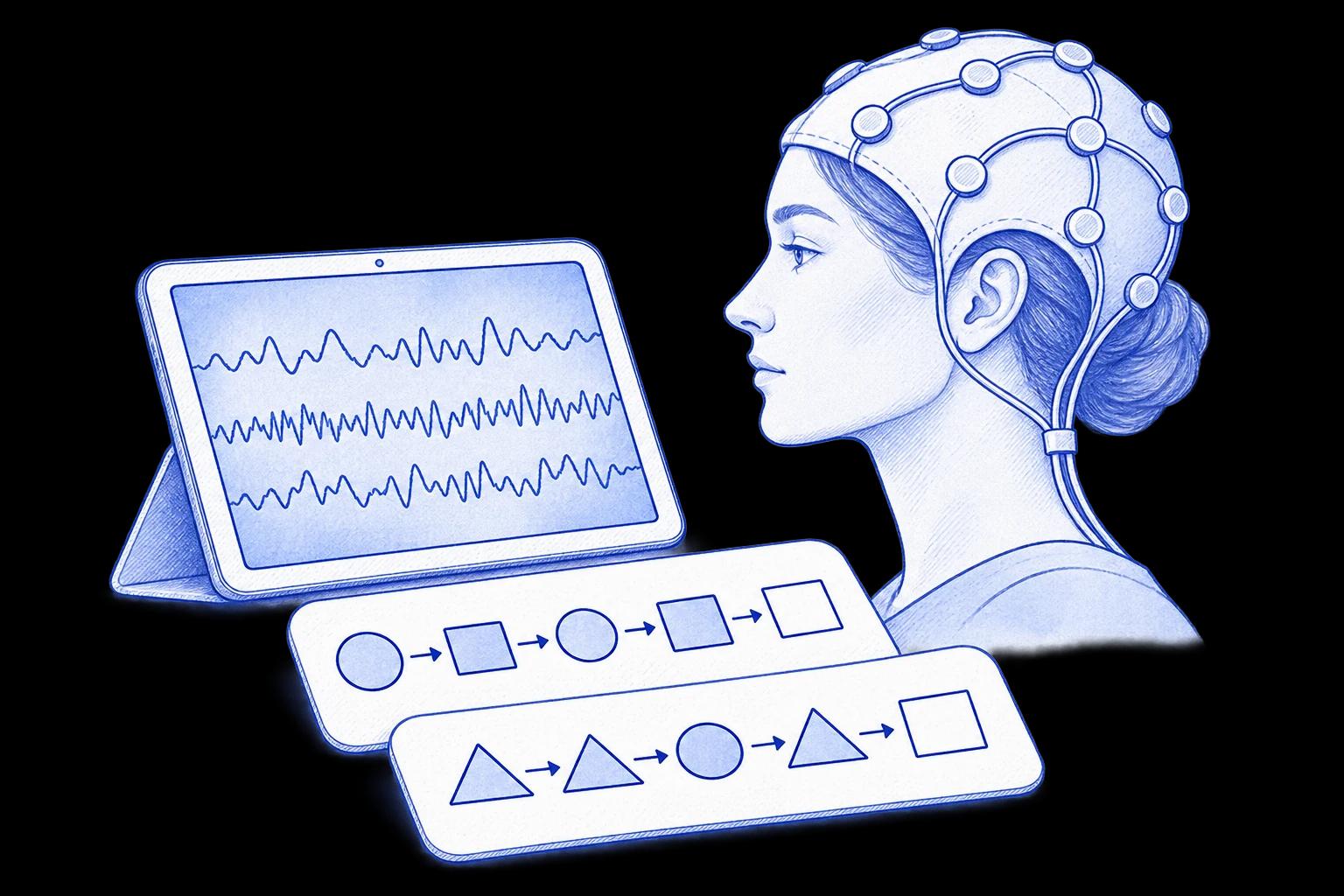
AI-generated ink illustration
Conceptual study artwork, not a photograph of teaching facilities.
Unidex · generated with ImageGen
Checked 2026-11-05
Symbolic subject artwork; no university facility depicted
Entering average
Published approximate guidance: Low 70s. 2027–28 entry. Ontario high-school applicants; DSZ, DZC. Exact published guidance; numerical equivalents are not inferred.
OUInfo · Neuroscience DSZ;2027–28 cycle November 2026
| Mon | Tue | Wed | Thu | Fri | Sat | Sun |
|---|---|---|---|---|---|---|
| 1 | ||||||
| 2 | 3 | 4 | 5 | 6 | 7 | 8 |
| 9 | 10 | 11 | 12 | 13 | 14 | 15 |
| 16 | 17 | 18 | 20 | 21 | 22 | |
| 23 | 24 | 25 | 26 | 27 | 28 | 29 |
| 30 |

2027 entry
School deadline, not a student task. Universities receive these grades by November 26. Verbatim: "Deadline for the OUAC to receive all midterm or final grades available for 4U/M courses from Ontario high schools. Schools may report in-progress grades for full-year courses as soon as they are available." Universities receive these by the target date of November 26, 2026. This is a deadline on the high school, not on the student, but it governs which grades a university sees in the first round.
 Other deadline details
Verbatim: "There is no specific Undergraduate application deadline if you are a Group B applicant. Deadlines vary at each university and sometimes depend on the program. Visit the university websites or contact the universities directly for their deadlines. If you are interested in a program but the deadline has passed, you may contact the university's admission office for help. Be aware of university-specific deadlines for submitting transcripts and portfolios, if required, and for arranging interviews and auditions. You must ensure the OUAC has enough time to process your choices before the universities' program deadlines." OUAC defines Group B as anyone who does not meet the Group A criteria, e.g. not currently taking an Ontario high school course, a Canadian outside Ontario, an international applicant, a postsecondary transfer student, or a mature applicant.
 ENG4UEnglish
 MHF4UAdvanced Functions
 Two of SBI4U, MCV4U, SCH4U or SPH4U
Distinct published Ontario Tech application route
Home-schooled applicants
Applicants educated in another Canadian province or the United States
Applicants applying from another postsecondary institution
Canadian citizens/permanent residents who do not qualify as secondary-school graduates
Applicants meeting every admission requirement except English proficiency
Complete graduation and progression requirements have not been mapped here. Check the university’s academic calendar.
Ontario high-school applicants; DSZ, DZC. Exact published guidance; numerical equivalents are not inferred.
OUInfo · Neuroscience DSZ;2027–28 cycleOUInfo · Neuroscience DSZ;2027–28 cycleFirst-year slots: one Fall general elective. Students planning upper-year physics or mathematics must satisfy the additional calculus/physics prerequisites printed below the map; the bioscience sequence does not waive them. The source publishes 15 credit hours for this semester; it does not assign that total to any one course. Elective slots: General elective.
 BIOL 1010UBiology I
 CHEM 1010UChemistry I3 credits
Reactions, stoichiometry, atomic structure, bonding and introductory nuclear chemistry.
MATH 1015UMathematics for Bioscience PHY 1030UIntroductory Physics3 credits
First-year slots: one Fall general elective. Students planning upper-year physics or mathematics must satisfy the additional calculus/physics prerequisites printed below the map; the bioscience sequence does not waive them. The source publishes 15 credit hours for this semester; it does not assign that total to any one course.
BIOL 1020UBiology IICHEM 1020UChemistry II3 creditsThermodynamics, kinetics, equilibria, organic reactions and electrochemistry.
 CSCI 1040UIntroduction to Programming for Scientists3 credits
Programming, algorithms, data structures and computational applications in science.
PHY 1040UPhysics for Bioscience PSYC 1000UIntroductory Psychology3 credits
Survey psychological theories and research on thought, behaviour, development and mental health.
Mapped termsTwo published first-year terms only. Conditional options are kept in term notes. Any course-slot choice share applies only to these mapped positions, not the whole degree or weighted credits.
 Course: Fall 2026
Published first-year Fall-start registration map only; later years and advanced-entry routes are outside this map. Each term is published as 15 credit hours. Individual weights are retained only where already held. Upper-year mathematics requires MATH 1000U or MATH 1010U and MATH 1020U. For upper-year physics, follow the listed mathematics/physics pathway; a B or higher in PHY 1040U also permits progression to higher-level physics.
BIOL 1010UBiology ICHEM 1010UChemistry I3 creditsReactions, stoichiometry, atomic structure, bonding and introductory nuclear chemistry.
Ontario Tech Registrar: Fall 2026 / Winter 2027 first-year map, NeuroscienceMATH 1015UMathematics for BiosciencePHY 1030UIntroductory Physics3 credits1 elective slot
Course: Winter 2027Published first-year Fall-start registration map only; later years and advanced-entry routes are outside this map. Each term is published as 15 credit hours. Individual weights are retained only where already held. Upper-year mathematics requires MATH 1000U or MATH 1010U and MATH 1020U. For upper-year physics, follow the listed mathematics/physics pathway; a B or higher in PHY 1040U also permits progression to higher-level physics.
BIOL 1020UBiology IICHEM 1020UChemistry II3 creditsThermodynamics, kinetics, equilibria, organic reactions and electrochemistry.
Ontario Tech Registrar: Fall 2026 / Winter 2027 first-year map, NeuroscienceCSCI 1040UIntroduction to Programming for Scientists3 creditsProgramming, algorithms, data structures and computational applications in science.
Ontario Tech Registrar: Fall 2026 / Winter 2027 first-year map, NeurosciencePHY 1040UPhysics for BiosciencePSYC 1000UIntroductory Psychology3 creditsSurvey psychological theories and research on thought, behaviour, development and mental health.
Ontario Tech Registrar: Fall 2026 / Winter 2027 first-year map, Neuroscience Career examplesBiotechnology researcherBiotechnology laboratory researcherPharmaceutical scientist
Some examples require further education, professional examinations, registration or work experience. No employer, salary, placement guarantee or automatic professional designation is inferred.
The literal career examples in the university’s Neuroscience undergraduate profile, the exact held source attached to this programme record. They are published possibilities, not graduate-outcome measurements or proof that every route qualifies for each role.
Allied Health, Applied Science, Arts, Education, Health Sciences and Science

2026–27 · First year · 10 courses / 30 credits · CAD
Canadian students example · Choose your category
 Tuition$6,102.46Books and suppliesSee course materials list
 ResidenceNot estimated
 Meal planNot estimated
Published tuition · Other charges extra
Housing and meals are outside this estimate.
Last updated


























































