



- HBA · 4 years
- Work experience details
- ~High 80s to low 90s


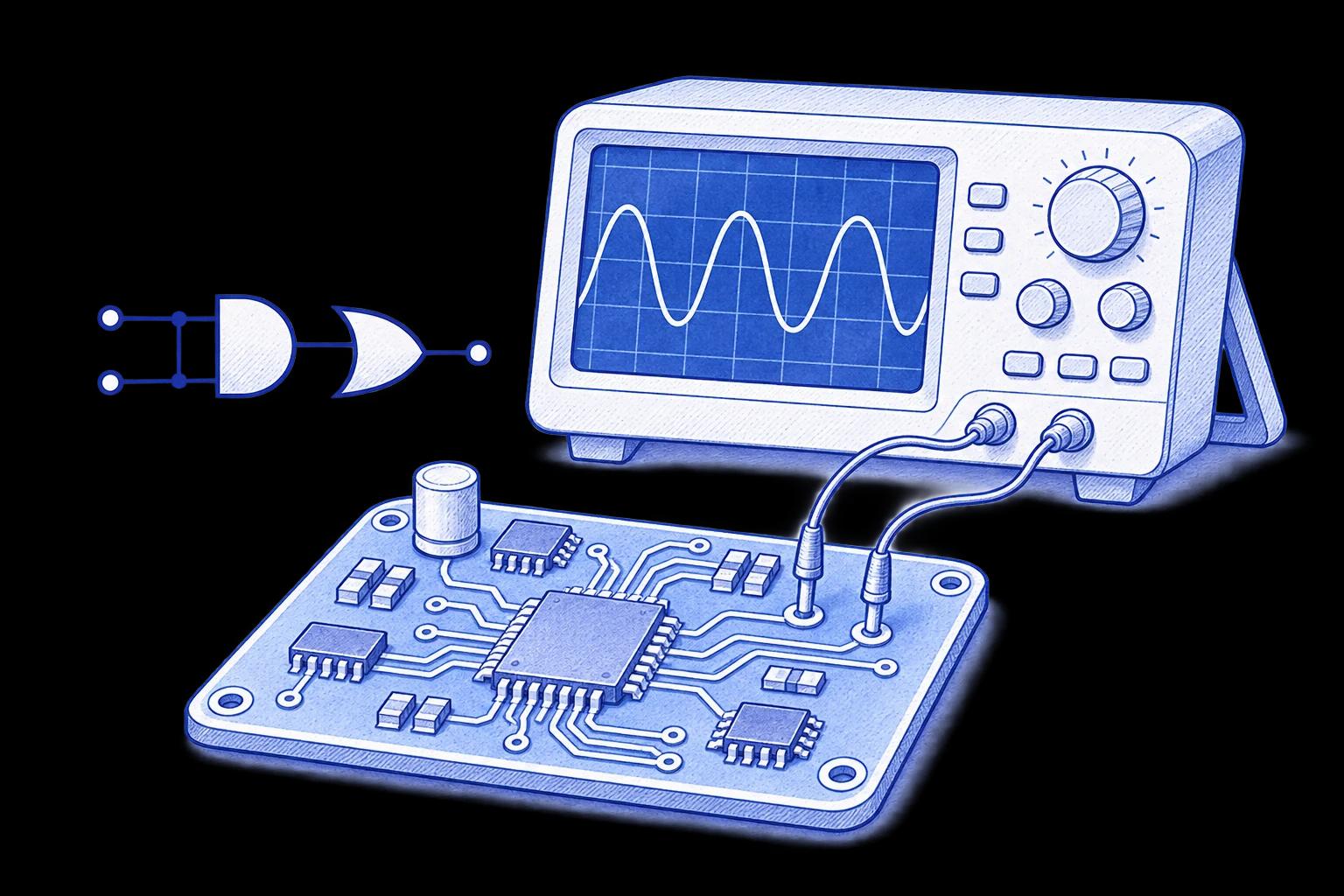
AI-generated ink illustration
Conceptual study artwork, not a photograph of teaching facilities.
Unidex · generated with ImageGen
Checked 2026-11-05
Symbolic subject artwork; no university facility depicted
Entering average
Published approximate guidance: Mid to high 90s. Fall 2027. Typical Ontario Top 6 admission grade range. McGill reports separate guidance for prerequisite mathematics and science grades.
McGill Ontario admissions · Engineering disciplines January 2027
| Mon | Tue | Wed | Thu | Fri | Sat | Sun |
|---|---|---|---|---|---|---|
| 1 | 2 | 3 | ||||
| 4 | 5 | 6 | 7 | 8 | 9 | 10 |
| 11 | 12 | 13 | 14 | 16 | 17 | |
| 18 | 19 | 20 | 21 | 22 | 23 | 24 |
| 25 | 26 | 27 | 28 | 29 | 30 | 31 |

Fall 2027 entry · Applicants studying or who last studied overseas or in the U.S.
 4U English or French
 MCV4UCalculus and Vectors
 SPH4UPhysics
 SCH4UChemistry
Entry terms · Fall (September)
Fall 2027 first-year entry to the Faculty of Engineering B.Eng.. McGill’s January 2027 list closes this degree.
McGill January 2027 program availabilityOntario high-school applicants completing school in Canada; faculty and programme-specific exceptions below
Ontario high-school applicants completing school in Canada; faculty and programme-specific exceptions below
Applicants meeting one of these specifically published exceptions
Applicants who do not meet a published exemption
Ontario high-school applicants completing school in Canada; faculty and programme-specific exceptions below
Ontario OSSD applicants attending high school in Canada; Engineering faculty entry
Full IB Diploma admission route, Engineering; separate from Ontario OSSD top-six assessment
Fall first-year Faculty of Engineering applicants
Canadian high school applicants outside Ontario and Quebec
Applicants completing a Quebec DEC
Applicants with a U.S. high school diploma
Electrical Engineering
Electrical Engineering Honours
Typical Ontario Top 6 admission grade range. McGill reports separate guidance for prerequisite mathematics and science grades.
McGill Ontario admissions · Engineering disciplinesMcGill Ontario admissions · Engineering disciplinesPublished 2026–27 requirements by entry background and study option.
Electrical Engineering
Required Year 0 Courses (22 credits). Transfer credit or exemptions depend on entry credentials.
CHEM 120General Chemistry 24 creditsA study of the fundamental principles of physical chemistry.
MCGILL complete current official course definition MATH 133Linear Algebra and Geometry3 credits
Systems of linear equations, matrices, inverses, determinants; geometric vectors in three dimensions, dot product, cross product, lines and planes; introduction to vector spaces, linear dependence and independence, bases. Linear transformations. Eigenvalues and diagonalization.
MCGILL complete current official course definitionMATH 140Calculus 13 creditsReview of functions and graphs. Limits, continuity, derivative. Differentiation of elementary functions. Antidifferentiation. Applications.
MCGILL complete current official course definitionMATH 141Calculus 24 creditsThe definite integral. Techniques of integration. Applications. Introduction to sequences and series.
MCGILL complete current official course definitionPHYS 131Mechanics and Waves4 creditsThe basic laws and principles of Newtonian mechanics; oscillations, waves, and wave optics.
MCGILL complete current official course definitionPHYS 142Electromagnetism and Optics4 creditsThe basic laws of electricity and magnetism; geometrical optics.
MCGILL complete current official course definitionRequired Non-Departmental Courses (26 credits).
CIVE 281Analytical Mechanics3 credits COMP 202Foundations of Programming3 credits
Introduction to computer programming in a high level language: variables, expressions, primitive types, methods, conditionals, loops. Introduction to algorithms, data structures (arrays, strings), modular software design, libraries, file input/output, debugging, exception handling. Selected topics.
MCGILL complete current official course definitionCOMP 206Introduction to Software Systems3 creditsComprehensive overview of programming in C, use of system calls and libraries, debugging and testing of code; use of developmental tools like make, version control systems.
MCGILL complete current official course definition FACC 100Introduction to the Engineering Profession1 credits
An introduction to engineering practice; professional conduct and responsibility emphasizing ethics, sustainability, and the engineer’s role in society; engineering for sustainability; foundational concepts in engineering design, project management, risk evaluation and management, occupational health and safety.
MCGILL complete current official course definitionFACC 250Responsibilities of the Professional Engineer0 creditsA course designed to provide all Engineering students with further training regarding their responsibilities as future Professional Engineers. Particular focus will be placed on three professional characteristics that future engineers must demonstrate: i) professionalism, ii) ethical and equitable behaviour, and iii) consideration of the impact of engineering on society and the environment.
MCGILL complete current official course definitionFACC 300Engineering Economy3 creditsIntroduction to the basic concepts required for the economic assessment of engineering projects. Topics include: accounting methods, marginal analysis, cash flow and time value of money, taxation and depreciation, discounted cash flow analysis techniques, cost of capital, inflation, sensitivity and risk analysis, analysis of R and D, ongoing as well as new investment opportunities.
MCGILL complete current official course definition FACC 400Engineering Professional Practice1 credits
Laws, regulations and codes governing engineering professional practice. Responsibility and liability. Environmental legislation. Project and organization management. Relations between engineer and client. Technical practice - analysis, design, execution and operation.
MCGILL complete current official course definitionMATH 262Intermediate Calculus3 creditsSeries and power series, including Taylor's theorem. Brief review of vector geometry. Vector functions and curves. Partial differentiation and differential calculus for vector valued functions. Unconstrained and constrained extremal problems. Multiple integrals including surface area and change of variables.
MCGILL complete current official course definitionMATH 263Ordinary Differential Equations for Engineers3 credits MIME 262Properties of Materials in Electrical Engineering3 credits
 WCOM 206Communication in Engineering3 credits
Written and oral communication in Engineering (in English): strategies for generating, developing, organizing, and presenting ideas in a technical setting; problem-solving; communicating to different audiences; editing and revising; and public speaking. Course work based on academic, technical, and professional writing in engineering.
MCGILL complete current official course definitionRequired Electrical Engineering Courses (57 credits).
ECSE 200Electric Circuits 13 credits ECSE 205Probability and Statistics for Engineers3 creditsECSE 206Introduction to Signals and Systems3 creditsECSE 210Electric Circuits 23 credits
 ECSE 211Design Principles and Methods3 creditsECSE 222Digital Logic3 creditsECSE 250Fundamentals of Software Development3 creditsECSE 251Electric and Magnetic Fields3 creditsECSE 307Linear Systems and Control4 creditsECSE 308Introduction to Communication Systems and Networks4 creditsECSE 324Computer Organization4 creditsECSE 331Electronics4 creditsECSE 343Numerical Methods in Engineering3 creditsECSE 354Electromagnetic Wave Propagation4 creditsECSE 362Fundamentals of Power Engineering4 creditsECSE 458D1Capstone Design Project3 creditsECSE 458D2Capstone Design Project3 credits
Electrical Engineering Honours
Required Year 0 Courses (22 credits). Transfer credit or exemptions depend on entry credentials.
CHEM 120General Chemistry 24 creditsA study of the fundamental principles of physical chemistry.
MCGILL complete current official course definitionMATH 133Linear Algebra and Geometry3 creditsSystems of linear equations, matrices, inverses, determinants; geometric vectors in three dimensions, dot product, cross product, lines and planes; introduction to vector spaces, linear dependence and independence, bases. Linear transformations. Eigenvalues and diagonalization.
MCGILL complete current official course definitionMATH 140Calculus 13 creditsReview of functions and graphs. Limits, continuity, derivative. Differentiation of elementary functions. Antidifferentiation. Applications.
MCGILL complete current official course definitionMATH 141Calculus 24 creditsThe definite integral. Techniques of integration. Applications. Introduction to sequences and series.
MCGILL complete current official course definitionPHYS 131Mechanics and Waves4 creditsThe basic laws and principles of Newtonian mechanics; oscillations, waves, and wave optics.
MCGILL complete current official course definitionPHYS 142Electromagnetism and Optics4 creditsThe basic laws of electricity and magnetism; geometrical optics.
MCGILL complete current official course definitionRequired Non-Departmental Courses (26 credits).
CIVE 281Analytical Mechanics3 creditsCOMP 202Foundations of Programming3 creditsIntroduction to computer programming in a high level language: variables, expressions, primitive types, methods, conditionals, loops. Introduction to algorithms, data structures (arrays, strings), modular software design, libraries, file input/output, debugging, exception handling. Selected topics.
MCGILL complete current official course definitionCOMP 206Introduction to Software Systems3 creditsComprehensive overview of programming in C, use of system calls and libraries, debugging and testing of code; use of developmental tools like make, version control systems.
MCGILL complete current official course definitionFACC 100Introduction to the Engineering Profession1 creditsAn introduction to engineering practice; professional conduct and responsibility emphasizing ethics, sustainability, and the engineer’s role in society; engineering for sustainability; foundational concepts in engineering design, project management, risk evaluation and management, occupational health and safety.
MCGILL complete current official course definitionFACC 250Responsibilities of the Professional Engineer0 creditsA course designed to provide all Engineering students with further training regarding their responsibilities as future Professional Engineers. Particular focus will be placed on three professional characteristics that future engineers must demonstrate: i) professionalism, ii) ethical and equitable behaviour, and iii) consideration of the impact of engineering on society and the environment.
MCGILL complete current official course definitionFACC 300Engineering Economy3 creditsIntroduction to the basic concepts required for the economic assessment of engineering projects. Topics include: accounting methods, marginal analysis, cash flow and time value of money, taxation and depreciation, discounted cash flow analysis techniques, cost of capital, inflation, sensitivity and risk analysis, analysis of R and D, ongoing as well as new investment opportunities.
MCGILL complete current official course definitionFACC 400Engineering Professional Practice1 creditsLaws, regulations and codes governing engineering professional practice. Responsibility and liability. Environmental legislation. Project and organization management. Relations between engineer and client. Technical practice - analysis, design, execution and operation.
MCGILL complete current official course definitionMATH 262Intermediate Calculus3 creditsSeries and power series, including Taylor's theorem. Brief review of vector geometry. Vector functions and curves. Partial differentiation and differential calculus for vector valued functions. Unconstrained and constrained extremal problems. Multiple integrals including surface area and change of variables.
MCGILL complete current official course definitionMATH 263Ordinary Differential Equations for Engineers3 creditsMIME 262Properties of Materials in Electrical Engineering3 creditsWCOM 206Communication in Engineering3 creditsWritten and oral communication in Engineering (in English): strategies for generating, developing, organizing, and presenting ideas in a technical setting; problem-solving; communicating to different audiences; editing and revising; and public speaking. Course work based on academic, technical, and professional writing in engineering.
MCGILL complete current official course definitionRequired Electrical Engineering Courses (61 credits).
ECSE 200Electric Circuits 13 creditsECSE 205Probability and Statistics for Engineers3 creditsECSE 206Introduction to Signals and Systems3 creditsECSE 210Electric Circuits 23 creditsECSE 211Design Principles and Methods3 creditsECSE 222Digital Logic3 creditsECSE 250Fundamentals of Software Development3 creditsECSE 251Electric and Magnetic Fields3 creditsECSE 307Linear Systems and Control4 creditsECSE 308Introduction to Communication Systems and Networks4 creditsECSE 324Computer Organization4 creditsECSE 331Electronics4 creditsECSE 343Numerical Methods in Engineering3 creditsECSE 354Electromagnetic Wave Propagation4 creditsECSE 362Fundamentals of Power Engineering4 creditsECSE 396Honours Research Laboratory Rotation 11 creditsECSE 397Honours Research Laboratory Rotation 21 creditsECSE 478D1Electrical Engineering Honours Thesis3 creditsECSE 478D2Electrical Engineering Honours Thesis3 creditsECSE 496Honours Research Laboratory Rotation 31 creditsECSE 497Honours Research Laboratory Rotation 41 creditsEngineers Canada lists McGill’s Electrical Engineering BEng as accredited.
This accreditation applies to the listed undergraduate degree.
Bachelor of Engineering (BEng)

2026–27 · Typical annual example · Fall + winter · 30 credits · CAD
Quebec residents example · Choose your category
 Tuition$3,117.60Books$1,000
 ResidenceNot estimated
 Meal planNot estimated
Tuition only · Summer credits and ancillary fees extra
Housing and meals are outside this estimate.
Books use the university-wide budget.
Last updated

























































