



- HBA · 4 years
- Work experience details
- ~High 80s to low 90s



AI-generated ink illustration
Conceptual study artwork, not a photograph of teaching facilities.
Unidex · generated with ImageGen
Checked 2026-11-05
Symbolic subject artwork; no university facility depicted
70% published Ontario minimum
The university publishes a 70% academic minimum, not an entering-average range.
Laurentian · Mining Engineering degree and requirements November 2026
| Mon | Tue | Wed | Thu | Fri | Sat | Sun |
|---|---|---|---|---|---|---|
| 1 | ||||||
| 2 | 3 | 4 | 5 | 6 | 7 | 8 |
| 9 | 10 | 11 | 12 | 13 | 14 | 15 |
| 16 | 17 | 18 | 20 | 21 | 22 | |
| 23 | 24 | 25 | 26 | 27 | 28 | 29 |
| 30 |

2027 entry
School deadline, not a student task. Universities receive these grades by November 26. Verbatim: "Deadline for the OUAC to receive all midterm or final grades available for 4U/M courses from Ontario high schools. Schools may report in-progress grades for full-year courses as soon as they are available." Universities receive these by the target date of November 26, 2026. This is a deadline on the high school, not on the student, but it governs which grades a university sees in the first round.
 Other deadline details
Verbatim: "There is no specific Undergraduate application deadline if you are a Group B applicant. Deadlines vary at each university and sometimes depend on the program. Visit the university websites or contact the universities directly for their deadlines. If you are interested in a program but the deadline has passed, you may contact the university's admission office for help. Be aware of university-specific deadlines for submitting transcripts and portfolios, if required, and for arranging interviews and auditions. You must ensure the OUAC has enough time to process your choices before the universities' program deadlines." OUAC defines Group B as anyone who does not meet the Group A criteria, e.g. not currently taking an Ontario high school course, a Canadian outside Ontario, an international applicant, a postsecondary transfer student, or a mature applicant.
 Grade 12 English 4U/M
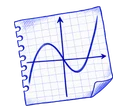 MHF4UAdvanced Functions
 SPH4UPhysics
 SCH4UChemistry
Entry terms · Fall 2027
Domestic high-school entry verified for this cycle. Other regular intakes were not confirmed.
OUInfo 2027–28 · public program index captureLaurentian exact Ontario first-entry programme
Canadian applicants applying to this degree
International applicants outside the Ontario high-school route
Complete graduation and progression requirements have not been mapped here. Check the university’s academic calendar.
Named courses from the published year-grouped requirements for this engineering discipline.
Published year grouping. Technical and complementary study electives follow separate menus.
 ENGR-1007ELEngineering Graphics and Design3 credits
Engineering drawings, three-dimensional visualization, drafting standards and computer-aided design.
ENGR-1026EIntroduction to Technical Writing and Communication for Engineers3 creditsEngineering writing and speaking through workshops, group research, collaborative reports, peer editing and presentations.
ENGR-1501EIntroduction to Engineering + LAB3 creditsEngineering licensing, ethics, public responsibility and technical communication, with a team design-build project.
 GEOL-1006ELIntroductory Geology I3 credits
Earth structure, plate tectonics, earthquakes, rocks and minerals, including laboratory and Sudbury field work.
 MATH-1036ELCalculus I3 credits
Limits, derivatives, applications, introductory integration, areas and volumes.
PHYS-1006ELIntroductory Physics I3 creditsMechanics, vectors, energy, matter, thermodynamics and waves.
 ENGR-0100EHealth and Safety Training I0 credits
Non-credit training in hazards, risk controls, electrical, fire and laboratory safety, and working at heights.
CHMI-1006ELGeneral Chemistry I3 creditsAtomic and molecular structure, nuclear chemistry, stoichiometry, periodicity and solutions.
 COSC-2836ELComputer Software for Sciences3 credits
Statistical, spreadsheet and numerical software tools used in science.
 ENGR-1056ELStatics3 credits
Equilibrium, structures, frames, friction, centroids and moments of area.
MATH-1037ELCalculus II3 creditsIntegration, differential equations, polar curves, sequences, series and multivariable functions.
 MATH-1057ELLinear Algebra I3 credits
Linear systems, matrices, vector spaces, transformations, eigenvalues and complex numbers.
PHYS-1007ELIntroductory Physics II3 creditsOptics, electricity, magnetism and modern physics.
Published year grouping. Technical and complementary study electives follow separate menus.
 ENGR-2026ELEngineering Materials3 credits
Study mechanical, chemical, electrical and thermal properties of metals, alloys, polymers and refractory materials.
ENGR-2036ELEngineering Thermodynamics I3 creditsApply thermodynamic laws to matter, energy conversion and engineering processes.
ENGR-2076ELMechanics and Strength of Materials I3 creditsAnalyse stress, strain, beams, pressure vessels and material failure, with mechanical testing labs.
ENGR-2106ELIntroduction to Mineral Resources Engineering3 creditsExplore mineral exploration, mining, extraction, processing and environmental considerations.
ENGR-2506ELDynamicsModel particle and rigid-body dynamics in two and three dimensions for mechanical design.
MATH-2066ELIntroduction to Differential Equations3 creditsSolve first-order, higher-order and systems of differential equations using series and matrix methods.
ENGR-0200EHealth and Safety Training II0 creditsSecond safety module: hazards, risk, regulation, mental health, leadership, incident investigation and ethics. ENGR 0100 and 24 credits required.
ENGR-2097ELFluid Mechanics I3 creditsApply fluid continuity, momentum and energy to pipes, channels, pumps, compressors and flow measurement.
ENGR-2317ESurface Mining3 creditsOpen-pit mine design, reserves, grades, stripping, pit slopes, drilling, blasting, equipment and stability.
ENGR-2346ELRock Mechanics3 creditsAnalyse rock strength, deformation, groundwater, classification and stability using field and computational methods.
ENGR-2356ELUnderground Mining Methods3 creditsSelect extraction methods, production rates, schedules and safety factors for mining deposits.
 ENGR-2517ELPlane Surveying and Photogrammetry3 credits
Study surveying, mapping and photogrammetry, with two weeks of fieldwork after April examinations.
 STAT-2246ELStatistics for Scientists3 credits
Data distributions, estimation, hypothesis testing, regression, correlation and statistical software.
Published year grouping. Technical and complementary study electives follow separate menus.
ENGR-3116ELMineral Processing I3 creditsStudy ore crushing, grinding, sizing and gravity separation through theory, modelling and processing circuits.
ENGR-3307ELMaterials Handling3 creditsDesign bulk-material handling systems and examine mining loading, hauling and conveying equipment.
ENGR-3346ELOre Reserve Analysis and Geostatistics3 creditsModel ore bodies and estimate mineral resources using conventional and geostatistical methods.
ENGR-3376ELDrilling and Development3 creditsSelect drilling methods and equipment and design mine development openings, support and construction.
ENGR-3387ELGround Control3 creditsAnalyse mine-opening failure and design reinforcement and support, including practical installation fieldwork.
 ENGR-3426ELEngineering Economics3 credits
Evaluate engineering projects using cash flows, financing, tax, depreciation, replacement, uncertainty and risk.
ENGR-0300EHealth and Safety Training III0 creditsThird safety module: risk, safe design, human factors, leadership and ethics. ENGR 0200 and 48 credits required.
ENGR-3327ELMine Ventilation3 creditsDesign mine ventilation, air conditioning and dust or fume controls using fans, measurements and surveys.
ENGR-3337ELExplosives and Blasting Technology3 creditsSelect explosives and design blasts through composition, initiation, economics, safety and damage criteria.
ENGR-4306ELOpen Pit Design3 creditsDesign open-pit mines using economic block models, pit algorithms, equipment selection and scheduling.
MATH-3416ELNumerical Methods I3 creditsUse numerical methods for equations, interpolation, integration, differentiation and differential equations.
GEOL-2017ELGeology for Engineers3 creditsStudy rock characteristics, tectonic structures and Canadian ore deposits, with sample and structural labs.
Published year grouping. Technical and complementary study electives follow separate menus.
ENGR-3006EIndigenous Innovation, Design, and Problem Solving3 creditsIndigenous innovation, design and problem-solving through First Nations, Métis and Inuit knowledge, materials and case studies.
ENGR-3157ELOperations Research3 creditsApply operations research through programming, networks, queues, simulation and computing examples.
ENGR-4316ELMine Planning and Design I3 creditsPlan underground mines through resource estimates, feasibility, infrastructure, scheduling, budgets and software.
ENGR-4366ELAutomation and Reliability of Mining Equipment3 creditsStudy mining automation, robotics, guidance sensors, machinery reliability and maintenance.
ENGR-0400EHealth and Safety Training IV0 creditsFourth safety module: process, electrical, radiation and robotics safety, crisis communication, change and wellness. ENGR 0300 and 60 credits required.
ENGR-3126ELOccupational Health Engineering3 creditsAssess industrial health hazards, exposure thresholds, measurements and engineering controls.
ENGR-3601EEngineering Project Management3 creditsEngineering project scope, schedules, quality, costs, resources and risk applied to real projects; 72 university credits required.
 ENGR-4106EEngineering Law, Ethics, Technology and Society3 credits
Engineering law, ethics, professional practice, technical communication, technological change and sustainability.
ENGR-4327ELMine Planning and Design II3 creditsComplete a team mine design project integrating technical, economic and environmental considerations.
Mapped termsPublished Fall and Winter academic terms of the named degree. Technical and complementary selections appear in notes. Co-op work terms follow a separate placement schedule.
ENGR-1007ELEngineering Graphics and Design3 creditsEngineering drawings, three-dimensional visualization, drafting standards and computer-aided design.
ENGR-1026EIntroduction to Technical Writing and Communication for Engineers3 creditsEngineering writing and speaking through workshops, group research, collaborative reports, peer editing and presentations.
ENGR-1501EIntroduction to Engineering + LAB3 creditsEngineering licensing, ethics, public responsibility and technical communication, with a team design-build project.
GEOL-1006ELIntroductory Geology I3 creditsEarth structure, plate tectonics, earthquakes, rocks and minerals, including laboratory and Sudbury field work.
MATH-1036ELCalculus I3 creditsLimits, derivatives, applications, introductory integration, areas and volumes.
PHYS-1006ELIntroductory Physics I3 creditsMechanics, vectors, energy, matter, thermodynamics and waves.
ENGR-0100EHealth and Safety Training I0 creditsNon-credit training in hazards, risk controls, electrical, fire and laboratory safety, and working at heights.
CHMI-1006ELGeneral Chemistry I3 creditsAtomic and molecular structure, nuclear chemistry, stoichiometry, periodicity and solutions.
COSC-2836ELComputer Software for Sciences3 creditsStatistical, spreadsheet and numerical software tools used in science.
ENGR-1056ELStatics3 creditsEquilibrium, structures, frames, friction, centroids and moments of area.
MATH-1037ELCalculus II3 creditsIntegration, differential equations, polar curves, sequences, series and multivariable functions.
MATH-1057ELLinear Algebra I3 creditsLinear systems, matrices, vector spaces, transformations, eigenvalues and complex numbers.
PHYS-1007ELIntroductory Physics II3 creditsOptics, electricity, magnetism and modern physics.
ENGR-2026ELEngineering Materials3 creditsStudy mechanical, chemical, electrical and thermal properties of metals, alloys, polymers and refractory materials.
ENGR-2036ELEngineering Thermodynamics I3 creditsApply thermodynamic laws to matter, energy conversion and engineering processes.
ENGR-2076ELMechanics and Strength of Materials I3 creditsAnalyse stress, strain, beams, pressure vessels and material failure, with mechanical testing labs.
ENGR-2106ELIntroduction to Mineral Resources Engineering3 creditsExplore mineral exploration, mining, extraction, processing and environmental considerations.
ENGR-2506ELDynamicsModel particle and rigid-body dynamics in two and three dimensions for mechanical design.
MATH-2066ELIntroduction to Differential Equations3 creditsSolve first-order, higher-order and systems of differential equations using series and matrix methods.
ENGR-0200EHealth and Safety Training II0 creditsSecond safety module: hazards, risk, regulation, mental health, leadership, incident investigation and ethics. ENGR 0100 and 24 credits required.
ENGR-2097ELFluid Mechanics I3 creditsApply fluid continuity, momentum and energy to pipes, channels, pumps, compressors and flow measurement.
ENGR-2317ESurface Mining3 creditsOpen-pit mine design, reserves, grades, stripping, pit slopes, drilling, blasting, equipment and stability.
ENGR-2346ELRock Mechanics3 creditsAnalyse rock strength, deformation, groundwater, classification and stability using field and computational methods.
ENGR-2356ELUnderground Mining Methods3 creditsSelect extraction methods, production rates, schedules and safety factors for mining deposits.
ENGR-2517ELPlane Surveying and Photogrammetry3 creditsStudy surveying, mapping and photogrammetry, with two weeks of fieldwork after April examinations.
STAT-2246ELStatistics for Scientists3 creditsData distributions, estimation, hypothesis testing, regression, correlation and statistical software.
ENGR-3116ELMineral Processing I3 creditsStudy ore crushing, grinding, sizing and gravity separation through theory, modelling and processing circuits.
ENGR-3307ELMaterials Handling3 creditsDesign bulk-material handling systems and examine mining loading, hauling and conveying equipment.
ENGR-3346ELOre Reserve Analysis and Geostatistics3 creditsModel ore bodies and estimate mineral resources using conventional and geostatistical methods.
ENGR-3376ELDrilling and Development3 creditsSelect drilling methods and equipment and design mine development openings, support and construction.
ENGR-3387ELGround Control3 creditsAnalyse mine-opening failure and design reinforcement and support, including practical installation fieldwork.
ENGR-3426ELEngineering Economics3 creditsEvaluate engineering projects using cash flows, financing, tax, depreciation, replacement, uncertainty and risk.
ENGR-0300EHealth and Safety Training III0 creditsThird safety module: risk, safe design, human factors, leadership and ethics. ENGR 0200 and 48 credits required.
Complementary Studies elective (3 credits).
ENGR-3327ELMine Ventilation3 creditsDesign mine ventilation, air conditioning and dust or fume controls using fans, measurements and surveys.
ENGR-3337ELExplosives and Blasting Technology3 creditsSelect explosives and design blasts through composition, initiation, economics, safety and damage criteria.
ENGR-4306ELOpen Pit Design3 creditsDesign open-pit mines using economic block models, pit algorithms, equipment selection and scheduling.
MATH-3416ELNumerical Methods I3 creditsUse numerical methods for equations, interpolation, integration, differentiation and differential equations.
GEOL-2017ELGeology for Engineers3 creditsStudy rock characteristics, tectonic structures and Canadian ore deposits, with sample and structural labs.
Technical electives (6 credits).
ENGR-3006EIndigenous Innovation, Design, and Problem Solving3 creditsIndigenous innovation, design and problem-solving through First Nations, Métis and Inuit knowledge, materials and case studies.
ENGR-3157ELOperations Research3 creditsApply operations research through programming, networks, queues, simulation and computing examples.
ENGR-4316ELMine Planning and Design I3 creditsPlan underground mines through resource estimates, feasibility, infrastructure, scheduling, budgets and software.
ENGR-4366ELAutomation and Reliability of Mining Equipment3 creditsStudy mining automation, robotics, guidance sensors, machinery reliability and maintenance.
ENGR-0400EHealth and Safety Training IV0 creditsFourth safety module: process, electrical, radiation and robotics safety, crisis communication, change and wellness. ENGR 0300 and 60 credits required.
Complementary Studies elective (3 credits). Technical elective (3 credits).
ENGR-3126ELOccupational Health Engineering3 creditsAssess industrial health hazards, exposure thresholds, measurements and engineering controls.
ENGR-3601EEngineering Project Management3 creditsEngineering project scope, schedules, quality, costs, resources and risk applied to real projects; 72 university credits required.
ENGR-4106EEngineering Law, Ethics, Technology and Society3 creditsEngineering law, ethics, professional practice, technical communication, technological change and sustainability.
ENGR-4327ELMine Planning and Design II3 creditsComplete a team mine design project integrating technical, economic and environmental considerations.
Canadian Engineering Accreditation Board accreditation for this named bachelor’s programme.
Published accreditation for this specific engineering degree.
Engineering · 36 credits

2026–27 · 36 credits · academic year · CAD
Ontario example · Choose your category
 Tuition$10,023.57Books and supplies$1,750 est. / 8 months
 ResidenceNot estimated
 Meal planNot estimated
Published full-time undergraduate Engineering tuition at the 36-credit reference load for the named BEng discipline. Incidental and association fees are separate.
Housing and meals are outside this estimate.
Last updated

























































