



- HBA · 4 years
- Work experience details
- ~High 80s to low 90s


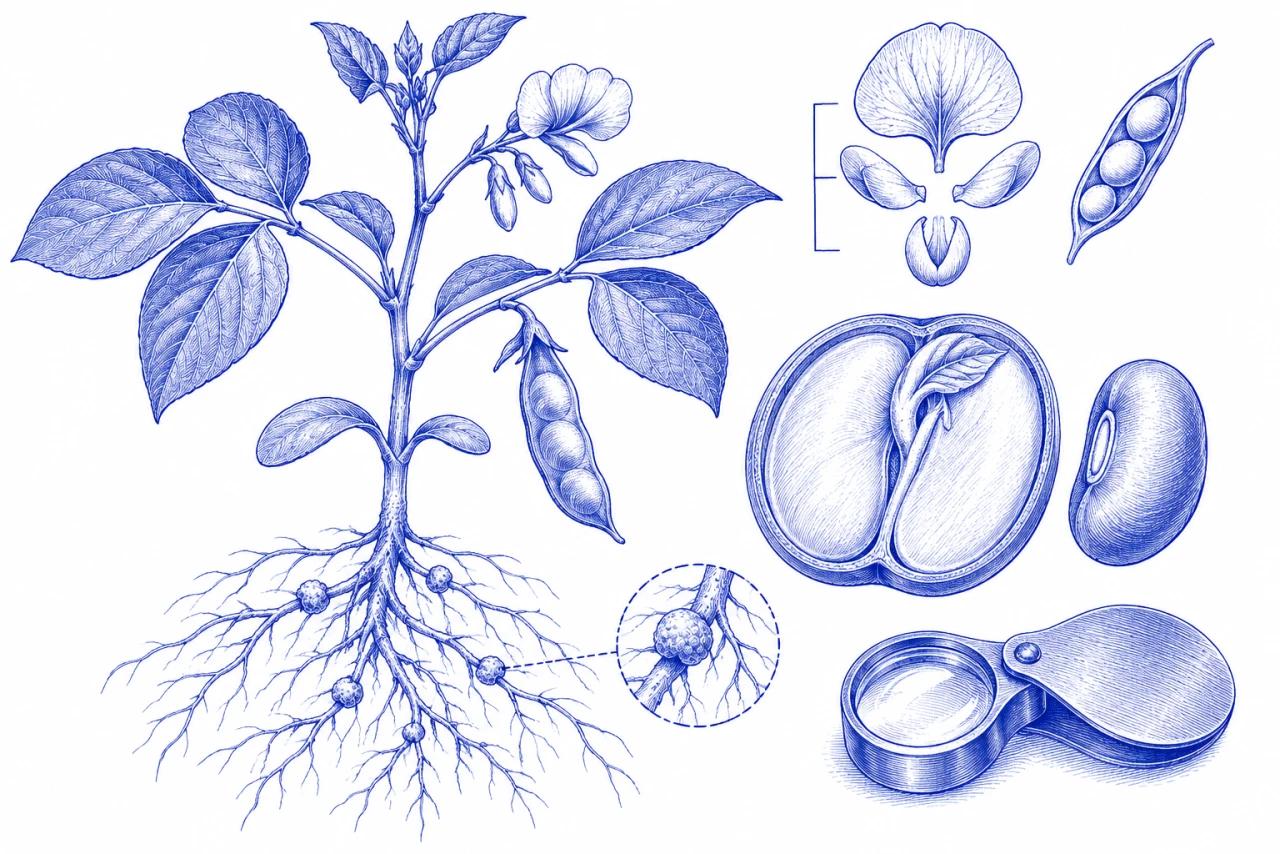
AI-generated ink illustration
Conceptual study artwork, not a photograph of teaching facilities.
Unidex · generated with ImageGen
Checked 2026-11-10
See the published deadlines below.
 Other deadline details
Verbatim: "Each institution sets their own application open and close dates. These dates also may vary based on the program you are applying to. You can use the search database to explore programs you are interested in applying to or visit the institution's website directly. Please refer to the institution's website or contact the Admissions/Registrar's Office directly for application deadlines and details." EducationPlannerBC is the single application service for B.C.'s 25 public post-secondary institutions but publishes no deadline dates of its own.
Check the university’s requirements for your province and applicant category.
Applicants using the open-intake route
Complete graduation and progression requirements have not been mapped here. Check the university’s academic calendar.
The admission average has not been researched for this program.
Apply to the Faculty of Science undeclared, then declare the Plant Health major for the Bachelor of Horticulture Science. KPU’s domestic guide lists Urban Ecosystems as postponed for Fall 2027.
BHortSc

Apply horticultural science to plant health problems in community, industry and research settings.
Separate study choices within this entry program. Each course block belongs to its named choice; it is not required of every student in the degree.
Current department course examples or proposed offerings, shared across its degree routes. Individual course credits appear only when printed. These menus do not establish the complete major requirements. Tentative offerings can change. 2026–27 calendar minimum credits required for the complete credential: 122. Major-only course tables do not replace linked degree-framework requirements.
HORT 1102Botany for Horticulture3 creditsStudents will study the morphology, anatomy, physiology, and sexual reproduction of plants.
KPU2026–27 exact course content HORT 1104Soils and Growing Media3 credits
Students will study the components and properties of soils and growing media.
KPU2026–27 exact course contentHORT 1105BC Pesticide Applicator Preparation1 creditsStudents will learn how to protect human health and minimize the risks to the environment when selecting and applying pesticides.
KPU2026–27 exact course content HORT 1110Introduction To Sustainable Horticulture3 credits
Students will consider horticulture within a context of social responsibility, exploring the interrelatedness between environment, society, and economy.
KPU2026–27 exact course contentHORT 1118Basic Machinery Operation and Maintenance3 creditsStudents will be introduced to horticulture machinery.
KPU2026–27 exact course contentHORT 1124Landscape Gardening Methods3 creditsStudents will be introduced to professional landscape gardening.
KPU2026–27 exact course contentHORT 1132Turf Maintenance Operations3 creditsStudents will operate machinery at the School of Horticulture Field Lab to gain practical experience in turf maintenance.
KPU2026–27 exact course content HORT 1155Introduction To Plant Materials3 credits
Students will practise skills that will enable them to identify a wide range of plants used in all segments of horticulture.
KPU2026–27 exact course contentHORT 1193Crop Production Practices3 creditsStudents will explore selected principles and practices of horticulture production.
KPU2026–27 exact course content HORT 1217Foundations of Plant Health3 credits
Students will study the biology of pests (including insects, mites, and vertebrates) to select a combination of biological, cultural, physical, and chemical control methods.
KPU2026–27 exact course contentHORT 1230Sustainable Turf Management3 creditsStudents will study and apply principles for the establishment and maintenance of sustainable turf.
KPU2026–27 exact course content HORT 1232Sports Turf Management Practices3 credits
Students will explore management techniques for specialized turf areas such as football, rugby and soccer fields, baseball diamonds, bowling greens, and grass tennis and croquet courts.
KPU2026–27 exact course contentHORT 1240Arboriculture I3 creditsStudents will study the relationships between plant function, growth, form and structure.
KPU2026–27 exact course contentHORT 1261Plant Propagation3 creditsStudents will discuss the main topics of plant propagation with a view towards sustainable practices.
KPU2026–27 exact course contentHORT 1293Crop Production Operations3 creditsStudents will perform and evaluate basic operations in horticulture crop production systems.
KPU2026–27 exact course contentHORT 2302Horticulture Work Experience1 creditsStudents will engage in paid employment at an instructor-approved landscape, turf or production work setting.
KPU2026–27 exact course contentHORT 2306Work Experience Report1 creditsStudents will summarize their work experience and insights orally and in writing.
KPU2026–27 exact course contentHORT 2308Landscape Pest Management3 creditsStudents will undertake a detailed study of specific pest and disease problems common to ornamental and native trees, shrubs, ground covers, annuals, and turfgrasses, with an emphasis on diagnosis.
KPU2026–27 exact course contentHORT 2327Sustainable Landscape Design I3 creditsStudents will learn to document and communicate various aspects of the residential landscape design process.
KPU2026–27 exact course contentHORT 2330Turfgrass and Environmental Stress3 creditsStudents will examine the effects of environmental stresses (including atmospheric, climatic, soil, and biotic stresses) on turfgrass growth, development, and function.
KPU2026–27 exact course contentHORT 2332Environmental Turf Management3 creditsStudents will explore turfgrass industry environmental issues.
KPU2026–27 exact course contentHORT 2333Turfgrass Pest Management3 creditsStudents will undertake a detailed study of the pests and weeds common to turfgrasses, and plants associated with turfgrass areas.
KPU2026–27 exact course contentHORT 2334Irrigation, Drainage and Lighting3 creditsStudents will study the soil-water-plant relationship as it applies to landscape irrigation and drainage within the context of water conservation.
KPU2026–27 exact course contentHORT 2335Sports Turf Management Practices2.5 creditsStudents will study and apply management techniques for specialized turf areas such as football, rugby and soccer fields, baseball diamonds, bowling greens, grass tennis and croquet courts.
KPU2026–27 exact course contentHORT 2355Plant Materials II3 creditsStudents will develop a general knowledge of plant material suitable for use in landscaped areas.
KPU2026–27 exact course contentHORT 2375Production Facilities and Systems3 creditsStudents will study the essential elements of greenhouse site selection and site layout.
KPU2026–27 exact course contentHORT 2378Production Horticulture Pests3 creditsStudents will study the major pests and diseases (including insects and mites; bacteria, fungi, nematodes, parasitic plants, and viruses) of greenhouse and nursery crops, and mushroom farms.
KPU2026–27 exact course content HORT 2393Crop Production Performance3 credits
Students will evaluate production practices used in commercial greenhouse crops.
KPU2026–27 exact course contentHORT 2412Landscape Estimating and Contract Administration3 creditsStudents will learn to prepare, administer and manage contracts and estimates for landscape projects.
KPU2026–27 exact course contentHORT 2426Landscape Construction3 creditsStudents will explore both the theory and practice of landscape construction.
KPU2026–27 exact course contentHORT 2427Sustainable Landscape Design II3 creditsStudents will explore conventional and sustainable approaches to landscape design associated with residential sites and small scale spaces.
KPU2026–27 exact course contentHORT 2432Grounds Machinery Maintenance3 creditsStudents will perform maintenance on turfgrass machinery used on a golf course or in parks facilities.
KPU2026–27 exact course contentHORT 2436Golf Course Management3 creditsStudents will study the operation and management of the golf course in the context of golf as a recreational activity, a competitive activity, and a business.
KPU2026–27 exact course content HORT 2437Golf Course Irrigation Systems, Designs, And Operations3 credits
Students will design, analyze, and maintain golf course and athletic field irrigation systems.
KPU2026–27 exact course contentHORT 2442Arboriculture II3 creditsStudents will evaluate the benefits and processes for preserving urban trees.
KPU2026–27 exact course contentHORT 2463Woody Plant Production and Development3 creditsStudents will discuss sustainable methods of tree and shrub production in containers and in the field to produce plant structure and form that meet industry standards.
KPU2026–27 exact course contentHORT 2473Greenhouse Climate Control3 creditsStudents will study the control of climate factors within a greenhouse including temperature, humidity, air circulation, light, and carbon dioxide.
KPU2026–27 exact course contentHORT 2477Production Management3 creditsStudents will explore the decisions facing a production manager in a commercial greenhouse or nursery business, including crop selection, scheduling, space, time management, and costing.
KPU2026–27 exact course contentHORT 2490Organic Crop Production3 creditsStudents will differentiate between various crop production systems against a background of traditional systems, sustainability, plant breeding and genetic modification (GM) of organisms.
KPU2026–27 exact course contentHORT 2493Crop Production Development3 creditsStudents will manage selected greenhouse crops to commercial industry standards.
KPU2026–27 exact course contentHORT 2599Special Topics in Horticulture3 creditsStudents will engage in an intensive study of a selected topic in horticulture.
KPU2026–27 exact course contentHORT 3210Applied Urban Ecosystems3 creditsStudents will examine the relationship between people, the urban environment, and green spaces.
KPU2026–27 exact course contentHORT 3230Urban Watershed Planning3 creditsStudents will examine watershed function and analyze water flow through urban areas and urban watersheds.
KPU2026–27 exact course contentHORT 3250Monitoring, Inventory, and Assessment of Plant Communities3 creditsStudents will monitor and inventory plant populations and plant communities to assess levels of biodiversity within urban ecosystems.
KPU2026–27 exact course contentHORT 3251Landscape and Environment 13 creditsStudents will analyze the convergence between principles of sustainable development and landscape conservation in constructed landscapes.
KPU2026–27 exact course contentHORT 3270Urban Agriculture3 creditsStudents will review the history, scope, and current application of urban agriculture.
KPU2026–27 exact course contentHORT 3310Entomology3 creditsStudents will study the relationship of arthropods to humans and human activities.
KPU2026–27 exact course contentHORT 3320Plant Pathology3 creditsStudents will work with fresh and preserved specimens to recognize and diagnose plant diseases using a variety of laboratory tools and resources.
KPU2026–27 exact course content HORT 3330Biological Control in Pest Management3 credits
Students will examine the biology, population ecology, reproduction strategies, life cycles, and commercialization of biological control agents.
KPU2026–27 exact course contentHORT 3360Scouting, Monitoring, and Assessment of Pests3 creditsStudents will utilize the current technologies and techniques to monitor populations of pests (vertebrates, arthropods, disease agents, and weeds) and beneficial organisms.
KPU2026–27 exact course contentHORT 4231Riparian Management3 creditsStudents will discuss the functions of waterways and wetlands.
KPU2026–27 exact course contentHORT 4252Landscape and the Environment: Applications3 creditsStudents will examine the nature of the interface between social and ecological systems.
KPU2026–27 exact course contentHORT 4253Urban Ecology3 creditsStudents will compare selected frameworks, models, and theories related to urban ecology.
KPU2026–27 exact course contentHORT 4340Pest Management3 creditsStudents will examine the control of a variety of pests using cultural, behavioural, biological, physical, mechanical, chemical, genetic, and legal means in diverse horticultural settings.
KPU2026–27 exact course contentHORT 4350Environmental Effects of Plant Health Management3 creditsStudents will study the effects of plant health practices on the environment.
KPU2026–27 exact course content HORT 4370National and Global Regulatory Issues3 credits
Students will study the international movement of potentially destructive plant pests from a global perspective.
KPU2026–27 exact course contentHORT 4440Vegetation Management3 creditsStudents will assess the natural history of plants considered to be weeds; and the economic, social, and environmental impacts of managing weeds.
KPU2026–27 exact course contentHORT 4480Society and Horticulture3 creditsStudents will analyze the social, economic, and ecological effects of horticulture from historical and contemporary perspectives.
KPU2026–27 exact course contentHORT 4599Special Topics in Horticulture3 creditsStudents will engage in an advanced study of a selected topic in horticulture.
KPU2026–27 exact course content HORT 4810Applied Research Project 1 Horticulture3 credits
Students will design and prepare an applied research plan.
KPU2026–27 exact course contentHORT 4820Applied Research Project 23 creditsStudents will undertake the applied research project developed in Hort 4810 Applied Research Project 1.
KPU2026–27 exact course contentPlant Health
Published requirement group, with course alternatives retained. This is not a fixed academic-term timetable or an assertion that every option is required. Alternative row: CBSY 1105 or CBSY 1110 | Computer Business Applications or Business Problem Solving with Spreadsheets | 3. Select 9 credits of HORT electives at the 1100 or 2000 level | 9. | Credits | 30. Select one of the following: | 3. Select one of the following: | 3. Select one of the following: | 3. Select 12 credits of HORT electives at the 1100 or 2000 level | 12. | Credits | 31. Select 6 credits of HORT electives at the 2000 level or higher | 6. Select 6 credits of Breadth electives 1 | 6. | Credits | 31. Select 9 credits of Breadth electives, including at least 3 credits at the 3000 level or higher 1 | 9. | Credits | 30. | Total Credits | 122
 ENGL 1100Introduction to University Writing3 credits
In this introductory university writing course, students will develop their abilities in critical reading and thinking, analysis, and clear written expression.
KPU 2026–27 native course contentHORT 1102Botany for Horticulture3 creditsStudents will study the morphology, anatomy, physiology, and sexual reproduction of plants.
KPU 2026–27 native course contentHORT 1104Soils and Growing Media3 creditsStudents will study the components and properties of soils and growing media.
KPU 2026–27 native course contentHORT 1110Introduction To Sustainable Horticulture3 creditsStudents will consider horticulture within a context of social responsibility, exploring the interrelatedness between environment, society, and economy.
KPU 2026–27 native course contentHORT 1155Introduction To Plant Materials3 creditsStudents will practise skills that will enable them to identify a wide range of plants used in all segments of horticulture.
KPU 2026–27 native course contentHORT 1217Foundations of Plant Health3 creditsStudents will study the biology of pests (including insects, mites, and vertebrates) to select a combination of biological, cultural, physical, and chemical control methods.
KPU 2026–27 native course contentCBSY 1105Computer Business Applications3 creditsProficiency in the use of computer business applications is an essential requirement in the business environment.
KPU 2026–27 native course contentCBSY 1110Business Problem Solving with Spreadsheets3 creditsStudents will employ spreadsheet software to address real business problems, and will be provided with detailed instruction in the use of it.
KPU 2026–27 native course contentBIOL 1110Introductory Biology I4 creditsStudents will study the diversity of life on Earth, the classification of organisms, biological evolution, and the interactions of organisms with their environments.
KPU 2026–27 native course content ENVI 1106Environmental Chemistry I4 credits
Students will study chemistry with a focus on environmental issues and applications.
KPU 2026–27 native course contentHORT 2302Horticulture Work Experience1 creditsStudents will engage in paid employment at an instructor-approved landscape, turf or production work setting.
KPU 2026–27 native course contentHORT 2306Work Experience Report1 creditsStudents will summarize their work experience and insights orally and in writing.
KPU 2026–27 native course contentBUSI 1205Supervisory Skills3 creditsThis course is designed for students in programs other than business management.
KPU 2026–27 native course content BUSI 1215Organizational Behaviour3 credits
Students will learn how the attributes of individuals and groups affect organizational performance and the work environment.
KPU 2026–27 native course contentBUSI 1250Human Resources Management I3 creditsEffective human resource management practices are a cornerstone for building an employee experience where organizations, teams, and individuals can flourish.
KPU 2026–27 native course contentACCT 1110Introductory Financial Accounting I3 creditsStudents will learn to prepare financial statements using Canadian Generally Accepted Accounting Principles (GAAP).
KPU 2026–27 native course contentBUSI 1209Business Management in Horticulture3 creditsStudents in Horticulture will learn the basic concepts of business management needed to be successful in the industry, including: budgeting, cash flow management, working with financial statements, basic banking procedures and dealing with financial institutions.
KPU 2026–27 native course contentBUSI 1210Essentials of Management3 creditsStudents will explore management theory topics related to planning, leading, organizing and controlling.
KPU 2026–27 native course contentHORT 2308Landscape Pest Management3 creditsStudents will undertake a detailed study of specific pest and disease problems common to ornamental and native trees, shrubs, ground covers, annuals, and turfgrasses, with an emphasis on diagnosis.
KPU 2026–27 native course contentHORT 2333Turfgrass Pest Management3 creditsStudents will undertake a detailed study of the pests and weeds common to turfgrasses, and plants associated with turfgrass areas.
KPU 2026–27 native course contentHORT 2378Production Horticulture Pests3 creditsStudents will study the major pests and diseases (including insects and mites; bacteria, fungi, nematodes, parasitic plants, and viruses) of greenhouse and nursery crops, and mushroom farms.
KPU 2026–27 native course contentBIOL 1210Introductory Biology II4 creditsStudents will explore the mechanisms and purpose of the major classes of biological molecules, and how these molecules impact live organisms.
KPU 2026–27 native course contentHORT 3310Entomology3 creditsStudents will study the relationship of arthropods to humans and human activities.
KPU 2026–27 native course contentHORT 3320Plant Pathology3 creditsStudents will work with fresh and preserved specimens to recognize and diagnose plant diseases using a variety of laboratory tools and resources.
KPU 2026–27 native course contentHORT 3330Biological Control in Pest Management3 creditsStudents will examine the biology, population ecology, reproduction strategies, life cycles, and commercialization of biological control agents.
KPU 2026–27 native course contentHORT 3360Scouting, Monitoring, and Assessment of Pests3 creditsStudents will utilize the current technologies and techniques to monitor populations of pests (vertebrates, arthropods, disease agents, and weeds) and beneficial organisms.
KPU 2026–27 native course content STAT 1115Statistics I3 credits
Students will summarize and display data and perform inferences about proportions, means and standard deviations for one and two populations.
KPU 2026–27 native course contentHORT 4340Pest Management3 creditsStudents will examine the control of a variety of pests using cultural, behavioural, biological, physical, mechanical, chemical, genetic, and legal means in diverse horticultural settings.
KPU 2026–27 native course contentHORT 4350Environmental Effects of Plant Health Management3 creditsStudents will study the effects of plant health practices on the environment.
KPU 2026–27 native course contentHORT 4370National and Global Regulatory Issues3 creditsStudents will study the international movement of potentially destructive plant pests from a global perspective.
KPU 2026–27 native course contentHORT 4440Vegetation Management3 creditsStudents will assess the natural history of plants considered to be weeds; and the economic, social, and environmental impacts of managing weeds.
KPU 2026–27 native course contentHORT 4480Society and Horticulture3 creditsStudents will analyze the social, economic, and ecological effects of horticulture from historical and contemporary perspectives.
KPU 2026–27 native course contentHORT 4810Applied Research Project 1 Horticulture3 creditsStudents will design and prepare an applied research plan.
KPU 2026–27 native course contentHORT 4820Applied Research Project 23 creditsStudents will undertake the applied research project developed in Hort 4810 Applied Research Project 1.
KPU 2026–27 native course contentCareer examples have not been verified for this page.
Official program pageCategory 1 courses

September 1,2026 through August 31,2027 · Registered native credit categories · CAD
Canadian students example · Choose your category
 Tuition$166.10 / credit
Course-category tuition; university and KSA fees are extra
Last updated


























































