



- HBA · 4 years
- Work experience details
- ~High 80s to low 90s


AI-generated ink illustration
Conceptual study artwork, not a photograph of teaching facilities.
Unidex · generated with ImageGen
Checked 2026-11-05
Symbolic subject artwork; no university facility depicted
Published threshold
Published eligibility threshold: B- overall and in math/sciences.. Published guidance checked November 2026. Concordia published high school minimum indicators
Concordia Ecology degree and admission requirements March 2027
| Mon | Tue | Wed | Thu | Fri | Sat | Sun |
|---|---|---|---|---|---|---|
| 2 | 3 | 4 | 5 | 6 | 7 | |
| 8 | 9 | 10 | 11 | 12 | 13 | 14 |
| 15 | 16 | 17 | 18 | 19 | 20 | 21 |
| 22 | 23 | 24 | 25 | 26 | 27 | 28 |
| 29 | 30 | 31 |

2027–28 full-time regular session · Undergraduate full-time regular session. Exact program and applicant-category conditions still apply.
The university calendar prints this general date. Check the chosen program and applicant-category deadline for any earlier requirement; this is not a guarantee of program availability.
 Other deadline details
 English 4U, or Français 4U for applicants attending a French secondary school
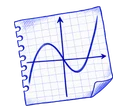 MHF4U/MCV4UAdvanced Functions 4U or Calculus and Vectors 4U
 SBI4U/SCH4U/SPH4UTwo of Biology 4U, Chemistry 4U, or Physics 4U
Entry terms · Fall (September)
September 2027 degree plan listed open in the published Concordia availability table.
Concordia September 2027 program availabilityConcordia published high school minimum indicators
Concordia Ecology degree and admission requirementsConcordia Ontario high school requirementsBSc

Concordia’s 2026–27 calendar requirements. Each list applies to its named concentration. Check the calendar for the year you enter.
BIOL 225Form and Function of Organisms3 creditsExamines how the structure and physiology of plants and animals support survival, growth and reproduction.
Concordia University 2026–27 Undergraduate Calendar, BIOL 225 BIOL 226Biodiversity and Ecology3 credits
Introduces biodiversity and evolution alongside ecological concepts such as populations, species interactions and ecosystems.
Concordia University 2026–27 Undergraduate Calendar, BIOL 226 BIOL 261Molecular and General Genetics3 credits
Introduces inheritance, chromosome behaviour, molecular genetics and genetic variation in populations.
Concordia University 2026–27 Undergraduate Calendar, BIOL 261BIOL 266Cell Biology3 creditsExamines how cells and their organelles function, including transport, signalling, division and programmed cell death.
Concordia University 2026–27 Undergraduate Calendar, BIOL 266BIOL 322Biostatistics3 creditsIntroduces statistical inference, experimental design and data analysis for the biological sciences.
Concordia University 2026–27 Undergraduate Calendar, BIOL 322BIOL 367Molecular Biology3 creditsCHEM 221Introductory Organic Chemistry I3 creditsCHEM 271Biochemistry I3 creditsBIOL 227Laboratory Studies in Biodiversity3 creditsUses tutorials and laboratory study to compare diverse organisms and understand their evolutionary relationships.
Concordia University 2026–27 Undergraduate Calendar, BIOL 227BIOL 330Vertebrate Biology3 creditsCompares how vertebrate groups evolved and how their anatomy, physiology and behaviour help them function in their environments.
Concordia University 2026–27 Undergraduate Calendar, BIOL 330BIOL 337Invertebrate Biology3 creditsSurveys invertebrate diversity through the evolution, anatomy, physiology and life histories of major animal groups.
Concordia University 2026–27 Undergraduate Calendar, BIOL 337BIOL 340Plant Biology3 creditsCompares the evolution, structure, physiology and life histories of plant groups, with examples from local flora.
Concordia University 2026–27 Undergraduate Calendar, BIOL 340BIOL 364Cell Physiology3 creditsExamines cellular processes such as energy use, movement, protein turnover and signalling.
Concordia University 2026–27 Undergraduate Calendar, BIOL 364BIOL 366Mechanisms of Development3 creditsStudies how cell interactions, gene regulation and signals govern differentiation and development.
Concordia University 2026–27 Undergraduate Calendar, BIOL 366BIOL 371Microbiology3 creditsBIOL 382Comparative Animal Physiology3 creditsCompares physiological systems across animal groups, including sensory function, circulation, respiration and digestion.
Concordia University 2026–27 Undergraduate Calendar, BIOL 382BIOL 385Entomology3 creditsStudies insect classification, anatomy, physiology and behaviour, with laboratory identification of specimens.
Concordia University 2026–27 Undergraduate Calendar, BIOL 385BIOL 321Evolution3 creditsEvaluates evidence and theories of evolution, including inheritance, natural selection and random processes.
Concordia University 2026–27 Undergraduate Calendar, BIOL 321BIOL 350The Ecology of Individuals3 creditsExamines how individual organisms adapt to conditions such as temperature, water, light and interactions with other species.
Concordia University 2026–27 Undergraduate Calendar, BIOL 350BIOL 351Basic Population Ecology3 creditsExamines population distribution and abundance through growth, regulation, survival, competition and predation.
Concordia University 2026–27 Undergraduate Calendar, BIOL 351BIOL 353Communities and Ecosystems3 creditsExamines how communities form and persist, including succession, diversity, energy flow and nutrient cycling.
Concordia University 2026–27 Undergraduate Calendar, BIOL 353BIOL 354Behavioural Ecology3 creditsExamines how behaviour adapts to ecological conditions through examples in foraging, predator avoidance and social interaction.
Concordia University 2026–27 Undergraduate Calendar, BIOL 354GEOG 363Geographic Information Systems3 creditsBIOL 450Techniques in Ecology3 creditsPractises experimental design, data collection and quantitative analysis for ecological, behavioural and evolutionary research.
Concordia University 2026–27 Undergraduate Calendar, BIOL 450BIOL 451Field Ecology3 creditsApplies sampling, experimental design and statistics to community ecology through fieldwork and follow-up analysis.
Concordia University 2026–27 Undergraduate Calendar, BIOL 451BIOL 452Population and Conservation Genetics3 creditsApplies population genetics to conservation and examines how evolutionary processes and human activity affect genetic diversity.
Concordia University 2026–27 Undergraduate Calendar, BIOL 452BIOL 457Conservation Biology3 creditsExamines conservation science and management, including threats to biodiversity and design of protected areas.
Concordia University 2026–27 Undergraduate Calendar, BIOL 457BIOL 459Aquatic Ecology3 creditsExamines production in freshwater and marine ecosystems and the role of fish in aquatic communities.
Concordia University 2026–27 Undergraduate Calendar, BIOL 459BIOL 473Environmental Microbiology3 creditsGEOG 463Advanced Geographic Information Systems3 credits Environmental regulation
 Environmental consultingWildlife managementScience education
Examples published by Concordia for this programme. Some paths require further study or professional credentials.
Arts and Science

2026–27 · Fall 2026 + winter 2027 · Per credit · CAD
Quebec residents example · Choose your category
 Tuition$103.92 / credit
Standard tuition · Approved residency and French-study exemptions change rates
Last updated

























































