




- HBA · 4 years
- Work experience details
- ~High 80s to low 90s


Concordia University · Sir George Williams
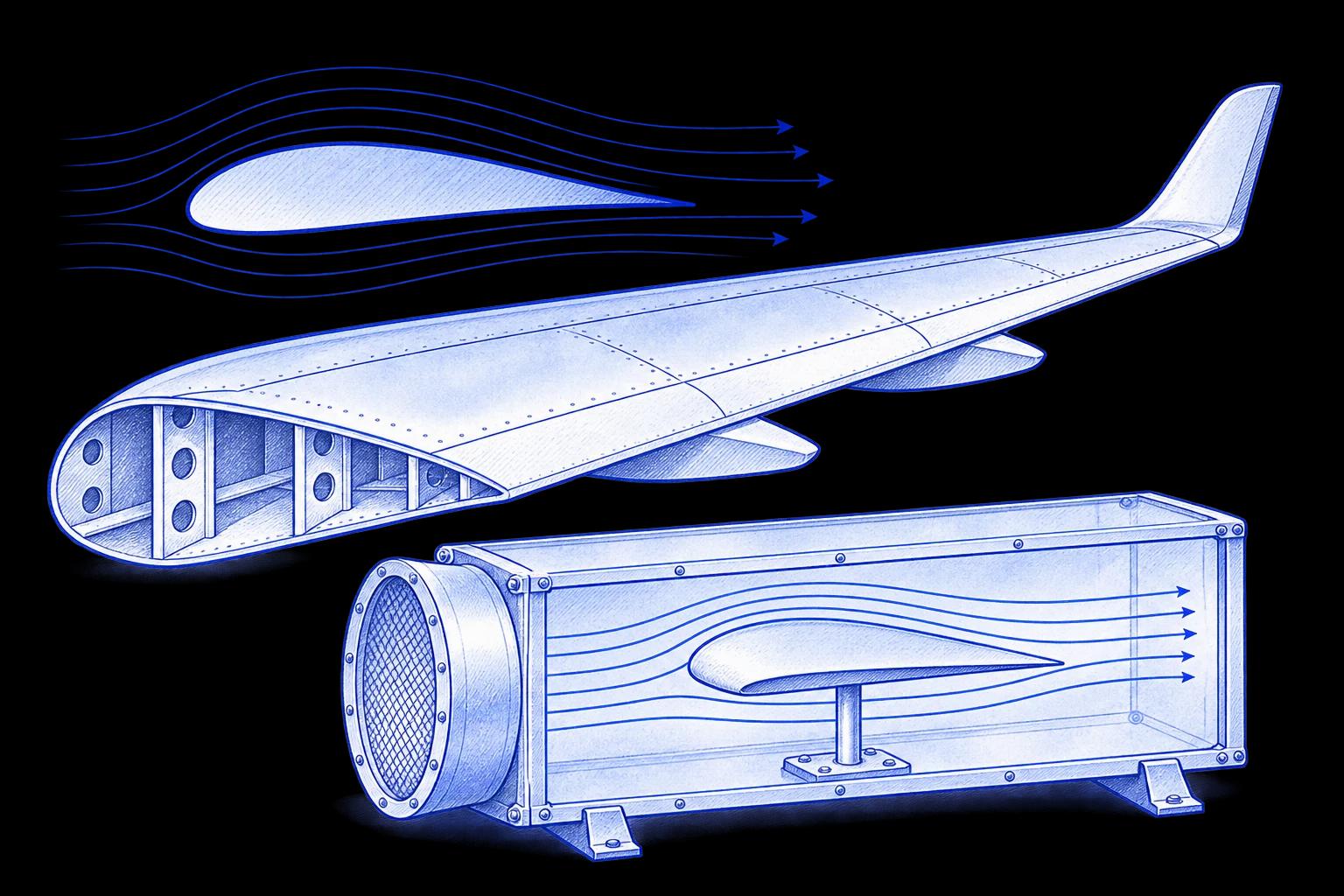
AI-generated ink illustration
Conceptual study artwork, not a photograph of teaching facilities.
Unidex · generated with ImageGen
Checked 2026-11-05
Symbolic subject artwork; no university facility depicted
Work experience
Co-op option with paid work terms of 12 to 16 weeks; Concordia's examples include modelling jet-engine performance, designing landing-gear parts and researching aircraft composites.
University work-study informationPublished threshold
Published eligibility threshold: B+ overall, A− in mathematics and physics. Published guidance checked November 2026. Published high-school minimum. Required courses vary by curriculum.
Concordia · Aerospace Engineering admission minimums November 2026
| Mon | Tue | Wed | Thu | Fri | Sat | Sun |
|---|---|---|---|---|---|---|
| 2 | 3 | 4 | 5 | 6 | 7 | 8 |
| 9 | 10 | 11 | 12 | 13 | 14 | 15 |
| 16 | 17 | 18 | 19 | 20 | 21 | 22 |
| 23 | 24 | 25 | 26 | 27 | 28 | 29 |
| 30 |

Winter 2027 entry · Only undergraduate programs still marked open in the live Winter 2027 availability table.
All Winter 2027 undergraduate programs close November 1. A closed program is unavailable already; international applicants must allow time for CAQ/study permits.
 Other deadline details
Check the university’s requirements for your province and applicant category.
Concordia University programme admission criteriaApplicants in each explicitly named curriculum or transfer category
Published high-school minimum. Required courses vary by curriculum.
Concordia · Aerospace Engineering admission minimumsCo-op option with paid work terms of 12 to 16 weeks; Concordia's examples include modelling jet-engine performance, designing landing-gear parts and researching aircraft composites.
University work-study informationBEng

Study aerodynamics and the operation and design of aerospace propulsion systems.
Current 2026/27 degree core, named alternatives and elective course banks. Individual credit values are printed by the calendar. Elective/route menus are choices, not all mandatory courses. Option B and Option C follow the published regular September plans. Option A has a separate mapped plan.
AERO 201Introduction to Flight and Aerospace Systems4 credits ENGR 213Applied Ordinary Differential Equations3 credits
 ENGR 201Professional Practice and Responsibility1.5 creditsENGR 242Statics3 credits
 MIAE 215Programming for Mechanical, Industrial and Aerospace Engineers3.5 credits
 AERO 253Thermal Sciences for Aerospace Engineering3 credits
 ENCS 282Technical Writing and Communication3 creditsENGR 233Applied Advanced Calculus3 creditsENGR 243Dynamics3 credits
 ENGR 244Mechanics of Materials3.75 credits
 ENGR 202Sustainable Development and Environmental Stewardship1.5 creditsENGR 311Transform Calculus and Partial Differential Equations3 credits
 ENGR 371Probability and Statistics in Engineering3 creditsMIAE 211Mechanical Engineering Drawing3.5 creditsMIAE 221Materials Science3 credits
 AERO 290Introduction to Aircraft Design3 creditsAERO 371Modelling and Control Systems3.5 creditsENGR 361Fluid Mechanics I3 creditsMECH 343Theory of Machines3.5 creditsMIAE 313Machine Drawing and Design3.5 creditsAERO 390Aerospace Engineering Design Project3 creditsAERO 417Standards, Regulations and Certification3 creditsAERO 481Materials Engineering for Aerospace3.5 credits
 MECH 373Instrumentation and Measurements3.5 creditsMIAE 311Manufacturing Processes3 creditsMIAE 312Engineering Design and Manufacturing Processes Lab1 credits
 ENGR 301Engineering Management Principles and Economics3 creditsENGR 391Numerical Methods in Engineering3 creditsENGR 392Impact of Technology on Society3 creditsMECH 375Mechanical Vibrations3.5 credits
 MIAE 383Applied Machine Learning in Mechanical, Industrial and Aerospace Engineering3.5 credits
AERO 490 is one 6-credit capstone spanning Year 4 Fall and Winter.
AERO 431Principles of Aeroelasticity3.5 creditsAERO 486Aircraft Stress Analysis3 creditsMECH 412Computer‑Aided Mechanical Design3.5 creditsAERO 490Capstone Aerospace Engineering Design Project6 creditsAERO 490 continues from Fall. The sequence also lists a 3-credit General Education requirement in Winter.
AERO 487Design of Aircraft Structures3 creditsMECH 460Finite Element Analysis3.75 creditsAERO 201Introduction to Flight and Aerospace Systems4 creditsCOEN 243Programming Methodology I3.5 creditsENGR 213Applied Ordinary Differential Equations3 creditsENGR 233Applied Advanced Calculus3 creditsENGR 242Statics3 creditsELEC 273Basic Circuit Analysis3.5 creditsENCS 282Technical Writing and Communication3 creditsENGR 243Dynamics3 creditsENGR 244Mechanics of Materials3.75 creditsENGR 201Professional Practice and Responsibility1.5 creditsCOEN 212Digital Systems Design I3.5 credits COEN 231Introduction to Discrete Mathematics3 creditsELEC 242Continuous‑Time Signals and Systems3 creditsENGR 202Sustainable Development and Environmental Stewardship1.5 creditsENGR 371Probability and Statistics in Engineering3 creditsAERO 290Introduction to Aircraft Design3 creditsAERO 371Modelling and Control Systems3.5 creditsCOEN 244Programming Methodology II3 creditsELEC 342Discrete‑Time Signals and Systems3.5 creditsAERO 253Thermal Sciences for Aerospace Engineering3 credits
The current course calendar accepts COEN 243 or MIAE 215 alongside ENGR 371 for MIAE 383. The sequence PDF prints only MIAE 215.
AERO 390Aerospace Engineering Design Project3 creditsCOEN 352Data Structures and Algorithms3 creditsELEC 481Linear Systems3.5 creditsENGR 361Fluid Mechanics I3 creditsMIAE 383Applied Machine Learning in Mechanical, Industrial and Aerospace Engineering3.5 creditsCOEN 311Computer Organization and Software3.5 creditsELEC 483Real‑Time Computer Control Systems3.5 creditsENGR 301Engineering Management Principles and Economics3 creditsENGR 391Numerical Methods in Engineering3 creditsSOEN 341Software Process and Practices4 creditsAERO 490 is one 6-credit capstone spanning Year 4 Fall and Winter. Technical elective timing spans Fall and Winter in the source; choose at least 4.75 credits under the current calendar.
AERO 417Standards, Regulations and Certification3 creditsAERO 482Avionic Navigation Systems3 creditsENGR 392Impact of Technology on Society3 creditsAERO 490Capstone Aerospace Engineering Design Project6 creditsAERO 490 continues from Fall. The sequence also lists a 3-credit General Education requirement in Winter. Technical elective timing spans Fall and Winter in the source; choose at least 4.75 credits under the current calendar.
AERO 483Integration of Avionics Systems3 creditsMapped termsPublished 2026–27 recommended Aerospace Engineering Option A (Aerodynamics and Propulsion), regular September entry, Years 1–4. Other options/intakes are separate. The Year 4 capstone and technical-elective area span Fall/Winter; unspecified elective allocations remain unknown. This is not a guaranteed timetable.
AERO 201Introduction to Flight and Aerospace Systems4 creditsIntroduction to flight vehicles in the atmosphere and in space; elements of aerodynamics, airfoils and wings; aerospace technologies including structures, materials and propulsion systems; elements of aircraft performance; basic principles of flight stability, control and systems integration; aspects of aircraft conceptual design.
ENGR 201Professional Practice and Responsibility1.5 creditsHealth and safety issues for engineering projects: Quebec and Canadian legislation; safe work practices; general laboratory safety common to all engineering disciplines, and specific laboratory safety pertaining to particular engineering disciplines. Review of the legal framework in Quebec, particularly the Professional Code and the Engineers Act, as well as professional ethics.
ENGR 213Applied Ordinary Differential Equations3 creditsThis course introduces Engineering students to the theory and application of ordinary differential equations. Definition and terminology, initial‑value problems, separable differential equations, linear equations, exact equations, solutions by substitution, linear models, orthogonal trajectories, complex numbers, form of complex numbers: powers and roots, theory: linear equations, homogeneous linear equations with constant coefficients, undetermined coefficients, variation of parameters, Cauchy‑Euler equation, reduction of order, linear models: initial value, review of power series, power series solutions, theory, homogeneous linear systems, solution by diagonalization, non‑homogeneous linear systems. Eigenvalues and eigenvectors.
ENGR 242Statics3 creditsResultant of force systems; equilibrium of particles and rigid bodies; distributed forces; statically determinate systems; trusses; friction; moments of inertia; virtual work. Shear and bending moment diagrams.
MIAE 215Programming for Mechanical, Industrial and Aerospace Engineers3.5 creditsThis course focuses on writing programs using assignment and sequences; variables and types; operators and expressions; conditional and repetitive statements; input and output; file access; functions; program structure and organization; pointers and dynamic memory allocation; introduction to classes and objects . The course introduces Python programming for machine learning and includes mechanical and industrial engineering applications.
ENCS 282 requires the published Writing Skills Requirement. The table’s prerequisites and co-requisites also apply.
ENCS 282Technical Writing and Communication3 creditsTechnical writing form and style. Technical and scientific papers, abstracts, reports. Library research and referencing methods for engineers and computer scientists. Technical communication using information technology: document processing software, computer‑assisted presentation, analysis and design of web presentation, choice and use of appropriate tools. Students will prepare an individual major report and make an oral presentation
ENGR 233Applied Advanced Calculus3 creditsThis course introduces Engineering students to the theory and application of advanced calculus. Functions of several variables, partial derivatives, total and exact differentials, approximations with differentials. Tangent plane and normal line to a surface, directional derivatives, gradient. Double and triple integrals. Polar, cylindrical, and spherical coordinates. Change of variables in double and triple integrals. Vector differential calculus; divergence, curl, curvature, line integrals, Green’s theorem, surface integrals, divergence theorem, applications of divergence theorem, Stokes’ theorem.
ENGR 243Dynamics3 creditsKinematics of a particle and rigid body; forces and accelerations; work and energy; impulse and momentum; dynamics of a system of particles and rigid bodies, introduction to vibrations.
ENGR 244Mechanics of Materials3.75 creditsThis course covers the following topics: mechanical behaviour of materials; stress; strain; review of shear and bending moment diagrams; analysis and design of structural and machine elements subjected to axial, torsional, and flexural loadings; combined stresses and stress transformation; deflections; introduction to elastic stability and buckling behaviour.
ENGR 251Thermodynamics I3 creditsBasic principles of thermodynamics and their application to various systems composed of pure substances and their homogeneous non‑reactive mixtures. Simple power production and utilization cycles.
ENGR 202Sustainable Development and Environmental Stewardship1.5 creditsIntroduction to the concept of sustainable development and the approaches for achieving it. Relationships with economic, social, and technological development. Methods for evaluating sustainability of engineering projects, including utilization of relevant databases and software. Impact of engineering design and industrial development on the environment. Case studies.
ENGR 311Transform Calculus and Partial Differential Equations3 creditsThis course covers the following topics: the Laplace transforms and their application to the solution of ordinary differential equations; Fourier series; elements of partial differential equations; Fourier method of separation of variables for the solution of partial differential equations; the one-dimensional transient heat conduction parabolic equation; the one-dimensional wave hyperbolic equation; the two-dimensional Laplace elliptic equation.
ENGR 371Probability and Statistics in Engineering3 creditsThis course starts out with axioms of probability theory, events, conditional probability and Bayes theorem. Next, random variables are introduced. Here, mathematical expectation, discrete and continuous probability density functions are covered. In statistics sampling distributions, interval estimation and hypothesis testing are introduced. The course includes applications to engineering problems.
MIAE 221Materials Science3 creditsThis course focuses on relationships between properties and internal structure, atomic bonding; molecular, crystalline and amorphous structures, crystalline imperfections and mechanisms of structural change; microstructures and their development from phase diagrams; structures and mechanical properties of polymers and ceramics; thermal and optical properties of materials.
MIAE 211Mechanical Engineering Drawing3.5 creditsThis course is an introduction to graphic language and design ; means and techniques. The following topics are covered: the third and the first angle projections; orthographic projection of points, lines, planes and solids; principal and auxiliary views; views in a given direction; sectional views; intersection of lines, planes and solids; development of surfaces; drafting prac tices; dimensioning, fits and tolerancing; computer ‑ aided drawing and solid modelling; working drawings ; detail and assembly drawing; design practice; machine elements representation.
AERO 290Introduction to Aircraft Design3 creditsStudents taking this course will work as part of a multidisciplinary team to solve an assigned aerospace conceptual design problem. The course provides introductory, design‑related knowledge on aerospace design topics including structural layout, powerplant integration, integrated systems requirements (such as avionics, electrical, flight controls, hydraulic, fuel, air, pressurization) and preliminary performance predictions. Lectures instruct students on the conceptual design process; aircraft sizing including take‑off weight, empty weight and fuel‑fraction estimates; mission analysis and trade studies; airfoil selection; constraint diagrams for thrust‑to‑weight and wing loading estimation; fuselage layout, engines and control surface sizing; structural and systems layout; introductory stability, control and performance; and cost analysis methods.
AERO 371Modelling and Control Systems3.5 creditsDefinition and classification of dynamic systems and components. Modelling of system components using ordinary differential equations: mechanical, electrical, electromechanical, and electrohydraulic subsystems in an airplane. Modelling of systems using transfer function models, block diagrams and signal flow graphs. Linearization of non‑linear systems. Transient and steady‑state characteristics of dynamic systems. Systems analyses using time domain methods, root‑locus methods, and frequency response methods. Characteristics and performance of linear feedback control systems. System stability. Proportional, integral and derivative controllers. Simulation technique using Matlab/Simulink.
ENGR 361Fluid Mechanics I3 creditsThe course covers basic concepts and principles of fluid mechanics. Classification of fluid flow. Hydrostatic forces on plane and curved surfaces, buoyancy and stability, fluids in rigid body motion. Mass, momentum, and energy conservation integral equations. Bernoulli equation. Basic concepts of pipe and duct flow. Introduction to Navier‑Stokes equations. Similarity and model studies.
MECH 343Theory of Machines3.5 creditsIntroduction to mechanisms; position and displacement; velocity; acceleration; synthesis of linkage; robotics; static force analysis; dynamic force analysis; forward kinematics and inverse kinematics; introduction to gear analysis and gear box design; kinematic analysis of spatial mechanisms.
MECH 351Thermodynamics II3.5 creditsBrief review of ideal gas processes. Semi‑perfect gases and the gas tables. Mixtures of gases, gases and vapours, air conditioning processes. Combustion and combustion equilibrium. Applications of thermodynamics to power production and utilization systems: study of basic and advanced cycles for gas compression, internal combustion engines, power from steam, gas turbine cycles, and refrigeration. Real gases.
AERO 390Aerospace Engineering Design Project3 creditsThis course focuses on general design philosophy and the design process. The following topics are covered: design factors such as product safety, reliability, life cycle costs and manufacturability; design in the aerospace context (vehicle and system design with regard to mission requirements, configuration, sizing, loads, etc.); mathematical modelling, analysis, and validation; introduction to Computer‑Aided Design and Engineering (CAD and CAE); design documentation. A team‑based project in which an aerospace system/subsystem is designed, implemented, documented and presented is an intrinsic part of this course.
AERO 481Materials Engineering for Aerospace3.5 creditsDifferent types of materials used in aerospace. Metals, composites, ceramics, polymers. Failure prediction and prevention. Modes of material failure, fracture, fatigue, creep, corrosion, impact. Effect of high temperature and multiaxial loadings. High temperature materials. Cumulative damage in fatigue and creep. Materials selection.
ENGR 391Numerical Methods in Engineering3 creditsThis course focuses on roots of algebraic and transcendental equations; function approximation; solution of simultaneous algebraic equations; interpolation; regression; introduction to machine learning; numerical differentiation; numerical integration; numerical solutions of ordinary differential equations and partial differential equations; reliability; conditioning; error analysis. Implementation using GNU Octave/MATLAB.
MECH 361Fluid Mechanics II3.5 creditsThis course covers elements of fluid mechanics, building on topics introduced in ENGR 361 . Topics include t he mechanical properties of fluids and the concepts of stress and strain in fluid mechanics. The continuity equation is discussed. The stream function, velocity potential and vorticity are introduced as well as potential irrotational flows. The Navier -Stokes Equations and their elementary solutions are discussed. Students are introduced to laminar and turbulent flows, flows around solid bodies, boundary layers, separation and wakes. Finally, compressible flows are introduced.
MIAE 383Applied Machine Learning in Mechanical, Industrial and Aerospace Engineering3.5 creditsThis course introduces machine learning (ML) methods with a focus on mechanical, industrial, and aerospace engineering (MIAE) applications. Topics include data analytics (data handling, cleaning, outlier detection, domain-driven feature extraction), supervised learning (regression, classification, ensembles), unsupervised learning (clustering, dimensionality reduction), and advanced topics (e.g., neural networks, reinforcement learning for decision-making, and generative artificial intelligence (AI) for design). Ethical and safety considerations in high-risk fields are explored. Emphasis is placed on ML in critical systems and MIAE-centric use cases, such as rotating machinery vibration, flight anomaly detection, flow control, predictive maintenance, manufacturing quality inspection, thermo-fluid systems, digital twins, and data-driven design of components.
AERO 455Computational Fluid Dynamics for Aerospace Applications3.75 creditsIntroduction to computational methods in fluid dynamics using commercial CFD codes; aspects of geometry modelling, structured and unstructured grid generation, solution strategy, and post‑processing; conversion of CAD to CFD models; an overview of basic numerical methods for the Navier‑Stokes equations with emphasis on accuracy evaluation and efficiency. Elements of turbulence closure modelling. User‑defined function for customized physical models into commercial CFD codes.
AERO 464Aerodynamics3 creditsFlow conservation equations, incompressible Navier‑Stokes equations, inviscid irrotational and rotational flows: the Euler equations, the potential and stream function equations. Dynamics of an incompressible inviscid flow field: the Kelvin, Stokes, and Helmholtz theorems. Elementary flows and their superposition, panel method for non‑lifting bodies. Airfoil and wing characteristics, aerodynamic forces and moments coefficients. Incompressible flows around thin airfoils, Biot‑Savart law, vortex sheets. Incompressible flow around thick airfoils, the panel method for lifting bodies. Incompressible flow around wings, Prandtl’s lifting line theory, induced angle and down‑wash, unswept wings, swept wings. Compressible subsonic flow: linearized theory, Prandlt‑Glauert equation and other compressibility correction rules, the area rule. Transonic flow: Von Karman’s ransonic small disturbance equation, transonic full potential equation, super‑critical airfoils.
ENGR 301Engineering Management Principles and Economics3 creditsIntroduction to project delivery systems. Principles of project management; role and activity of a manager; enterprise organizational charts; cost estimating; planning and control. Company finances; interest and time value of money; discounted cash flow; evaluation of projects in private and public sectors; depreciation methods; business tax regulations; decision tree; sensitivity analysis.
ENGR 392Impact of Technology on Society3 creditsSocial history of technology and of science including the industrial revolution and modern times. Engineering and scientific creativity, social and environmental problems created by uncontrolled technology, appropriate technology.
MECH 352Heat Transfer I3.5 creditsAnalytical and numerical methods for steady‑state and transient heat conduction. Empirical and practical relations for forced‑ and free‑convection heat transfer. Radiation heat exchange between black bodies, and between non‑black bodies. Gas radiation. Solar radiation. Effect of radiation on temperature measurement.
The source prints AERO 490 as a single 6-credit project spanning Fall and Winter. It appears once here for course inventory; no allocation of all 6 credits to the Fall workload is implied. Technical electives span the Year 4 Fall/Winter area without a per-term allocation; consult the Academic Requirements Report.
AERO 417Standards, Regulations and Certification3 creditsOverview of DoT and other international aviation standards (e.g. FAA), regulations and certification procedures; regulatory areas, namely, pilot training/testing, air traffic procedures, aircraft systems design and airworthiness; development process for new regulations and criteria for certification.
AERO 462Turbomachinery and Propulsion3 creditsThis course covers the following topics: review of the gas turbine cycle and components arrangement; turbo‑propulsion (turboprop, turbofan, turbojet and turboshafts); energy transfer in turbomachines (Euler equation, velocity triangles); dimensional analysis of turbomachines; flow in turbomachines; three‑dimensional flow in turbomachines; mechanisms of losses in turbomachines; axial‑flow turbines and compressors; centrifugal compressors; compressor and turbine performance maps; surge and stall.
MECH 461Gas Dynamics3.5 creditsReview of one‑dimensional compressible flow. Normal and oblique shock waves; Prandtl‑Meyer flow; combined effects in one‑dimensional flow; non‑ideal gas effects; multi‑dimensional flow; linearized flow; method of characteristics. Selected experiments in supersonic flow, convergent‑divergent nozzles, hydraulic analog and Fanno tube.
AERO 490Capstone Aerospace Engineering Design Project6 creditsThis course includes a supervised design, simulation or experimental capstone design project including a preliminary project proposal with complete project plan and a technical report at the end of the fall term; a final report by the group and presentation at the end of the winter term.
Also one 3-credit General Studies requirement. AERO 490 continues across Fall/Winter with the one 6-credit project weight counted once. The native technical-elective area covers both terms without specifying a term-by-term allocation.
AERO 465Gas Turbine Design3.5 creditsReview of turbo‑propulsion types and energy transfer in turbomachines. Two‑ and three‑dimensional flow. Lift and drag for airfoils. Cascade tests and correlations. Aerodynamic losses: physics, mechanisms, control of viscous effects. Preliminary and detailed design of turbines and compressors. Structural and thermal design requirements. Failure considerations: creep, fatigue and corrosion. Performance matching. Combustion and gearbox design. Air and oil systems design requirements. Installations and acoustics. Evolution of design. Recent trends in technologies.
AERO 455Computational Fluid Dynamics for Aerospace Applications3.75 creditsIntroduction to computational methods in fluid dynamics using commercial CFD codes; aspects of geometry modelling, structured and unstructured grid generation, solution strategy, and post‑processing; conversion of CAD to CFD models; an overview of basic numerical methods for the Navier‑Stokes equations with emphasis on accuracy evaluation and efficiency. Elements of turbulence closure modelling. User‑defined function for customized physical models into commercial CFD codes.
CONCORDIA complete current official course definitionAERO 462Turbomachinery and Propulsion3 creditsThis course covers the following topics: review of the gas turbine cycle and components arrangement; turbo‑propulsion (turboprop, turbofan, turbojet and turboshafts); energy transfer in turbomachines (Euler equation, velocity triangles); dimensional analysis of turbomachines; flow in turbomachines; three‑dimensional flow in turbomachines; mechanisms of losses in turbomachines; axial‑flow turbines and compressors; centrifugal compressors; compressor and turbine performance maps; surge and stall.
Published notes: This course is equivalent to MECH 462. Students who have received credit for MECH 462 may not take this course for credit. Students who have received credit for MECH 468 may not take this course for credit.
CONCORDIA complete current official course definitionAERO 464Aerodynamics3 creditsFlow conservation equations, incompressible Navier‑Stokes equations, inviscid irrotational and rotational flows: the Euler equations, the potential and stream function equations. Dynamics of an incompressible inviscid flow field: the Kelvin, Stokes, and Helmholtz theorems. Elementary flows and their superposition, panel method for non‑lifting bodies. Airfoil and wing characteristics, aerodynamic forces and moments coefficients. Incompressible flows around thin airfoils, Biot‑Savart law, vortex sheets. Incompressible flow around thick airfoils, the panel method for lifting bodies. Incompressible flow around wings, Prandtl’s lifting line theory, induced angle and down‑wash, unswept wings, swept wings. Compressible subsonic flow: linearized theory, Prandlt‑Glauert equation and other compressibility correction rules, the area rule. Transonic flow: Von Karman’s ransonic small disturbance equation, transonic full potential equation, super‑critical airfoils.
Published notes: This course is equivalent to MECH 464. Students who have received credit for MECH 464 may not take this course for credit.
CONCORDIA complete current official course definitionAERO 465Gas Turbine Design3.5 creditsReview of turbo‑propulsion types and energy transfer in turbomachines. Two‑ and three‑dimensional flow. Lift and drag for airfoils. Cascade tests and correlations. Aerodynamic losses: physics, mechanisms, control of viscous effects. Preliminary and detailed design of turbines and compressors. Structural and thermal design requirements. Failure considerations: creep, fatigue and corrosion. Performance matching. Combustion and gearbox design. Air and oil systems design requirements. Installations and acoustics. Evolution of design. Recent trends in technologies.
Published notes: This course is equivalent to MECH 465. Students who have received credit for MECH 465 may not take this course for credit.
CONCORDIA complete current official course definitionENGR 251Thermodynamics I3 creditsBasic principles of thermodynamics and their application to various systems composed of pure substances and their homogeneous non‑reactive mixtures. Simple power production and utilization cycles.
CONCORDIA complete current official course definitionMECH 351Thermodynamics II3.5 creditsBrief review of ideal gas processes. Semi‑perfect gases and the gas tables. Mixtures of gases, gases and vapours, air conditioning processes. Combustion and combustion equilibrium. Applications of thermodynamics to power production and utilization systems: study of basic and advanced cycles for gas compression, internal combustion engines, power from steam, gas turbine cycles, and refrigeration. Real gases.
CONCORDIA complete current official course definitionMECH 352Heat Transfer I3.5 creditsAnalytical and numerical methods for steady‑state and transient heat conduction. Empirical and practical relations for forced‑ and free‑convection heat transfer. Radiation heat exchange between black bodies, and between non‑black bodies. Gas radiation. Solar radiation. Effect of radiation on temperature measurement.
CONCORDIA complete current official course definitionMECH 361Fluid Mechanics II3.5 creditsThis course covers elements of fluid mechanics, building on topics introduced in ENGR 361 . Topics include t he mechanical properties of fluids and the concepts of stress and strain in fluid mechanics. The continuity equation is discussed. The stream function, velocity potential and vorticity are introduced as well as potential irrotational flows. The Navier -Stokes Equations and their elementary solutions are discussed. Students are introduced to laminar and turbulent flows, flows around solid bodies, boundary layers, separation and wakes. Finally, compressible flows are introduced.
CONCORDIA complete current official course definitionMECH 461Gas Dynamics3.5 creditsReview of one‑dimensional compressible flow. Normal and oblique shock waves; Prandtl‑Meyer flow; combined effects in one‑dimensional flow; non‑ideal gas effects; multi‑dimensional flow; linearized flow; method of characteristics. Selected experiments in supersonic flow, convergent‑divergent nozzles, hydraulic analog and Fanno tube.
CONCORDIA complete current official course definition AERO 446Aerospace Vehicle Performance3 credits
Introduction to fixed‑wing aircraft operation. Flying environment and its measurement by aircraft instrumentation. Computation of lift and drag, effects of viscosity and compressibility. Review of piston, turboprop, turbojet and turbofan power plants. Operational performance of aircraft in climb, cruise, descent and on ground. Advanced aircraft systems. Operational considerations in aircraft design. Projects on selected topics.
CONCORDIA complete current official course definitionAERO 471Aircraft Hydro‑Mechanical and Fuel Systems3.5 creditsThis course focuses on design principles and sizing of the following aircraft systems: hydraulic system, primary and secondary flight control actuation systems, landing gear systems, and fuel system. Traditional and new technology implementations in aircraft, helicopters and other aerospace vehicles are considered. Associated standards and regulations are described. Principles of architecture development and integration, as well as engineering tools for system sizing and simulation, are covered.
CONCORDIA complete current official course definitionAERO 472Aircraft Pneumatic and Electrical Power Systems3.5 creditsThis course focuses on design principles and sizing of the following aircraft systems: electrical power system, auxiliary and emergency power systems, environmental control system, ice and rain protection system, and pneumatic power system. Traditional and new technology implementations in aircraft, helicopters and other aerospace vehicles are considered. Associated standards and regulations are described. Principles of architecture development and integration, as well as engineering tools for system sizing and simulation, are covered. A project is required, including a laboratory component.
CONCORDIA complete current official course definitionAERO 480Flight Control Systems3.5 creditsBasic flight control and flight dynamics principles. Aircraft dynamic equations and performance data. Implementation of aircraft control: control surfaces and their operations, development of thrust and its control; autopilot systems, their algorithms, dynamics and interaction problems. Flight instruments, principles of operation and dynamics. Cockpit layouts ; basic configuration, ergonomic design, control field forces; advanced concepts in instruments, avionics and displays; HUD; flight management systems, and communication equipment. Introduction to flight simulation: overview of visual, audio and motion simulator systems; advanced concepts in flight simulators.
Published notes: This course is equivalent to ELEC 415 and to MECH 480. Students who have received credit for ELEC 415 or MECH 480 may not take this course for credit.
CONCORDIA complete current official course definitionAERO 485Introduction to Space Systems3 creditsClassification of space propulsion systems; Tsiolkovskj’s equation; ideal rocket and nozzle design; flight performance; basic orbital mechanics; chemical propellant rocket performance analysis; fundamentals of liquid and solid propellant rocket motors; electric, solar, fusion thruster.
Published notes: This course is equivalent to MECH 485. Students who have received credit for MECH 485 or for this topic under a MECH 498 number may not take this course for credit.
CONCORDIA complete current official course definitionENGR 411Special Technical Report1 creditsStudents must submit a report on a topic related to the students’ discipline and approved by the Department. The report must present a review of a current engineering problem, a proposal for a design project, or a current engineering practice.
Published notes: Students who have received credit for ENGR 410 may not take this course for credit.
CONCORDIA complete current official course definition ENGR 412Honours Research Project3 credits
Students work on a research project in their area of concentration, selected in consultation with and conducted under the supervision of a faculty member of the Department. The student’s work must culminate in a final report, as well as an oral presentation. Students planning to register for this course should consult with the Department prior to term of planned registration. Intended for students with potential interest in graduate programs.
Published notes: Must be approved by the Department prior to registration
CONCORDIA complete current official course definitionINDU 372Quality Control and Reliability3 creditsImportance of quality; total quality management; statistical concepts relevant to process control; control charts for variables and attributes; sampling plans. Introduction to reliability models and acceptance testing; issues of standardization.
CONCORDIA complete current official course definition INDU 412Human Factors Engineering3.5 credits
Elements of anatomy, physiology, and psychology; engineering anthropometry; human capacities and limitations; manual material handling; design of workplaces; human‑machines system design; design of controls and displays; shift work. Applications to a manufacturing environment.
CONCORDIA complete current official course definitionMECH 368Electronics for Mechanical Engineers3.5 creditsThis course covers the following topics: voltage and current dividers, voltage and current sources, Thevenin and Norton equivalent sources; semiconductors and diodes; amplifiers and switches; operational amplifiers; digital logic components and circuits (flip-flops, registers, memories, MUX/DEMUX, etc.); digital systems; digital communication and computer architecture.
Published notes: Electrical Engineering and Computer Engineering students may not take this course for credit. Students who have received credit for MECH 470 may not take this course for credit.
CONCORDIA complete current official course definitionMECH 426Stress and Failure Analysis of Machinery3 creditsAnalysis of stresses, strains and deformations in machine elements; non‑symmetric bending of beams; shear centre for thin‑walled beams; curved beams; torsion of non‑circular shafts and tubes; thick wall cylinders; plates and shells; contact elements; stress concentrations; energy methods; failure modes, analysis and prevention; buckling, fracture, fatigue and creep.
CONCORDIA complete current official course definitionMECH 451Renewable Energy: Fundamentals and Applications3 creditsThis course introduces the fundamental aspects and the main applications of renewable energy systems. The focus is on the thermodynamics, heat transfer and fluid mechanics aspects of renewable energy systems. The course covers the following topics: review of thermodynamics, review of heat transfer, review of fluid mechanics, solar energy, wind energy, hydropower, geothermal energy, biomass energy, ocean energy and hydrogen and fuel cells.
CONCORDIA complete current official course definitionMECH 452Heat Transfer II3.5 creditsHeat exchangers. Condensation and boiling heat transfer. Principles of forced convection. Analysis of free convection from a vertical wall. Correlations for free convection in enclosed spaces. Mass transfer. Special topics of heat transfer.
CONCORDIA complete current official course definitionMECH 453Heating, Ventilation and Air Conditioning Systems3 creditsThis course covers the following topics: heating and cooling load calculation; overview of heating and air conditioning systems; review of v apour compression refrigeration cycles, refrigerant properties, and psychometrics; performance characteristics of components (evaporators, condensers, compressors, and throttling devices, such as expansion valves and capillary tubes); system performance characteristics (calculation of system operating conditions based on the capacities of its components and outdoor and indoor conditions); d efrosting; estimation of energy consumption for heating with heat pumps; fundamentals of refrigerant piping, water piping, and air distribution systems.
CONCORDIA complete current official course definitionMECH 498Topics in Mechanical Engineering3 creditsThis course may be offered in a given year upon the authorization of the Mechanical, Industrial and Aerospace Engineering Department. The course content may vary from offering to offering and will be chosen to complement the elective courses available in a given option or options.
CONCORDIA complete current official course definitionCOEN 313Digital Systems Design II3.5 creditsIn this course, students are exposed to a comprehensive overview of VHDL language and the synthesis process for the design of digital systems. First, students learn the hardware implementation of basic VHDL language constructs, then they are exposed to the core of the RT-level design, including combinational circuits, "regular" sequential circuits, finite state machines, and circuits designed using register transfer methodology. Students are introduced as well to concepts related to metastability, self-timed circuits, programmable logic devices, field programmable gate arrays and testing issues.
CONCORDIA complete current official course definitionCOEN 317Microprocessor‑Based Systems3.5 creditsFirst, an introduction on a brief history of microprocessors is presented. Then, students get familiar with microprocessor architecture, its instructions, bus organization, data transfer and memory interfacing. Next, the focus of the course is placed on the fundamentals of interfacing. Students learn how to use General Purpose Input Outputs (GPIOs) to connect various peripheral devices to the microprocessor and write programs to control these devices. Examples of peripheral devices are Light Emitting Diodes (LEDs), switches, timer/counters, seven-segment LED displays, Liquid Crystal Displays (LCDs) and sensors. They also learn how to configure serial communication protocols. Moreover, students are exposed to advanced topics including interrupt system and Direct Memory Access (DMA).
Published notes: Students who have received credit for COEN 417 may not take this course for credit.
CONCORDIA complete current official course definitionCOEN 320Introduction to Real‑Time Systems3.5 creditsThis course covers the fundamentals of real‑time systems, which include their definitions, requirements, design issues, and applications. It also covers the critical features of real‑time operating systems (RTOS), such as multi-tasking, process management, scheduling of periodic, aperiodic, and sporadic tasks, interprocess communication and synchronization, real‑time memory management, clocks and timers, interrupts and exceptions handling, message queues, and asynchronous input/output. Students learn how to program POSIX real-time, periodic, aperiodic, and sporadic threads by using concurrent programming languages and a real-time development environment. Moreover, this course covers real‑time uniprocessor scheduling policies: static vs. dynamic, pre‑emptive vs. non‑pre‑emptive scheduling algorithms, and some specific techniques ; rate‑monotonic, earliest‑deadline‑first, deadline monotonic, least‑laxity‑time‑first; clock‑driven scheduling. Techniques used to design, model, and specify real-time systems, such as finite state machines, UML state machines, and Petri and Timed Petri Networks, are introduced. This course also introduces reliability and fault‑tolerance in real-time systems and presents some case studies of RTOS ; QNX, VxWorks, and research prototypes.
CONCORDIA complete current official course definitionCOEN 346Operating Systems3.5 creditsThe evolution, architecture, and use of modern operating systems (OS). Multi‑tasking, concurrency and synchronization, IPC, deadlock, resource allocation, scheduling, multi‑threaded programming, memory and storage managements, file systems, I/O techniques, buffering, protection and security, the client/server paradigm and communications. Introduction to real time operating systems. Students write substantial programs dealing with concurrency and synchronization in a multi‑tasking environment.
Published notes: Students who have received credit for COMP 346 may not take this course for credit.
CONCORDIA complete current official course definitionCOEN 366Communication Networks and Protocols3.5 creditsThe main objectives of the course are an introduction to computer networks, architectures, protocols, and their fundamentals. Topics covered in the course include communications protocols basics, flow control, error detection and error control techniques, network topologies including local area networks (LANs) and wide area networks (WANs), layered architecture standards (OSI and TCP/IP), standard protocols, and their fundamentals, application and socket programming.
Published notes: Students who have received credit for ELEC 366 , ELEC 463 or COEN 445 may not take this course for credit.
CONCORDIA complete current official course definitionCOEN 413Hardware Functional Verification3.5 creditsThis course is about functional verification techniques and tools for hardware systems. It starts with the review of hardware design languages and the definition of hardware functional verification, then it introduces basic object-oriented programming notions, such as classes, methods, inheritance, threads, inter-process communications, and virtual methods. Students are later introduced to coverage metrics, functional coverage, and functional verification CAD tools. Students learn the use of SystemVerilog language to develop class-based verification environment based on the universal verification methodology (UVM). Students are exposed to practical verification case studies.
CONCORDIA complete current official course definitionCOEN 421Embedded Systems Design4 creditsEmbedded systems, foundations for cyber‑physical systems design. Embedded HW architectures, sensors, actuators, processors. IO and peripherals, memory architectures, interfacing memory and peripheral. Hardware‑software partitioning, software transformations, floating to fixed point conversion, loop transformations, code compaction, low‑power design and embedded system testing.
CONCORDIA complete current official course definitionCOEN 498Topics in Computer Engineering3 creditsThe course, when offered, will include topics which complement elective courses in computer engineering and computer science
CONCORDIA complete current official course definitionELEC 251Fundamentals of Applied Electromagnetics3 creditsThis course provides a comprehensive introduction to engineering electromagnetics using vector calculus. The course starts with electrostatics including electric charge, Coulomb’s Law, electrostatic forces, electric field, Gauss’s Law, electric potential, stored energy and Laplace’s Equation and its solution using the separation of variable technique . The electrical properties of dielectric materials are studied, including electrets, permittivity, and capacitance. Currents in wires and in material media are studied, including conductivity and resistance, conduction in a vacuum, displacement current and Ampere’s Law. The course presents magnetostatics, the Biot-Savart Law, the magnetic field of a current, the magnetic force on a wire, and the energy stored in a magnetic field. Magnetic induction and Faraday’s Law are studied, including inductance and mutual inductance, electromotive force and magnetic circuits. The magnetic properties of materials are presented, including ferromagnetism and hysteresis. The course concludes with an introduction to time-varying electric and magnetic fields, and Maxwell’s Equations in differential form.
CONCORDIA complete current official course definitionELEC 311Electronics I3.5 creditsThe course first presents diodes: students get familiar with terminal characteristics of junction diodes and analysis of diode circuits. The small signal model and its application are presented, as well as operation in the reverse-breakdown region (Zener diodes), rectifiers, limiting and clamping circuits. Students learn principles of signal amplification, including linearity, loading effects and cascaded amplifiers. MOSFETs structure, physical operation and current-voltage characteristics are then discussed. Students also learn MOSFET applications, DC analysis and biasing considerations (small signal analysis, models and parameters). The three basic configurations (common gate, common source and common drain) and amplification are explained. An overview of BJT circuits is also presented and covers the structure and physical operation of BJTs, DC analysis, biasing considerations and basic configurations for amplification. The course involves PSPICE laboratory pre-labs and extensive simulation exercises.
CONCORDIA complete current official course definitionELEC 331Fundamentals of Electrical Power Engineering3.5 creditsReview of fundamentals of AC circuit analysis. Overview of power systems. Three‑phase circuits: balanced three‑phase circuits with star and delta connected loads, power measurements. Magnetic circuits. Transformers. Power conversion techniques: single phase AC/DC rectifiers, DC/DC choppers and DC/AC converters. DC machines: Operating principle, separately excited DC motor, torque speed characteristics and control methods using rectifiers and choppers. Induction machines: Theory of three‑phase induction machines, equivalent circuit parameters, efficiency, torque speed characteristics and control methods using inverters. Overview of power distribution systems. Safety codes.
CONCORDIA complete current official course definitionELEC 351Electromagnetic Waves and Guiding Structures3.5 creditsThis course presents the partial differential equations governing transmission lines and their solution in the time domain and in the frequency domain. The input impedance is found and transmission line circuits are solved. The Smith Chart is derived and used to design impedance matching. Maxwell’s Equations are used to find the wave equation, which is solved to discover uniform plane waves. Boundary conditions are enforced to find Snell’s Laws and the Fresnel reflection coefficients for a dielectric half space. The fields in rectangular waveguide are found as the solution to a boundary value problem, and the behaviour of waveguides is studied. Antenna are studied including directional radiation, antenna arrays, directivity and gain, effective area, and the Friis Transmission Equation.
CONCORDIA complete current official course definitionELEC 367Introduction to Digital Communications3.5 creditsThe following topics are covered: analog communications and frequency multiplexing; pulse‑code‑modulation time multiplexing; additive white Gaussian noise; matched filter and correlator receiver; maximum likelihood receiver and error probability; intersymbol interference, pulse shaping filter; Signal Space Analysis; Union Bound on the probability of error; Pass‑band communication Systems; coherent and non‑coherent communication systems. Introduction to synchronization.
Published notes: Students who have received credit for ELEC 462 may not take this course for credit.
CONCORDIA complete current official course definitionELEC 433Power Electronics3.5 creditsReview of basic electrical concepts. Power electronic systems. Power semiconductor switches. AC controllers. Line frequency AC‑DC converters: diodes and thyristor circuits. DC‑DC converters. DC‑AC converters. Utilityapplications: STATCOM and power electronic interfaces. Industrial and utility applications.
CONCORDIA complete current official course definitionELEC 442Advanced Signal Processing3 creditsThis course focuses on fundamental principles, methods and applications of statistical and adaptive signal processing. It begins with the introduction of random signal processing basics, including random variables and sequences, linear systems with stationary inputs, linear signal models, power spectral density estimation. It then covers optimum linear filtering and prediction, namely, Wiener filter, constrained minimum mean square error (MMSE) estimation, array/space-time processing and beamforming, forward and backward linear prediction. The course also covers adaptive filtering methods including least mean square filters, least-square filter, recursive least square filter, Kalman filter. Finally, the course ends with machine learning principles for signal processing including Bayesian learning, support vector machine, and neural network basics.
CONCORDIA complete current official course definitionELEC 458Techniques in Electromagnetic Compatibility3 creditsIntroduction to EMC procedures, control plans, and specifications. Radiated and conducted susceptibility and emission testing. Introduction to EMC antennas, antenna concepts, electric and magnetic dipoles, biconical dipoles, conical log spiral antennas, setting up fields for susceptibility testing, measuring radiation from equipment. Coupled transmission lines, pulse propagation, closely spaced parallel transmission lines, capacitive coupling, inductive coupling, shielding against magnetic fields. Shielding and enclosures, electric and magnetic field screening mechanisms, shielding effectiveness, grounding considerations. EMC test facilities, screened rooms, TEM cells, signals and spectra, intermodulation, cross‑modulation, the spectrum analyzer. Noise and pseudo‑random noise, noise performance of measurement/receiving systems, noise equivalent bandwidth, noise figure, antenna noise temperature and S/N ratio.
CONCORDIA complete current official course definitionELEC 464Wireless Communications3 creditsIntroduction to error control coding: linear block codes, syndrome‑based decoding, coding vs. modulation, convolutional codes, Viterbi decoder. Communications link analysis. Introduction to cellular systems: frequency reuse, trunking and grade of services, sectoring and cell splitting, coverage and capacity. Modulation techniques for mobile communications. Mobile radio channels. Spread‑spectrum techniques. Multiplexing and multiple access techniques. Wireless standards from first generation to fourth generation; OFDM: an architecture for the fourth generation.
CONCORDIA complete current official course definitionELEC 482System Optimization3.5 creditsLinear least squares. Properties of quadratic functions with applications to steepest descent method, Newton’s method and Quasi‑Newton methods for nonlinear optimization. One‑dimensional optimization. Introduction to constrained optimization, including the elements of Kuhn‑Tucker conditions for optimality. Least pth and mini‑max optimization. Application of optimization techniques to engineering problems.
Published notes: Students who have received credit for ENGR 472 may not take this course for credit.
CONCORDIA complete current official course definitionELEC 498Topics in Electrical Engineering3 creditsThis course may be offered in a given year upon the authorization of the Electrical and Computer Engineering Department. The course content may vary from offering to offering and will be chosen to complement elective courses available in a given year.
CONCORDIA complete current official course definitionSOEN 342Software Requirements and Deployment3 creditsThis course covers the following topics: requirements engineering; eliciting and coping with changing and evolving requirements; deployment of a software system under real‑life functional and non‑functional requirements scenarios; understanding how requirements impact early‑stage and deployed software systems through all phases of engineering, including design, implementation, test and verification, deployment, and evolution. A project is required.
CONCORDIA complete current official course definitionSOEN 343Software Architecture and Design4 creditsThis course covers the following topics: from requirements to design to implementation; planned vs. evolutionary design and refactoring; model‑driven design and Unified Modelling Language (UML); structural and behavioural design descriptions and specifications; general and domain‑specific design principles, patterns and idioms; introduction to software architecture (styles and view models); design quality; architectural debt; design smells; refactoring Anti‑Patterns to Patterns; design rationale.
CONCORDIA complete current official course definitionELEC 275Principles of Electrical Engineering3.5 creditsFundamentals of electric circuits: Kirchoff’s laws, voltage and current sources, Ohm’s law, series and parallel circuits. Nodal and mesh analysis of DC circuits. Superposition theorem, Thevenin and Norton Equivalents. Use of operational amplifiers. Transient analysis of simple RC, RL and RLC circuits. Steady state analysis: Phasors and impedances, power and power factor. Single and three phase circuits. Magnetic circuits and transformers. Power generation and distribution.
CONCORDIA complete current official course definition Career examplesAerodynamics engineerAeronautical engineer
 Aerospace design engineerAircraft inspectorAircraft performance engineerPratt & Whitney CanadaBombardier AerospaceBell HelicopterCAE ElectronicsSiemens Canada
A selection of occupations in the university's aerospace career directory. Professional engineering practice requires separate registration.
The university states that this degree meets OIQ educational requirements. Québec licensing also requires candidate registration, supervised experience, required professional training and French-language competence.
All Concordia engineering programs are accredited by the Canadian Engineering Accreditation Board.
A selection of occupations in the university's aerospace career directory. Professional engineering practice requires separate registration.
Engineering and Computer Science

2026–27 · Fall 2026 + winter 2027 · Per credit · CAD
Quebec residents example · Choose your category
 Tuition$103.92 / credit
Standard tuition · Approved residency and French-study exemptions change rates
Last updated

























































