



- HBA · 4 years
- Work experience details
- ~High 80s to low 90s


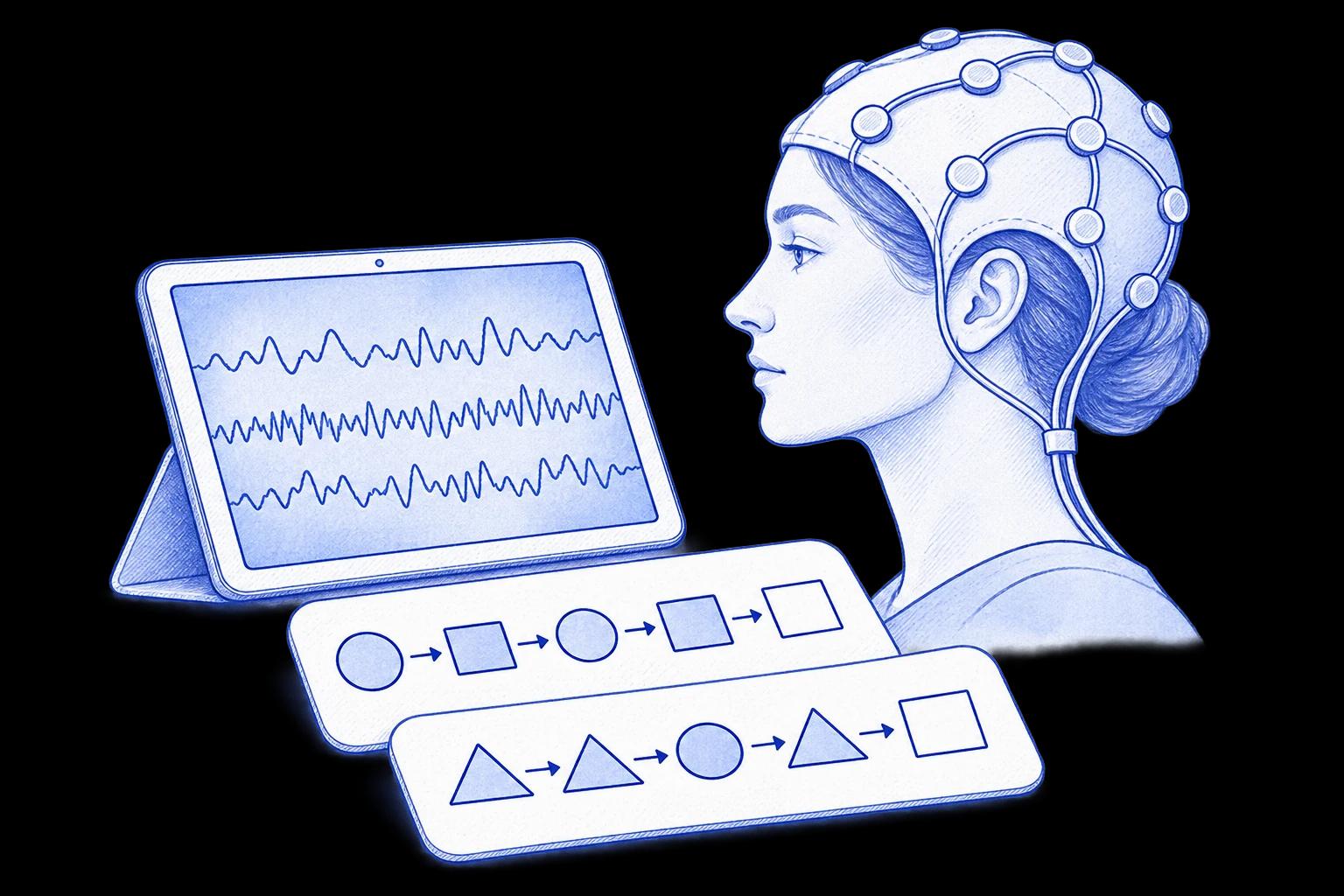
AI-generated ink illustration
Conceptual study artwork, not a photograph of teaching facilities.
Unidex · generated with ImageGen
Checked 2026-11-05
Symbolic subject artwork; no university facility depicted
Work experience
Optional co-op; Carleton says Cognitive Science graduates have taken roles across government, media, universities, tech, financial services and cultural organizations.
Cognitive Science · official programme informationEntering average
Published approximate guidance: 75%. 2027/28. Ontario high-school entry in 2027/28, exact listed routes CGS/CGG. Later major/option selection and other applicant categories remain separate.
Carleton university-supplied OUInfo: Cognitive Science – Honours (4 years), Ontario entry 2027/28 October 2026
| Mon | Tue | Wed | Thu | Fri | Sat | Sun |
|---|---|---|---|---|---|---|
| 1 | 2 | 3 | 4 | |||
| 5 | 6 | 7 | 8 | 9 | 10 | 11 |
| 12 | 13 | 14 | 16 | 17 | 18 | |
| 19 | 20 | 21 | 22 | 23 | 24 | 25 |
| 26 | 27 | 28 | 29 | 30 | 31 |

2026 entry
Verbatim: "Deadline for international students to apply for the January 2027 term (students whose transcripts originate outside of Canada or the US)."
 Other deadline details
Verbatim: "There is no specific Undergraduate application deadline if you are a Group B applicant. Deadlines vary at each university and sometimes depend on the program. Visit the university websites or contact the universities directly for their deadlines. If you are interested in a program but the deadline has passed, you may contact the university's admission office for help. Be aware of university-specific deadlines for submitting transcripts and portfolios, if required, and for arranging interviews and auditions. You must ensure the OUAC has enough time to process your choices before the universities' program deadlines." OUAC defines Group B as anyone who does not meet the Group A criteria, e.g. not currently taking an Ontario high school course, a Canadian outside Ontario, an international applicant, a postsecondary transfer student, or a mature applicant.
Check the university’s requirements for your province and applicant category.
Carleton exact programme public Ontario requirements selectorCurrent Ontario high-school applicants to this degree
Ontario college graduate/transfer applying to this degree; selected major requirements also apply
Canadian university graduate/transfer applying to this degree; selected major requirements also apply
Quebec CEGEP applying to this degree; selected major requirements also apply
International Baccalaureate applying to this degree; selected major requirements also apply
Mature applicant applying to this degree; selected major requirements also apply
Home-schooled applicant applying to this degree; selected major requirements also apply
Applicants completing IB at an Ontario high school; Carleton undergraduate degree entry
High-school applicants educated in Alberta, Nunavut and Northwest Territories
High-school applicants educated in British Columbia and Yukon
High-school applicants educated in Manitoba
High-school applicants educated in New Brunswick
High-school applicants educated in Newfoundland and Labrador
High-school applicants educated in Nova Scotia
High-school applicants educated in Prince Edward Island
High-school applicants educated in Saskatchewan
Cognitive Science with Concentration in Philosophical and Conceptual Issues Bachelor of Cognitive Science Honours (20.0 credits)
Cognitive Science with Concentration in Language and Linguistics Bachelor of Cognitive Science Honours (20.0 credits)
Cognitive Science with Concentration in the Biological Foundations of Cognition Bachelor of Cognitive Science Honours (20.0 credits)
Cognitive Science with Concentration in Cognition and Psychology Bachelor of Cognitive Science Honours (20.0 credits)
Cognitive Science with Concentration in Cognition and Computation Bachelor of Cognitive Science Honours (20.0 credits)
Cognitive Science Bachelor of Cognitive Science (15.0 credits)
Ontario high-school entry in 2027/28, exact listed routes CGS/CGG. Later major/option selection and other applicant categories remain separate.
Carleton university-supplied OUInfo: Cognitive Science – Honours (4 years), Ontario entry 2027/28Carleton university-supplied OUInfo: Cognitive Science – Honours (4 years), Ontario entry 2027/28Optional co-op; Carleton says Cognitive Science graduates have taken roles across government, media, universities, tech, financial services and cultural organizations.
University work-study informationCurrent degree and concentration variants. Each has its own required course and credit rules.
BCogSc

Study artificial intelligence and computational models of cognition. The stream has limited enrolment and requires third-year standing.
Courses explicitly named in the selected2026/27 degree or stream requirement tables, including alternatives and optional course banks. Credits retain Carleton’s own published unit; this is not a weekly timetable.
All listed degree/concentration routes share these three courses.
 LING 1001Introduction to Linguistics I0.5 credits
Introduces linguistic analysis through speech sounds, word structure, syntax and meaning.
 PSYC 1001Introduction to Psychology I0.5 credits
Surveys psychology as a natural science, including neuroscience, cognition and learning.
PSYC 1002Introduction to Psychology II0.5 creditsSurveys psychology as a social science, including personality, social psychology and mental health.
Choose 1.0 credits from the calendar bank. FYSM 1604 is 0.5 credits; it is not by itself a 1.0-credit replacement for both half courses. FYSM 1607 is the separate 1.0-credit seminar option.
CGSC 1001Mysteries of the Mind0.5 creditsExamines how cognitive science studies knowledge, learning, reasoning, bias and the mind.
PHIL 1301Mind, World, and Knowledge0.5 creditsExamines philosophical questions about mind, consciousness, reality, meaning, truth and knowledge.
FYSM 1604Cognitive Science: Understanding the Mind0.5 creditsExamines cognition across linguistics, psychology, philosophy and computing, including language, intelligence and the mind-brain relationship.
FYSM 1607Cognitive Science: Thinking and Knowing1 creditsExamines cognition across linguistics, psychology, philosophy and computing, including language, intelligence and the mind-brain relationship.
Additional courses for this concentration only.
CGSC 1005Computational Methods in Cognitive Science0.5 creditsIntroduces programming and computational methods through applications in cognitive science.
 NEUR 1202Neuroscience of Mental Health and Psychiatric Conditions0.5 credits
Examines mental-health conditions through biological, developmental, experiential and environmental factors.
NEUR 1203Neuroscience of Mental Health and Neurological Conditions0.5 creditsExamines neurological conditions through biological, developmental, experiential and environmental factors.
Additional courses for this concentration only.
COMP 1005Introduction to Computer Science I0.5 creditsIntroduces algorithms, procedural programming, data types, functions, testing and computational problem-solving.
COMP 1006Introduction to Computer Science II0.5 creditsDevelops object-oriented programming through data structures, inheritance, recursion, testing and program efficiency.
The guide assigns CGSC 1005 to the other concentration routes and the 15-credit degree.
CGSC 1005Computational Methods in Cognitive Science0.5 creditsIntroduces programming and computational methods through applications in cognitive science.
CGSC 2001Theories in Cognitive Science0.5 creditsCognitive Science’s history and integration of psychology, philosophy, linguistics, AI and neuroscience.
CGSC 2002Methods in Cognitive Science0.5 creditsSelected cognitive-science topics through several disciplines, potentially including independent research.
 CGSC 3601Artificial Intelligence and Cognitive Science0.5 credits
AI and computer models of cognitive processes as contributions to cognitive science.
 LING 2005Linguistic Analysis0.5 credits
Analyse sound, word and sentence structures through practical linguistic-data exercises.
LING 2007Phonetics0.5 creditsSpeech sounds, transcription, articulation, acoustics, perception and cross-language patterns.
PHIL 2001Introduction to Logic0.5 creditsFormal logic, symbolic translation, inference and logical correctness; open to first-year students.
PHIL 2501Introduction to Philosophy of Mind0.5 creditsPhilosophical questions about minds, bodies, consciousness, identity and cognition.
CGSC 3004Philosophy and Cognitive Science0.5 creditsPhilosophy’s methods and role in cognitive science and competing accounts of the mind.
CGSC 3603Artificial Intelligence: Philosophical and Ethical Issues0.5 creditsPhilosophical and ethical questions about AI, sentience, cognition, healthcare and social effects.
PHIL 2301Introduction to the Philosophy of Science0.5 creditsPhilosophy of scientific methods, explanation, evidence and approaches to understanding the world.
PHIL 2504Language and Communication0.5 creditsLanguage, meaning, communication and cognition from linguistic and philosophical perspectives.
PHIL 3104The Roots of Analytic Philosophy0.5 creditsEarly analytic philosophy through Russell, Moore, Wittgenstein and their intellectual context.
PHIL 3301Issues in the Philosophy of Science0.5 creditsSelected philosophy-of-science questions or the philosophy of a particular scientific discipline.
PHIL 3306Symbolic Logic0.5 creditsPropositional and predicate logic, deduction, completeness, semantics and extensions to basic logic.
PHIL 3501Philosophy of Cognitive Science0.5 creditsPhilosophical questions about studying the mind scientifically and using computational models.
PHIL 3502Mind and Action0.5 creditsPhilosophical relationships between thought, agency, action, rationality and mental causation.
PHIL 3504Pragmatics0.5 creditsLanguage use in conversation and culture, including implicature, reference and speech acts.
PHIL 3506Semantics0.5 creditsWords, sentences and linguistic meaning, with formal semantics and the relation to context.
PHIL 3530Philosophy of Language0.5 creditsPhilosophy of language, including meaning, truth, reference, concepts and context.
PSYC 2700Introduction to Cognitive Psychology0.5 creditsCognitive-psychology theories and methods concerning attention, learning, memory, language and thinking.
PSYC 2307Human Neuropsychology I0.5 creditsBrain-behaviour relationships, nervous-system function and neural bases of cognition and emotion.
CGSC 3908Honours Seminar in Cognitive Science0.5 creditsCognitive-science theories and empirical approaches, with independent research preparing for an honours thesis.
CGSC 4908Honours Thesis1 creditsInterdisciplinary thesis; supervisor assignment and registration require Undergraduate Supervisor approval.
 CGSC 4909Honours Project1 credits
Interdisciplinary honours project involving one or more group research projects.
PHIL 2540Personal Identity and the Self0.5 creditsPersonal identity, selfhood, mind-body relationships, memory and self-knowledge.
PHIL 3140Epistemology0.5 creditsEvidence, rationality, knowledge, justification, scepticism and the roles of reason and experience.
PHIL 4055Lexical Semantics0.5 creditsWord meaning, lexical relationships, meaning variation and lexical aspect.
PHIL 4210Seminar in Philosophy of Language or Linguistics0.5 creditsSelected philosophical issues or thinkers concerning language and linguistics.
PHIL 4220Seminar in philosophy of Mind or Cognition0.5 creditsSelected philosophical issues or thinkers concerning mind and cognition.
PHIL 4230Seminar in Metaphysics, Epistemology, or Philosophy of Science0.5 creditsSelected issues or thinkers in metaphysics, epistemology or philosophy of science.
PHIL 4503Special Topic in Philosophy of Computing0.5 creditsAn in-depth special topic in philosophy of computing; no fixed topic is specified.
PHIL 4505Formal Semantics0.5 creditsAdvanced compositional semantics, logic and interfaces with syntax and pragmatics.
LING 3004Syntax I0.5 creditsSyntactic theory, sentence structures and dependencies, and testing grammatical hypotheses.
LING 3005Morphology I0.5 creditsWord structure, inflection, derivation and interactions between morphology, sounds and syntax.
LING 3007Phonology I0.5 creditsLanguage sound systems, phonological rules, stress, tone and cross-language patterns.
LING 3601Language Processing and the Brain0.5 creditsAdult speech and language processing, its brain mechanisms and experimental methods.
 LING 2604Communication Differences and Disabilities I0.5 credits
Survey speech, language, fluency and hearing differences and disabilities; topics vary yearly.
LING 3604Communication Differences and Disabilities II0.5 creditsSelected communication differences and disabilities through theory and cross-language evidence; topics may vary.
LING 3504Pragmatics0.5 creditsLanguage use in conversation and culture, including implicature, reference and speech acts.
LING 3505Semantics0.5 creditsWords, sentences and linguistic meaning, with formal semantics and the relation to context.
LING 3603Child Language0.5 creditsLanguage development from birth to about ten, including grammar, pragmatics and environmental influences.
LING 4004Syntax II0.5 creditsAdvanced syntactic theory topics; no specific topic list is published.
LING 4005Morphology II0.5 creditsAdvanced morphological theory topics; no specific topic list is published.
LING 4007Phonology II0.5 creditsAdvanced phonological theory topics; no specific topic list is published.
LING 4505Formal Semantics0.5 creditsAdvanced compositional semantics, logic and interfaces with syntax and pragmatics.
LING 4510Lexical Semantics0.5 creditsWord meaning, lexical relationships, meaning variation and lexical aspect.
LING 4601Cognitive Neuroscience of Language0.5 creditsAdvanced adult language-processing and brain mechanisms, potentially including first-language acquisition.
LING 4603First Language Acquisition0.5 creditsAdvanced language acquisition and development, including environment, cognition and inborn knowledge.
 LING 4605Psycholinguistic Research Methods0.5 credits
Design psycholinguistic experiments and interpret and report statistical research results.
 LING 4606Statistics for Language Research0.5 credits
Apply statistics to language data and measurement problems in linguistic research.
NEUR 2001Introduction to Research Methods in Neuroscience0.5 creditsNeuroscience research methods, descriptive statistics, communication and responsible scientific conduct.
NEUR 2002Introduction to Statistics in Neuroscience0.5 creditsDescriptive and inferential statistics for neuroscience, including tests, ANOVA and correlation.
NEUR 2201Cellular and Molecular Neuroscience0.5 creditsNeural signalling, ion channels, transporters, intracellular pathways and gene-expression regulation.
NEUR 2202Neurodevelopment and Plasticity0.5 creditsNervous-system development and plasticity, including neurons, axons, synapses and psychopathology.
NEUR 3001Data Analysis in Neuroscience I0.5 creditsUse software and appropriate statistical methods to analyse and interpret real neuroscience data.
NEUR 3002Data Analysis in Neuroscience II0.5 creditsApply statistical software, tests, ANOVA and regression to neuroscience data.
NEUR 2801Neuroscience and Creativity0.5 creditsCreativity’s neurobiological basis in people with and without mental-health conditions.
NEUR 3204Neuropharmacology0.5 creditsNeurotransmitters, drug action and the neurochemical bases of psychiatric disorders.
NEUR 3206Sensory and Motor Neuroscience0.5 creditsSensory processing and motor control through their underlying neural mechanisms.
NEUR 3207Systems Neuroscience0.5 creditsNeural systems involved in emotion, motivation, sleep and complex behaviour.
NEUR 3303The Neuroscience of Consciousness0.5 creditsNeural mechanisms of consciousness and changes associated with sleep, illness, drugs and other stimuli.
PSYC 3307Human Neuropsychology II0.5 creditsAssess cortical function and neurological, psychiatric and cognitive disorders using neuropsychological methods.
PSYC 3709Language Processing and the Brain0.5 creditsAdult speech and language processing, its brain mechanisms and experimental methods.
PSYC 2001Introduction to Research Methods in Psychology0.5 creditsPsychological research designs, observation, surveys, descriptive statistics and reporting findings.
PSYC 2002Introduction to Statistics in Psychology0.5 creditsDescriptive and inferential statistics for psychology, including tests, ANOVA and correlation.
PSYC 3000Design and Analysis in Psychological Research1 creditsStatistical analysis, estimation, hypothesis testing, regression and experimental design using software.
PSYC 3700Cognition (Honours Seminar)1 creditsHonours cognitive-psychology research, study design, data analysis and reports in preparation for a fourth-year thesis.
PSYC 3506Cognitive Development0.5 creditsCognitive development across the lifespan, focusing on memory, thinking, language and learning skills.
PSYC 3508Child Language0.5 creditsLanguage development from birth to about ten, including grammar, pragmatics and environmental influences.
PSYC 3702Perception0.5 creditsPerception theories, methods and practical applications in fields such as medicine, design and communication.
 COMP 2401Introduction to Systems Programming0.5 credits
System-level programming, operating-system concepts, memory, processes and system calls.
COMP 2402Abstract Data Types and Algorithms0.5 creditsDesign abstract data types and analyse structures such as lists, trees and graphs.
COMP 2404Introduction to Software Engineering0.5 creditsDesign maintainable and reusable object-oriented software using modularity, encapsulation and design patterns.
COMP 2406Fundamentals of Web Applications0.5 creditsWeb-application technologies, programming models, databases and distributed-application performance and security.
 COMP 2804Discrete Structures II0.5 credits
Discrete mathematics for computing, including counting, probability, recurrences and randomised algorithms.
COMP 3008Software Structures for User Interfaces0.5 creditsBuild user interfaces using reactive programming, interface infrastructure and implementation patterns.
Cognitive Science with Concentration in Philosophical and Conceptual Issues Bachelor of Cognitive Science Honours (20.0 credits)
Cognitive Science with Concentration in Language and Linguistics Bachelor of Cognitive Science Honours (20.0 credits)
Cognitive Science with Concentration in the Biological Foundations of Cognition Bachelor of Cognitive Science Honours (20.0 credits)
Cognitive Science with Concentration in Cognition and Psychology Bachelor of Cognitive Science Honours (20.0 credits)
Cognitive Science with Concentration in Cognition and Computation Bachelor of Cognitive Science Honours (20.0 credits)
Cognitive Science Bachelor of Cognitive Science (15.0 credits)
Current degree and concentration variants. Each has its own required course and credit rules.
 Career examplesData AnalystsData analyst
 Product designer
 Product managerTechnical writerWeb designerSpeech-language pathologistArtificial IntelligenceData VisualizationEducation
 Policy AnalysisProduct DesignProduct Management
 ResearchSpeech-Language PathologyTeaching
 Technical WritingWebsite DesignGovernmentMediaUniversitiesTechnology companies
 Financial services
University-published career examples for Cognitive Science, including its published routes; some require further training or registration. These are examples, not ranked graduate outcomes.
Bachelor of Cognitive Science

2026–27 · First year · Fall + winter · Full-fee status · CAD
Ontario students example · Choose your category
Tuition + compulsory fees$7,624.02Books and suppliesSee course syllabus Residence
 Meal planNot estimated
Tuition and compulsory fees, including UPASS · 2.0+ billing hours each term
Housing and meals are outside this estimate.
Last updated

























































