



- HBA · 4 years
- Work experience details
- ~High 80s to low 90s


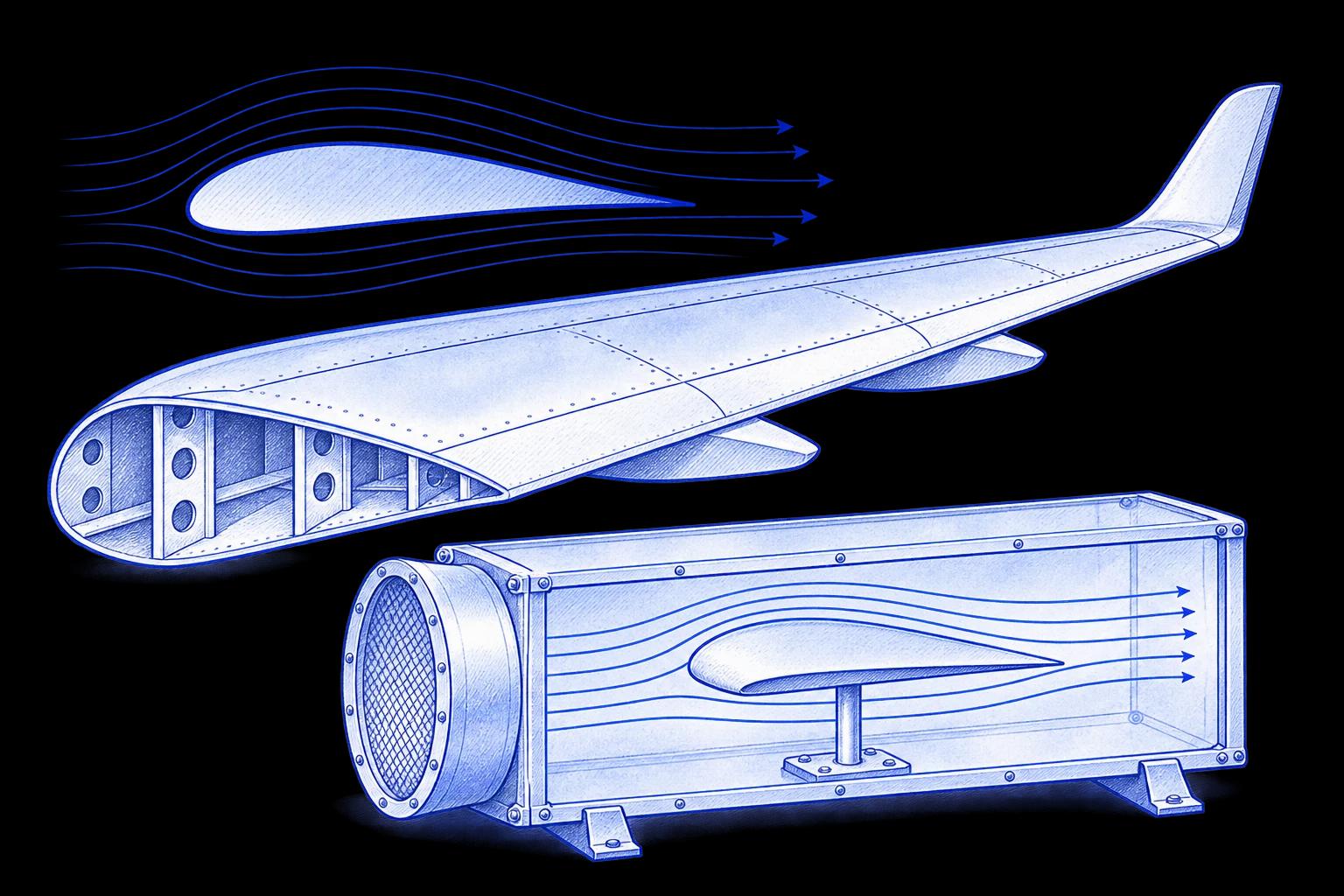
AI-generated ink illustration
Conceptual study artwork, not a photograph of teaching facilities.
Unidex · generated with ImageGen
Checked 2026-11-05
Symbolic subject artwork; no university facility depicted
Work experience
Optional paid co-op with work terms of 4, 6, 8, 12 or 16 months.
Aerospace Engineering · official programme informationEntering average
The 88–90% entering average is an estimate compiled from recently published admission data.
Carleton university-supplied OUInfo: Engineering – Aerospace, Ontario entry 2027/28 October 2026
| Mon | Tue | Wed | Thu | Fri | Sat | Sun |
|---|---|---|---|---|---|---|
| 1 | 2 | 3 | 4 | |||
| 5 | 6 | 7 | 8 | 9 | 10 | 11 |
| 12 | 13 | 14 | 16 | 17 | 18 | |
| 19 | 20 | 21 | 22 | 23 | 24 | 25 |
| 26 | 27 | 28 | 29 | 30 | 31 |

2026 entry
Verbatim: "Deadline for international students to apply for the January 2027 term (students whose transcripts originate outside of Canada or the US)."
 Other deadline details
Verbatim: "There is no specific Undergraduate application deadline if you are a Group B applicant. Deadlines vary at each university and sometimes depend on the program. Visit the university websites or contact the universities directly for their deadlines. If you are interested in a program but the deadline has passed, you may contact the university's admission office for help. Be aware of university-specific deadlines for submitting transcripts and portfolios, if required, and for arranging interviews and auditions. You must ensure the OUAC has enough time to process your choices before the universities' program deadlines." OUAC defines Group B as anyone who does not meet the Group A criteria, e.g. not currently taking an Ontario high school course, a Canadian outside Ontario, an international applicant, a postsecondary transfer student, or a mature applicant.
 MHF4UAdvanced Functions
 MCV4UCalculus and Vectors
 SCH4UChemistry
 SPH4UPhysics
Current Ontario high-school applicants to this degree
Ontario high-school applicants to this selected degree/major or concentration only
Ontario high-school applicants to this selected degree/major or concentration only
Ontario high-school applicants to this selected degree/major or concentration only
Ontario college graduate/transfer applying to this degree; selected major requirements also apply
Canadian university graduate/transfer applying to this degree; selected major requirements also apply
Quebec CEGEP applying to this degree; selected major requirements also apply
International Baccalaureate applying to this degree; selected major requirements also apply
Mature applicant applying to this degree; selected major requirements also apply
Home-schooled applicant applying to this degree; selected major requirements also apply
Applicants completing IB at an Ontario high school; Carleton undergraduate degree entry
Ontario high-school entry in 2027/28, exact listed route CEA. Later major/option selection and other applicant categories remain separate.
Ontario high school applicants for Fall 2027
High-school applicants educated in Alberta, Nunavut and Northwest Territories
High-school applicants educated in British Columbia and Yukon
High-school applicants educated in Manitoba
High-school applicants educated in New Brunswick
High-school applicants educated in Newfoundland and Labrador
High-school applicants educated in Nova Scotia
High-school applicants educated in Prince Edward Island
High-school applicants educated in Saskatchewan
Aerospace Engineering - Bachelor of Engineering Stream A: Aerodynamics, Propulsion and Vehicle Performance (21.0 credits)
Aerospace Engineering - Bachelor of Engineering Stream B: Aerospace Structures, Systems and Vehicle Design (21.0 credits)
Aerospace Engineering - Bachelor of Engineering Stream C: Aerospace Electronics and Systems (21.0 credits)
Aerospace Engineering - Bachelor of Engineering Stream D: Space Systems Design (21.0 credits)
Optional paid co-op with work terms of 4, 6, 8, 12 or 16 months.
University work-study informationCurrent degree and concentration variants. Each has its own required course and credit rules.
BEng

Study flight aerodynamics, propulsion and vehicle performance.
Courses explicitly named in the selected2026/27 degree or stream requirement tables, including alternatives and optional course banks. Credits retain Carleton’s own published unit; this is not a weekly timetable. 2026–27 Engineering calendar requirements by year. Courses and selections depend on the named stream.
Shared by all Engineering degrees; non-Engineering requirements depend on the Aerospace progression map.
 ECOR 1031Programming and Data Management0.5 credits
Introduces engineering software development, data handling, numerical algorithms, testing and iterative programming.
 ECOR 1032Circuits and Mechatronics0.5 credits
Introduces circuits and mechatronics through electronic components, sensors, actuators and a microcontroller project.
ECOR 1033Statics0.5 creditsStudies forces and equilibrium, including moments, trusses, frames and internal loads.
ECOR 1034Dynamics0.5 creditsStudies motion, forces, energy and momentum, with applications including a projectile design project.
These published courses are non-credit and pass/fail. ECOR 1055 and 1057 are Fall; ECOR 1056 is Winter.
ECOR 1055Introduction to Engineering Disciplines I0 creditsIntroduces professional activities in the student’s Engineering discipline. Graded SAT/UNS.
ECOR 1056Introduction to Engineering Disciplines II0 creditsIntroduces the range of Engineering disciplines through selected lectures. Graded SAT/UNS.
ECOR 1057Engineering Profession0 creditsIntroduces engineering practice, safety, ethics, documentation and law. Graded SAT/UNS.
The faculty publishes these two mathematics courses; exact Chemistry and Physics choices remain programme-specific.
MATH 1004Calculus for Engineering or Physics0.5 creditsIntroduces limits, differentiation and integration for engineering and physics, including applications to areas and volumes.
 MATH 1104Linear Algebra for Engineering or Science0.5 credits
Studies linear systems, matrices, vector spaces, eigenvalues and transformations for engineering and science.
The calendar lists required courses and selection groups for this year. Check the original table for elective choices and restrictions.
CHEM 1101Chemistry for Engineering Students0.5 creditsECOR 1031Programming and Data Management0.5 creditsECOR 1032Circuits and Mechatronics0.5 creditsECOR 1033Statics0.5 creditsECOR 1034Dynamics0.5 creditsMATH 1004Calculus for Engineering or Physics0.5 creditsMATH 1104Linear Algebra for Engineering or Science0.5 creditsPHYS 1004Introductory Electromagnetism and Wave Motion0.5 creditsECOR 1055Introduction to Engineering Disciplines I0 creditsECOR 1056Introduction to Engineering Disciplines II0 creditsECOR 1057Engineering Profession0 creditsThe calendar lists required courses and selection groups for this year. Check the original table for elective choices and restrictions.
 AERO 2001Aerospace Engineering Graphical Design0.5 creditsECOR 2050Design and Analysis of Engineering Experiments0.5 creditsELEC 3605Electrical Engineering0.5 creditsMAAE 2101Engineering Dynamics0.5 creditsMAAE 2202Mechanics of Solids I0.5 creditsMAAE 2300Fluid Mechanics I0.5 creditsMAAE 2400Thermodynamics and Heat Transfer0.5 credits
 MAAE 2700Engineering Materials0.5 creditsMATH 1005Differential Equations and Infinite Series for Engineering or Physics0.5 creditsMATH 2004Multivariable Calculus for Engineering or Physics0.5 creditsECOR 2995Engineering Portfolio0 credits
The calendar lists required courses and selection groups for this year. Check the original table for elective choices and restrictions.
AERO 3002Aerospace Design and Practice0.5 creditsAERO 3700Aerospace Materials0.5 credits CCDP 2100Communication Skills for Engineering Students0.5 credits
 ECOR 3800Engineering Economics0.5 creditsMAAE 3004Dynamics of Machinery0.5 creditsMAAE 3202Mechanics of Solids II0.5 creditsMAAE 3300Fluid Mechanics II0.5 creditsMAAE 3400Applied Thermodynamics0.5 creditsMAAE 3500Feedback Control Systems0.5 creditsMATH 3705Mathematical Methods I0.5 creditsSYSC 3600Systems and Simulation0.5 credits
The calendar lists required courses and selection groups for this year. Check the original table for elective choices and restrictions.
AERO 4003Aerospace Systems Design0.5 creditsAERO 4302Aircraft Aerodynamics0.5 credits AERO 4306Aerospace Vehicle Performance0.5 creditsAERO 4308Aircraft Stability and Control0.5 credits
 ECOR 4995Professional Practice0.5 creditsMAAE 4907Engineering Design Project1 credits
 ECOR 4907Multidisciplinary Engineering Project1 creditsAERO 4402Aircraft Propulsion0.5 creditsAERO 4442Transatmospheric and Spacecraft Propulsion0.5 creditsAERO 4607Rotorcraft Aerodynamics and Performance0.5 credits
The calendar lists required courses and selection groups for this year. Check the original table for elective choices and restrictions.
CHEM 1101Chemistry for Engineering Students0.5 creditsECOR 1031Programming and Data Management0.5 creditsECOR 1032Circuits and Mechatronics0.5 creditsECOR 1033Statics0.5 creditsECOR 1034Dynamics0.5 creditsMATH 1004Calculus for Engineering or Physics0.5 creditsMATH 1104Linear Algebra for Engineering or Science0.5 creditsPHYS 1004Introductory Electromagnetism and Wave Motion0.5 creditsECOR 1055Introduction to Engineering Disciplines I0 creditsECOR 1056Introduction to Engineering Disciplines II0 creditsECOR 1057Engineering Profession0 creditsThe calendar lists required courses and selection groups for this year. Check the original table for elective choices and restrictions.
AERO 2001Aerospace Engineering Graphical Design0.5 creditsECOR 2050Design and Analysis of Engineering Experiments0.5 creditsELEC 3605Electrical Engineering0.5 creditsMAAE 2101Engineering Dynamics0.5 creditsMAAE 2202Mechanics of Solids I0.5 creditsMAAE 2300Fluid Mechanics I0.5 creditsMAAE 2400Thermodynamics and Heat Transfer0.5 creditsMAAE 2700Engineering Materials0.5 creditsMATH 1005Differential Equations and Infinite Series for Engineering or Physics0.5 creditsMATH 2004Multivariable Calculus for Engineering or Physics0.5 creditsECOR 2995Engineering Portfolio0 creditsThe calendar lists required courses and selection groups for this year. Check the original table for elective choices and restrictions.
AERO 3002Aerospace Design and Practice0.5 creditsAERO 3101Lightweight Structures0.5 creditsAERO 3700Aerospace Materials0.5 creditsCCDP 2100Communication Skills for Engineering Students0.5 creditsECOR 3800Engineering Economics0.5 creditsMAAE 3004Dynamics of Machinery0.5 creditsMAAE 3202Mechanics of Solids II0.5 creditsMAAE 3300Fluid Mechanics II0.5 creditsMAAE 3500Feedback Control Systems0.5 creditsMATH 3705Mathematical Methods I0.5 creditsSYSC 3600Systems and Simulation0.5 creditsThe calendar lists required courses and selection groups for this year. Check the original table for elective choices and restrictions.
AERO 4003Aerospace Systems Design0.5 creditsAERO 4602Introductory Aeroelasticity0.5 creditsAERO 4608Composite Materials0.5 creditsECOR 4995Professional Practice0.5 creditsMAAE 4102Materials: Strength and Fracture0.5 creditsMAAE 4907Engineering Design Project1 creditsECOR 4907Multidisciplinary Engineering Project1 creditsAERO 4609Joining of Materials0.5 creditsMECH 4103Fatigue and Fracture Analysis0.5 creditsMECH 4104Vibration Analysis0.5 creditsMECH 4604Finite Element Methods0.5 creditsThe calendar lists required courses and selection groups for this year. Check the original table for elective choices and restrictions.
CHEM 1101Chemistry for Engineering Students0.5 creditsECOR 1031Programming and Data Management0.5 creditsECOR 1032Circuits and Mechatronics0.5 creditsECOR 1033Statics0.5 creditsECOR 1034Dynamics0.5 creditsMATH 1004Calculus for Engineering or Physics0.5 creditsMATH 1104Linear Algebra for Engineering or Science0.5 creditsPHYS 1004Introductory Electromagnetism and Wave Motion0.5 creditsECOR 1055Introduction to Engineering Disciplines I0 creditsECOR 1056Introduction to Engineering Disciplines II0 creditsECOR 1057Engineering Profession0 creditsThe calendar lists required courses and selection groups for this year. Check the original table for elective choices and restrictions.
AERO 2001Aerospace Engineering Graphical Design0.5 creditsECOR 2050Design and Analysis of Engineering Experiments0.5 creditsELEC 2501Circuits and Signals0.5 creditsELEC 2507Electronics I0.5 creditsELEC 2607Switching Circuits0.5 creditsMAAE 2101Engineering Dynamics0.5 creditsMAAE 2202Mechanics of Solids I0.5 creditsMATH 1005Differential Equations and Infinite Series for Engineering or Physics0.5 creditsMATH 2004Multivariable Calculus for Engineering or Physics0.5 creditsSYSC 3600Systems and Simulation0.5 creditsECOR 2995Engineering Portfolio0 creditsThe calendar lists required courses and selection groups for this year. Check the original table for elective choices and restrictions.
AERO 3002Aerospace Design and Practice0.5 creditsCCDP 2100Communication Skills for Engineering Students0.5 creditsECOR 3800Engineering Economics0.5 creditsELEC 3105Electromagnetic Fields0.5 creditsELEC 3500Digital Electronics0.5 creditsELEC 3509Electronics II0.5 creditsELEC 3909Electromagnetic Waves0.5 creditsMAAE 2300Fluid Mechanics I0.5 creditsMAAE 2700Engineering Materials0.5 creditsMAAE 3500Feedback Control Systems0.5 creditsMATH 3705Mathematical Methods I0.5 creditsThe calendar lists required courses and selection groups for this year. Check the original table for elective choices and restrictions.
AERO 3504Avionics I0.5 creditsAERO 4003Aerospace Systems Design0.5 creditsAERO 4504Avionics II0.5 creditsECOR 4995Professional Practice0.5 creditsMAAE 2400Thermodynamics and Heat Transfer0.5 creditsSYSC 3501Communication Theory0.5 creditsMAAE 4907Engineering Design Project1 creditsECOR 4907Multidisciplinary Engineering Project1 creditsAERO 3240Orbital Mechanics0.5 creditsAERO 3841Spacecraft Design I0.5 creditsELEC 4502Microwave Circuits0.5 creditsELEC 4503Radio Frequency Lines and Antennas0.5 creditsELEC 4505Telecommunication Circuits0.5 creditsELEC 4506Computer-Aided Design of Circuits and Systems0.5 creditsELEC 4509Communication Links0.5 creditsELEC 4600Radar and Navigation0.5 creditsELEC 4609Integrated Circuit Design and Fabrication0.5 credits ELEC 4703Solar Cells0.5 creditsELEC 4706High-Speed Electronics: Circuits and Systems0.5 creditsELEC 4707Analog Integrated Electronics0.5 creditsELEC 4708Advanced Digital Integrated Circuit Design0.5 creditsELEC 4709Integrated Sensors0.5 credits
 SYSC 4205Image Processing for Medical Applications0.5 creditsSYSC 4600Digital Communications0.5 creditsSYSC 4607Wireless Communications0.5 credits
The calendar lists required courses and selection groups for this year. Check the original table for elective choices and restrictions.
CHEM 1101Chemistry for Engineering Students0.5 creditsECOR 1031Programming and Data Management0.5 creditsECOR 1032Circuits and Mechatronics0.5 creditsECOR 1033Statics0.5 creditsECOR 1034Dynamics0.5 creditsMATH 1004Calculus for Engineering or Physics0.5 creditsMATH 1104Linear Algebra for Engineering or Science0.5 creditsPHYS 1004Introductory Electromagnetism and Wave Motion0.5 creditsECOR 1055Introduction to Engineering Disciplines I0 creditsECOR 1056Introduction to Engineering Disciplines II0 creditsECOR 1057Engineering Profession0 creditsThe calendar lists required courses and selection groups for this year. Check the original table for elective choices and restrictions.
AERO 2001Aerospace Engineering Graphical Design0.5 creditsECOR 2050Design and Analysis of Engineering Experiments0.5 creditsMAAE 2101Engineering Dynamics0.5 creditsMAAE 2202Mechanics of Solids I0.5 creditsMAAE 2300Fluid Mechanics I0.5 creditsMAAE 2400Thermodynamics and Heat Transfer0.5 creditsMATH 1005Differential Equations and Infinite Series for Engineering or Physics0.5 creditsMATH 2004Multivariable Calculus for Engineering or Physics0.5 creditsSYSC 3600Systems and Simulation0.5 creditsECOR 2995Engineering Portfolio0 creditsThe calendar lists required courses and selection groups for this year. Check the original table for elective choices and restrictions.
AERO 3002Aerospace Design and Practice0.5 creditsAERO 3240Orbital Mechanics0.5 creditsAERO 3841Spacecraft Design I0.5 creditsCCDP 2100Communication Skills for Engineering Students0.5 creditsECOR 3800Engineering Economics0.5 creditsMAAE 2700Engineering Materials0.5 creditsMAAE 3004Dynamics of Machinery0.5 creditsMAAE 3300Fluid Mechanics II0.5 creditsMAAE 3500Feedback Control Systems0.5 creditsMATH 3705Mathematical Methods I0.5 creditsThe calendar lists required courses and selection groups for this year. Check the original table for elective choices and restrictions.
AERO 3303High-Speed Flight Aerodynamics0.5 creditsAERO 4442Transatmospheric and Spacecraft Propulsion0.5 creditsAERO 4446Heat Transfer for Aerospace Applications0.5 creditsAERO 4540Spacecraft Attitude Dynamics and Control0.5 creditsAERO 4842Spacecraft Design II0.5 creditsECOR 4995Professional Practice0.5 creditsELEC 4509Communication Links0.5 creditsMAAE 4907Engineering Design Project1 creditsECOR 4907Multidisciplinary Engineering Project1 creditsAERO 3101Lightweight Structures0.5 creditsAERO 3700Aerospace Materials0.5 creditsELEC 4600Radar and Navigation0.5 creditsELEC 4709Integrated Sensors0.5 creditsMapped termsCarleton’s first-year progression for Fall 2026 entrants. Confirm the tree for your intake. Upper years and options have separate requirements.
 Course: Fall
The tree also assigns a Complementary Studies elective. Follow the list approved for Engineering.
MATH 1004Calculus for Engineering or Physics0.5 creditsIntroduces limits, differentiation and integration for engineering and physics, including applications to areas and volumes.
CHEM 1101Chemistry for Engineering Students0.5 creditsChemical structure, reactions, equilibrium, thermodynamics and basic organic chemistry, with experimental laboratory techniques.
ECOR 1033Statics0.5 creditsStudies forces and equilibrium, including moments, trusses, frames and internal loads.
ECOR 1034Dynamics0.5 creditsStudies motion, forces, energy and momentum, with applications including a projectile design project.
ECOR 1055Introduction to Engineering Disciplines I0 creditsIntroduces professional activities in the student’s Engineering discipline. Graded SAT/UNS.
ECOR 1057Engineering Profession0 creditsIntroduces engineering practice, safety, ethics, documentation and law. Graded SAT/UNS.
Course: WinterMATH 1104Linear Algebra for Engineering or Science0.5 creditsStudies linear systems, matrices, vector spaces, eigenvalues and transformations for engineering and science.
PHYS 1004Introductory Electromagnetism and Wave Motion0.5 creditsCalculus-based study of work, potential energy, electricity, magnetism, oscillations and waves.
ECOR 1031Programming and Data Management0.5 creditsIntroduces engineering software development, data handling, numerical algorithms, testing and iterative programming.
ECOR 1032Circuits and Mechatronics0.5 creditsIntroduces circuits and mechatronics through electronic components, sensors, actuators and a microcontroller project.
ECOR 1056Introduction to Engineering Disciplines II0 creditsIntroduces the range of Engineering disciplines through selected lectures. Graded SAT/UNS.
Aerospace Engineering - Bachelor of Engineering Stream A: Aerodynamics, Propulsion and Vehicle Performance (21.0 credits)
Aerospace Engineering - Bachelor of Engineering Stream B: Aerospace Structures, Systems and Vehicle Design (21.0 credits)
Aerospace Engineering - Bachelor of Engineering Stream C: Aerospace Electronics and Systems (21.0 credits)
Aerospace Engineering - Bachelor of Engineering Stream D: Space Systems Design (21.0 credits)
Current degree and concentration variants. Each has its own required course and credit rules.
AerodynamicsAerospace IndustryAircraft CommunicationAircraft Control SystemsAircraft NavigationAircraft RepairAircraft Space ManufacturingAvionicsCanadian Space AgencyDefenseLaunch VehiclesMission ControlPiloted and Autonomous AircraftPropulsion SystemsSatellite CommunicationsSatellite Systems and OperationsSpace SystemsSpacecraftSpaceXStructuresTransportationAerospace manufacturingDefenceSatellite systems and operationsUniversity-published career examples for Aerospace Engineering, including its published routes; some require further training or registration. These are examples, not ranked graduate outcomes.
Canadian Engineering Accreditation Board, 1992 to present.
Carleton describes this as Canada's first accredited Bachelor of Aerospace Engineering, offered since 1988. The page names no accrediting body.
Bachelor of Engineering

2026–27 · First year · Fall + winter · Full-fee status · CAD
Ontario students example · Choose your category
 Tuition + compulsory fees$12,290.12Books and suppliesSee course syllabus
 Residence
 Meal planNot estimated
Tuition and compulsory fees, including UPASS · 2.0+ billing hours each term
Housing and meals are outside this estimate.
Last updated

























































